

Women Investors: Wealth Transfer and Challenges Ahead
Written by Emily J. Thompson, Senior Investment Analyst
Updated: 4 days ago
0mins


Source: CNBC
- Wealth Transfer Trend: Cerulli Associates predicts that by 2048, $105 trillion will be inherited, with about $54 trillion going to spouses, and since women live nearly six years longer than men on average, they are expected to be the primary beneficiaries, fundamentally altering wealth control dynamics.
- Asset Growth: In 2023, women in the U.S. commanded $18 trillion in investable assets, representing 34% of total assets under management, and this figure is expected to nearly double to $34 trillion by 2030, accounting for about 38% of total U.S. assets, indicating a significant rise in women's investment presence.
- Changing Investment Behavior: According to Wells Fargo's research, 71% of women invested in the stock market in 2024, up from 60% the previous year, with Gen Z and millennials leading this trend, reflecting an increase in confidence and risk tolerance among female investors.
- Importance of Education and Planning: Experts recommend that women start investing early, particularly in their 20s and 30s to build strong financial habits, and emphasize the need for clear discussions with advisors about wealth transfer and lifestyle balance to ensure adequate retirement savings.
Trade with 70% Backtested Accuracy
Stop guessing "Should I Buy WFC?" and start using high-conviction signals backed by rigorous historical data.
Sign up today to access powerful investing tools and make smarter, data-driven decisions.
Analyst Views on WFC
Wall Street analysts forecast WFC stock price to rise
17 Analyst Rating
10 Buy
6 Hold
1 Sell
Moderate Buy
Current: 81.450

Low
74.00
Averages
98.66
High
113.00
Current: 81.450
Low
74.00
Averages
98.66
High
113.00
About WFC
Wells Fargo & Company is a financial services company. The Company provides a diversified set of banking, investment and mortgage products and services, as well as consumer and commercial finance, to individuals, businesses and institutions. The Company operates through four segments: Consumer Banking and Lending, Commercial Banking, Corporate and Investment Banking, and Wealth & Investment Management. The Company provides consumer financial products and services, including checking and savings accounts, credit and debit cards, and auto, residential mortgage, and small business lending. In addition, the Company offers financial planning, private banking, investment management, and fiduciary services. It also provides financial solutions to businesses through products and services including traditional commercial loans and lines of credit, letters of credit, asset-based lending and leasing, trade financing, treasury management, and investment banking services.
About the author

Emily J. Thompson
Emily J. Thompson, a Chartered Financial Analyst (CFA) with 12 years in investment research, graduated with honors from the Wharton School. Specializing in industrial and technology stocks, she provides in-depth analysis for Intellectia’s earnings and market brief reports.

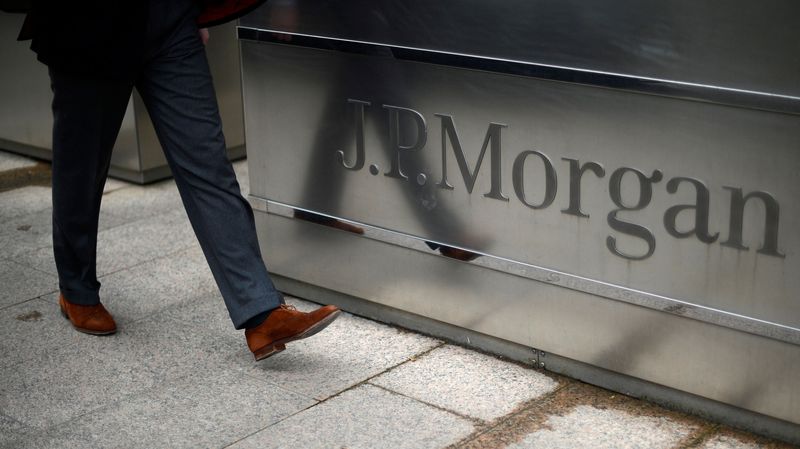
JPMorgan CEO Responds to Trump's Lawsuit Over Account Closures


- Lawsuit Context: Trump accuses JPMorgan of closing his accounts for political reasons and seeks $5 billion in damages; although CEO Jamie Dimon claims the lawsuit lacks merit, he empathizes with Trump's anger, highlighting the legal and regulatory risks banks face in such situations.
- Compliance Pressure: Dimon emphasizes that banks are compelled to debank clients to comply with regulatory demands, which discourages them from taking on high-risk customers, thereby affecting Trump's banking relationships and those of his companies.
- Regulatory Landscape: While no specific law mandates banks to close accounts due to reputational risk, the existing regulatory framework creates significant risks for banks when dealing with certain clients, as evidenced by JPMorgan's closure of multiple accounts linked to Trump following the January 6 Capitol attack in 2021.
- Market Impact and Future Outlook: Dimon noted in an interview that the financial industry is beginning to benefit from a deregulatory push initiated by Trump appointees, which could enhance banks' profitability and reduce capital loss requirements, potentially leading to changes in the current legal and regulatory environment.
See More
Geopolitical Conflict Triggers Market Volatility

- Market Reaction: U.S. equities faced pressure following a joint attack by the U.S. and Israel on Iran, with stock futures sharply lower and gold prices soaring as investors sought safe-haven assets, indicating market sensitivity to geopolitical risks.
- Energy Price Surge: The conflict disrupted shipments out of the Persian Gulf, causing oil and natural gas prices to spike, which not only increases volatility in the energy market but could also exert pressure on global economic recovery.
- Historical Data Analysis: According to Wells Fargo, since World War II, the S&P 500 typically sees a median gain of 0.4% two weeks after geopolitical events, although it often experiences declines in the short term, reflecting market uncertainty.
- Investment Strategy Advice: Both Wells Fargo and JPMorgan strategists advise investors to remain cautious during market volatility and to wait for a 1-2 week decline in risk assets to create buying opportunities, as historical data suggests markets usually recover within two weeks following geopolitical events.
See More

Global Market Turmoil and Oil Price Surge


- Market Reaction: Dow futures are down about 500 points and Brent crude oil prices have surged over 8% following the U.S.-Israeli attack on Iran, indicating limited market tolerance for a short war, while a prolonged conflict could lead to soaring oil prices and broader economic impacts.
- Iran Situation: The assassination of Iran's Supreme Leader Ayatollah Khamenei has led to a negative market response, with concerns that the Islamic Revolutionary Guard will remain in power, suggesting that international conflict may not ease, thereby increasing market uncertainty.
- Energy Stock Dynamics: Citigroup raised price targets for several energy companies, including Chevron and Exxon, reflecting market fears of supply disruptions as tankers are rerouted to avoid the Strait of Hormuz, which could lead to sustained supply issues.
- Tech Stock Outlook: Nvidia plans to unveil a new inference processor aimed at enhancing AI system efficiency, and despite concerns over AI disruption, analysts remain bullish on its semiconductor performance, with Morgan Stanley again naming it a top pick, replacing Micron.
See More

Key Wall Street Rating Changes on Monday


- Morgan Stanley Bullish on Nvidia: Morgan Stanley names Nvidia a top pick, viewing the current stock price at 18x CY27 EPS as an attractive entry point, expecting market concerns about growth durability to shift to enthusiasm in the coming months.
- Barclays Downgrades Blue Owl: Barclays downgrades Blue Owl from overweight to equal weight, citing overly high market estimates and suggesting that the stock is now closer to fairly priced based on earnings growth potential.
- Piper Sandler Upgrades CrowdStrike: Piper Sandler upgrades CrowdStrike from neutral to overweight, maintaining a $520 price target, arguing that the market's bearish sentiment driven by AI narratives is overdone for a leading security platform with a strong track record.
- Goldman Sachs Upgrades Dutch Bros: Goldman Sachs upgrades Dutch Bros from neutral to buy, asserting that the market is underestimating the coffee chain's fundamental strength and competitive positioning amid a challenging coffee landscape.
See More

Market Volatility Amid AI Impact and Geopolitical Tensions
- Geopolitical Shock: The U.S. and Israel's military strikes on Iran have triggered significant market volatility, with investors uneasy about future developments, leading to a spike in oil prices on Friday and heightened concerns over potential crude supply disruptions from the Middle East.
- AI Impact Intensifies: As financial firms like Block laid off nearly half their workforce, fears of AI-induced white-collar job losses escalated, resulting in the S&P 500 and Nasdaq dropping nearly 1% and 3.4%, respectively, marking their worst monthly performance since March 2025.
- Chip Stocks Decline: Despite Nvidia reporting better-than-expected quarterly results, its shares fell nearly 6.7%, reflecting a broader market rotation away from hardware stocks, with Broadcom also declining nearly 4%, indicating waning investor confidence in the chip sector.
- Financial Stocks Under Pressure: A report from Citrini Research warned that rapid AI adoption could lead to double-digit unemployment by 2028, causing financial stocks like Capital One and Wells Fargo to suffer significant losses of 6% and over 8%, respectively, amplifying concerns about consumer health.
See More

Stocks Decline Once More as Technology Selloff Continues


- Concerns Over Software Stocks: The worries regarding software stocks, referred to as the "SaaSpocalypse," have intensified recently.
- Impact on Tech Sector: These concerns have spread beyond software to affect the broader tech sector, including semiconductor and hardware companies.
See More
JPMorgan CEO Responds to Trump's Lawsuit Over Account Closures
- Lawsuit Context: Trump accuses JPMorgan of closing his accounts for political reasons and seeks $5 billion in damages; although CEO Jamie Dimon claims the lawsuit lacks merit, he empathizes with Trump's anger, highlighting the legal and regulatory risks banks face in such situations.
- Compliance Pressure: Dimon emphasizes that banks are compelled to debank clients to comply with regulatory demands, which discourages them from taking on high-risk customers, thereby affecting Trump's banking relationships and those of his companies.
- Regulatory Landscape: While no specific law mandates banks to close accounts due to reputational risk, the existing regulatory framework creates significant risks for banks when dealing with certain clients, as evidenced by JPMorgan's closure of multiple accounts linked to Trump following the January 6 Capitol attack in 2021.
- Market Impact and Future Outlook: Dimon noted in an interview that the financial industry is beginning to benefit from a deregulatory push initiated by Trump appointees, which could enhance banks' profitability and reduce capital loss requirements, potentially leading to changes in the current legal and regulatory environment.
See More
Geopolitical Conflict Triggers Market Volatility
- Market Reaction: U.S. equities faced pressure following a joint attack by the U.S. and Israel on Iran, with stock futures sharply lower and gold prices soaring as investors sought safe-haven assets, indicating market sensitivity to geopolitical risks.
- Energy Price Surge: The conflict disrupted shipments out of the Persian Gulf, causing oil and natural gas prices to spike, which not only increases volatility in the energy market but could also exert pressure on global economic recovery.
- Historical Data Analysis: According to Wells Fargo, since World War II, the S&P 500 typically sees a median gain of 0.4% two weeks after geopolitical events, although it often experiences declines in the short term, reflecting market uncertainty.
- Investment Strategy Advice: Both Wells Fargo and JPMorgan strategists advise investors to remain cautious during market volatility and to wait for a 1-2 week decline in risk assets to create buying opportunities, as historical data suggests markets usually recover within two weeks following geopolitical events.
See More
Global Market Turmoil and Oil Price Surge
- Market Reaction: Dow futures are down about 500 points and Brent crude oil prices have surged over 8% following the U.S.-Israeli attack on Iran, indicating limited market tolerance for a short war, while a prolonged conflict could lead to soaring oil prices and broader economic impacts.
- Iran Situation: The assassination of Iran's Supreme Leader Ayatollah Khamenei has led to a negative market response, with concerns that the Islamic Revolutionary Guard will remain in power, suggesting that international conflict may not ease, thereby increasing market uncertainty.
- Energy Stock Dynamics: Citigroup raised price targets for several energy companies, including Chevron and Exxon, reflecting market fears of supply disruptions as tankers are rerouted to avoid the Strait of Hormuz, which could lead to sustained supply issues.
- Tech Stock Outlook: Nvidia plans to unveil a new inference processor aimed at enhancing AI system efficiency, and despite concerns over AI disruption, analysts remain bullish on its semiconductor performance, with Morgan Stanley again naming it a top pick, replacing Micron.
See More
Key Wall Street Rating Changes on Monday
- Morgan Stanley Bullish on Nvidia: Morgan Stanley names Nvidia a top pick, viewing the current stock price at 18x CY27 EPS as an attractive entry point, expecting market concerns about growth durability to shift to enthusiasm in the coming months.
- Barclays Downgrades Blue Owl: Barclays downgrades Blue Owl from overweight to equal weight, citing overly high market estimates and suggesting that the stock is now closer to fairly priced based on earnings growth potential.
- Piper Sandler Upgrades CrowdStrike: Piper Sandler upgrades CrowdStrike from neutral to overweight, maintaining a $520 price target, arguing that the market's bearish sentiment driven by AI narratives is overdone for a leading security platform with a strong track record.
- Goldman Sachs Upgrades Dutch Bros: Goldman Sachs upgrades Dutch Bros from neutral to buy, asserting that the market is underestimating the coffee chain's fundamental strength and competitive positioning amid a challenging coffee landscape.
See More
Market Volatility Amid AI Impact and Geopolitical Tensions
- Geopolitical Shock: The U.S. and Israel's military strikes on Iran have triggered significant market volatility, with investors uneasy about future developments, leading to a spike in oil prices on Friday and heightened concerns over potential crude supply disruptions from the Middle East.
- AI Impact Intensifies: As financial firms like Block laid off nearly half their workforce, fears of AI-induced white-collar job losses escalated, resulting in the S&P 500 and Nasdaq dropping nearly 1% and 3.4%, respectively, marking their worst monthly performance since March 2025.
- Chip Stocks Decline: Despite Nvidia reporting better-than-expected quarterly results, its shares fell nearly 6.7%, reflecting a broader market rotation away from hardware stocks, with Broadcom also declining nearly 4%, indicating waning investor confidence in the chip sector.
- Financial Stocks Under Pressure: A report from Citrini Research warned that rapid AI adoption could lead to double-digit unemployment by 2028, causing financial stocks like Capital One and Wells Fargo to suffer significant losses of 6% and over 8%, respectively, amplifying concerns about consumer health.
See More
Stocks Decline Once More as Technology Selloff Continues
- Concerns Over Software Stocks: The worries regarding software stocks, referred to as the "SaaSpocalypse," have intensified recently.
- Impact on Tech Sector: These concerns have spread beyond software to affect the broader tech sector, including semiconductor and hardware companies.
See More




