US December Core CPI Rises 2.6% YoY, Significant Food Price Increases


- Core CPI Data: The US December core Consumer Price Index rose 2.6% year-over-year, slightly below economists' expectations, indicating persistent inflationary pressures that could influence future monetary policy decisions.
- Food Price Increases: Food prices rose 3.1% year-over-year in December, with dining out prices up 4.1% and at-home food prices up 2.4%, directly impacting consumer spending and corporate profits.
- Beef Price Surge: Beef prices soared, with uncooked ground beef up 15.5%, roasts up 17.5%, and steaks up 17.8%, reflecting a combination of supply shortages and strong demand, with this trend expected to last for several years.
- Coffee Price Rise: Coffee prices increased by 19.8% year-over-year in December, and despite tariff relief in November, it remains unclear when retail prices will decline, potentially affecting the profitability of several coffee chain companies.
Trade with 70% Backtested Accuracy
Analyst Views on ACI

About ACI
About the author


Parsifal Capital Reduces Stake in Albertsons Companies

- Share Reduction Details: On February 17, 2026, Parsifal Capital Management disclosed a sale of 4,239,655 shares of Albertsons Companies, with an estimated transaction value of $75.60 million, reducing its stake from 10.9% to 3.48% of assets under management.
- Portfolio Shift: This significant reduction in Albertsons' holdings indicates a strategic pivot towards higher growth investments, freeing up capital for more dynamic opportunities rather than maintaining exposure to a low-margin grocery operator.
- Company Performance Overview: Despite Albertsons reporting a 1.9% year-over-year increase in third-quarter net sales to $19.1 billion and a notable 21% surge in digital sales, its stock has declined by 7.7% over the past year, raising concerns about its profitability in the competitive grocery sector.
- Future Outlook: While facing pressures from pharmacy mix and digital fulfillment costs, Albertsons maintains cash flow durability and scale across over 2,200 stores, suggesting that long-term investors may still find value in its growth potential despite current challenges.
Parsifal Capital Management Reduces Stake in Albertsons Companies
- Share Reduction Details: Parsifal Capital Management sold 4,239,655 shares of Albertsons Companies in Q4 2025, with an estimated transaction value of $75.60 million, resulting in a $75.08 million decrease in position value, highlighting the impact of market fluctuations on the portfolio.
- Holding Proportion Shift: Following the sale, Parsifal's stake in Albertsons dropped to 2,469,593 shares, representing 3.48% of AUM, which means Albertsons is no longer among its top five holdings, indicating a reduced risk appetite for defensive grocery operators.
- Operational Performance: Despite a 7.7% decline in share price over the past year, Albertsons reported a 1.9% increase in net sales to $19.1 billion in Q3, with digital sales surging by 21%, demonstrating resilience in a competitive grocery market.
- Investment Strategy Shift: This reduction allows Parsifal to free up capital for higher-growth investments, signaling a strategic pivot from low-margin food retail towards opportunities in consumer products and healthcare sectors.
Albertsons Tests Personalized Ads in ChatGPT Ahead of Valentine's Day
- Advertising Innovation Test: Albertsons Companies participates in the OpenAI Ad Pilot Program, aiming to provide more relevant and personalized advertising experiences through ChatGPT, which is expected to enhance consumer shopping convenience and brand value.
- Valentine's Day Marketing Strategy: Ahead of Valentine's Day, Albertsons ads will appear in ChatGPT, allowing consumers to see local store ads when searching for related terms, thereby increasing the effectiveness and targeting of holiday shopping.
- Customer Engagement Boost: By testing ads in ChatGPT, Albertsons aims to enhance engagement with new customers while building meaningful connections with existing ones, driving sales growth and customer loyalty.
- AI Technology Integration: Albertsons has embedded AI technology across various enterprise levels, launching the Albertsons AI shopping assistant and AskAI, with early data showing significant increases in customer engagement and basket growth.

Uber Eats Launches AI Shopping Assistant to Compete with Instacart


- AI Shopping Assistant Launch: Uber Eats has introduced the Cart Assistant, an AI tool that can automatically add items from handwritten shopping lists or recipe screenshots to online shopping baskets, displaying prices and promotions, thereby enhancing user shopping experience and customer loyalty.
- Intensified Market Competition: The launch of Cart Assistant intensifies competition between Uber Eats and Instacart, with Instacart's gross transaction value nearing $40 billion annually, while Uber's retail business is projected to reach a $12 billion annual run rate by 2025, highlighting the significant potential in the retail market for both companies.
- Technological Investment Edge: Uber's substantial investment in AI allows it to keep pace with Instacart technologically; while Cart Assistant may not be a game changer, it strengthens Uber's competitive position across its diversified platform, particularly in transportation and food delivery.
- Ongoing AI Applications: Uber is leveraging AI not only in the shopping assistant but also in driver matching, route optimization, and dynamic pricing, and is expected to continue investing in AI to better meet customer needs and drive business growth.
Three Unconventional "Buy the Dip" Selections—and One Sector to Steer Clear Of

Market Trends: The market is experiencing a pullback, creating opportunities for contrarian investors as many individual stocks are down significantly, suggesting a potential for selective buying strategies.
Investment Strategies: Jeff Clark emphasizes the importance of identifying oversold stocks and sectors, particularly in software and grocery chains, while advising caution against popular trades like gold mining stocks.
Bitcoin Sentiment: Current bearish sentiment around Bitcoin contrasts sharply with previous bullish trends, with Clark suggesting that today's prices may be more attractive for investment compared to past highs.
Contrarian Opportunities: Clark highlights that emotional market conditions often present unique investment opportunities, particularly in sectors that are currently undervalued or overlooked.
Grocery Sector Faces Challenges and Opportunities

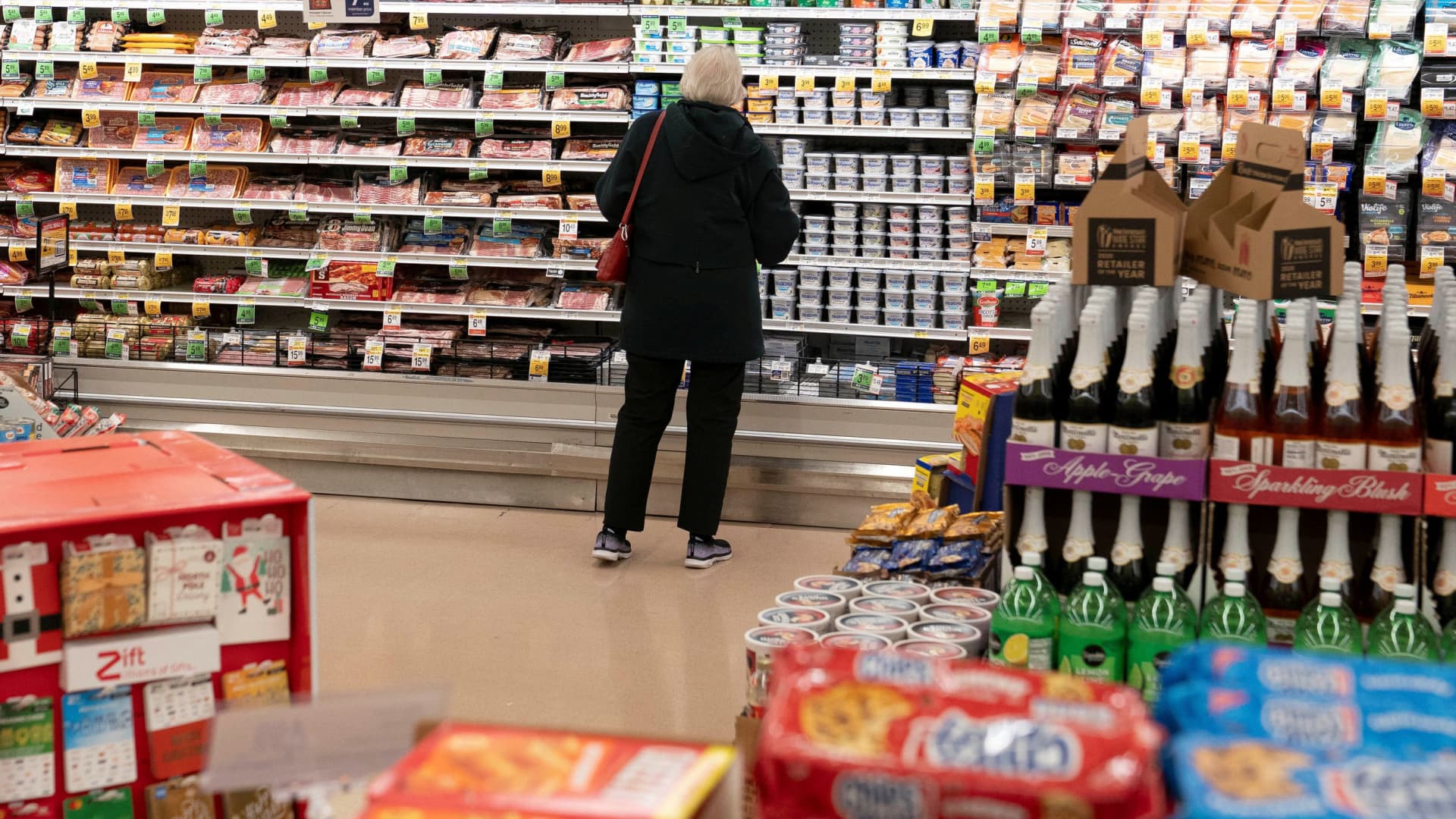
- Low Industry Valuations: Excluding giants like Walmart and Costco, Kroger Company (KR) trades at 12.7x forward earnings estimates, significantly below the S&P 500, indicating a cautious market sentiment reflected in the grocery sector's average valuation of just 11.3x.
- Stagnant Revenue Growth: Over the past five years, revenues at major grocery chains have barely budged, with inflation-adjusted figures showing declines; Kroger's net income margin is projected at only 2.1% for FY 2026, while Albertson's (ACI) is even narrower at 1.4%.
- Emerging Market Opportunities: Sprouts Farmers Market (SFM) is forecasted to achieve approximately 10% revenue growth in FY 2026 with a net income margin of 5.7%, highlighting its competitive edge in the natural and organic food sector against traditional grocers.
- Attractive Options Strategy: Given SFM's recent weak stock performance, investors can sell cash-secured puts to earn about 5% returns; if the stock remains above $65 by expiration, profits are realized, while a drop allows acquisition at a discount, showcasing the appeal of value investing.
Parsifal Capital Reduces Stake in Albertsons Companies
- Share Reduction Details: On February 17, 2026, Parsifal Capital Management disclosed a sale of 4,239,655 shares of Albertsons Companies, with an estimated transaction value of $75.60 million, reducing its stake from 10.9% to 3.48% of assets under management.
- Portfolio Shift: This significant reduction in Albertsons' holdings indicates a strategic pivot towards higher growth investments, freeing up capital for more dynamic opportunities rather than maintaining exposure to a low-margin grocery operator.
- Company Performance Overview: Despite Albertsons reporting a 1.9% year-over-year increase in third-quarter net sales to $19.1 billion and a notable 21% surge in digital sales, its stock has declined by 7.7% over the past year, raising concerns about its profitability in the competitive grocery sector.
- Future Outlook: While facing pressures from pharmacy mix and digital fulfillment costs, Albertsons maintains cash flow durability and scale across over 2,200 stores, suggesting that long-term investors may still find value in its growth potential despite current challenges.
Parsifal Capital Management Reduces Stake in Albertsons Companies
- Share Reduction Details: Parsifal Capital Management sold 4,239,655 shares of Albertsons Companies in Q4 2025, with an estimated transaction value of $75.60 million, resulting in a $75.08 million decrease in position value, highlighting the impact of market fluctuations on the portfolio.
- Holding Proportion Shift: Following the sale, Parsifal's stake in Albertsons dropped to 2,469,593 shares, representing 3.48% of AUM, which means Albertsons is no longer among its top five holdings, indicating a reduced risk appetite for defensive grocery operators.
- Operational Performance: Despite a 7.7% decline in share price over the past year, Albertsons reported a 1.9% increase in net sales to $19.1 billion in Q3, with digital sales surging by 21%, demonstrating resilience in a competitive grocery market.
- Investment Strategy Shift: This reduction allows Parsifal to free up capital for higher-growth investments, signaling a strategic pivot from low-margin food retail towards opportunities in consumer products and healthcare sectors.
Albertsons Tests Personalized Ads in ChatGPT Ahead of Valentine's Day
- Advertising Innovation Test: Albertsons Companies participates in the OpenAI Ad Pilot Program, aiming to provide more relevant and personalized advertising experiences through ChatGPT, which is expected to enhance consumer shopping convenience and brand value.
- Valentine's Day Marketing Strategy: Ahead of Valentine's Day, Albertsons ads will appear in ChatGPT, allowing consumers to see local store ads when searching for related terms, thereby increasing the effectiveness and targeting of holiday shopping.
- Customer Engagement Boost: By testing ads in ChatGPT, Albertsons aims to enhance engagement with new customers while building meaningful connections with existing ones, driving sales growth and customer loyalty.
- AI Technology Integration: Albertsons has embedded AI technology across various enterprise levels, launching the Albertsons AI shopping assistant and AskAI, with early data showing significant increases in customer engagement and basket growth.
Uber Eats Launches AI Shopping Assistant to Compete with Instacart
- AI Shopping Assistant Launch: Uber Eats has introduced the Cart Assistant, an AI tool that can automatically add items from handwritten shopping lists or recipe screenshots to online shopping baskets, displaying prices and promotions, thereby enhancing user shopping experience and customer loyalty.
- Intensified Market Competition: The launch of Cart Assistant intensifies competition between Uber Eats and Instacart, with Instacart's gross transaction value nearing $40 billion annually, while Uber's retail business is projected to reach a $12 billion annual run rate by 2025, highlighting the significant potential in the retail market for both companies.
- Technological Investment Edge: Uber's substantial investment in AI allows it to keep pace with Instacart technologically; while Cart Assistant may not be a game changer, it strengthens Uber's competitive position across its diversified platform, particularly in transportation and food delivery.
- Ongoing AI Applications: Uber is leveraging AI not only in the shopping assistant but also in driver matching, route optimization, and dynamic pricing, and is expected to continue investing in AI to better meet customer needs and drive business growth.
Three Unconventional "Buy the Dip" Selections—and One Sector to Steer Clear Of
Market Trends: The market is experiencing a pullback, creating opportunities for contrarian investors as many individual stocks are down significantly, suggesting a potential for selective buying strategies.
Investment Strategies: Jeff Clark emphasizes the importance of identifying oversold stocks and sectors, particularly in software and grocery chains, while advising caution against popular trades like gold mining stocks.
Bitcoin Sentiment: Current bearish sentiment around Bitcoin contrasts sharply with previous bullish trends, with Clark suggesting that today's prices may be more attractive for investment compared to past highs.
Contrarian Opportunities: Clark highlights that emotional market conditions often present unique investment opportunities, particularly in sectors that are currently undervalued or overlooked.
Grocery Sector Faces Challenges and Opportunities
- Low Industry Valuations: Excluding giants like Walmart and Costco, Kroger Company (KR) trades at 12.7x forward earnings estimates, significantly below the S&P 500, indicating a cautious market sentiment reflected in the grocery sector's average valuation of just 11.3x.
- Stagnant Revenue Growth: Over the past five years, revenues at major grocery chains have barely budged, with inflation-adjusted figures showing declines; Kroger's net income margin is projected at only 2.1% for FY 2026, while Albertson's (ACI) is even narrower at 1.4%.
- Emerging Market Opportunities: Sprouts Farmers Market (SFM) is forecasted to achieve approximately 10% revenue growth in FY 2026 with a net income margin of 5.7%, highlighting its competitive edge in the natural and organic food sector against traditional grocers.
- Attractive Options Strategy: Given SFM's recent weak stock performance, investors can sell cash-secured puts to earn about 5% returns; if the stock remains above $65 by expiration, profits are realized, while a drop allows acquisition at a discount, showcasing the appeal of value investing.