

Target to Ban Synthetic Colors in Cereal by May
Written by Emily J. Thompson, Senior Investment Analyst
Updated: 3 days ago
0mins
Source: Newsfilter
- Synthetic Color Ban: Target has announced that by the end of May, all cereals sold must be free from certified synthetic colors, aiming to respond to consumer demand for healthier food options, enhance brand image, and attract health-conscious shoppers.
- Industry Trend: This policy aligns with actions taken by other food manufacturers like PepsiCo, Campbell's, and Conagra Brands, indicating a broader retail industry shift towards eliminating artificial dyes in response to the 'Make America Healthy Again' initiative, which could impact the entire food supply chain.
- Competitor Actions: Walmart also announced last October that it would remove synthetic dyes from its U.S. private-label foods, and Target's decision may prompt more retailers to follow suit, thereby creating a wider trend towards healthier food options in the industry.
- Market Impact: As consumer scrutiny of food ingredients increases, Target's ban not only enhances its market competitiveness but may also encourage other retailers to reassess their product ingredients, further driving the industry's health transformation.
Trade with 70% Backtested Accuracy
Stop guessing "Should I Buy PEP?" and start using high-conviction signals backed by rigorous historical data.
Sign up today to access powerful investing tools and make smarter, data-driven decisions.
Analyst Views on PEP
Wall Street analysts forecast PEP stock price to fall
12 Analyst Rating
6 Buy
6 Hold
0 Sell
Moderate Buy
Current: 169.740

Low
144.00
Averages
161.90
High
172.00
Current: 169.740
Low
144.00
Averages
161.90
High
172.00
About PEP
PepsiCo, Inc. is a global beverage and convenient food company. The Company’s segments include PepsiCo Foods North America (PFNA), PepsiCo Beverages North America (PBNA), International Beverages Franchise (IB Franchise), Europe, Middle East and Africa (EMEA), Latin America Foods (LatAm Foods), and Asia Pacific Foods. PFNA segment includes all of its convenient food businesses in the United States and Canada. PBNA segment includes all of its beverage businesses in the United States and Canada. IB Franchise segment includes its international franchise beverage businesses, as well as its SodaStream business. EMEA segment includes its convenient food businesses and beverage businesses with Company-owned bottlers in Europe, the Middle East and Africa. LatAm Foods segment includes all of its convenient food businesses in Latin America. Asia Pacific Foods segment consists of its convenient food businesses in Asia Pacific, including China, Australia and New Zealand, as well as India.
About the author

Emily J. Thompson
Emily J. Thompson, a Chartered Financial Analyst (CFA) with 12 years in investment research, graduated with honors from the Wharton School. Specializing in industrial and technology stocks, she provides in-depth analysis for Intellectia’s earnings and market brief reports.

PepsiCo's Poppi Brand Continues Strong Growth Post-Acquisition

- Brand Growth Momentum: Since PepsiCo's $1.95 billion acquisition of Poppi on March 17, 2025, the brand has shown strong growth momentum, with explosive sales expected from 2020 to 2024, solidifying its position in the functional beverage market.
- Market Expansion Plans: Poppi is set to launch in the UK at Tesco and Pret A Manger on March 5, 2026, marking its second international market after Canada, with rapid market share growth anticipated through PepsiCo's distribution network.
- Channel Diversification: Poppi's sales channels have expanded to thousands of retailers, including Whole Foods, Target, and Walmart, demonstrating strong market penetration in the U.S., Canada, and Mexico, which enhances brand visibility and consumer acceptance.
- Strategic Significance: This acquisition not only strengthens PepsiCo's beverage portfolio but also supports its “positive choices” growth strategy by introducing a low-sugar, gut-health-focused functional beverage, thereby enhancing the brand's competitive edge in the market.
See More

Dividend Stocks Surge Amid Market Volatility, Outperforming S&P 500


- Dividend Stocks Performance: In 2026, dividend aristocrats are outperforming the broader market, with the ProShares S&P 500 Dividend Aristocrats ETF up 10% year-to-date compared to less than 1% for the S&P 500, reflecting investors' preference for stable income amid market volatility.
- Coca-Cola Dividend Increase: Coca-Cola announced a 4% increase in its quarterly dividend to 53 cents per share in February, marking its 64th consecutive year of dividend growth, and returned $8.8 billion to shareholders last year, demonstrating strong cash flow and market stability.
- NextEra Energy's Growth Plans: NextEra Energy raised its quarterly dividend by 10% to about 62 cents per share and plans for 10% annual dividend growth through 2026, with ambitions to add 30 gigawatts of new generation capacity by 2035, showcasing its commitment to renewable energy.
- Abbott Laboratories' Sustained Growth: Abbott announced a 6.8% dividend increase to 63 cents per share in December, achieving 54 consecutive years of growth, and despite missing fourth-quarter revenue expectations, its dividend growth of over 70% reflects strong profitability and market confidence.
See More
Analysis of Beyond Meat's Stock Price Collapse

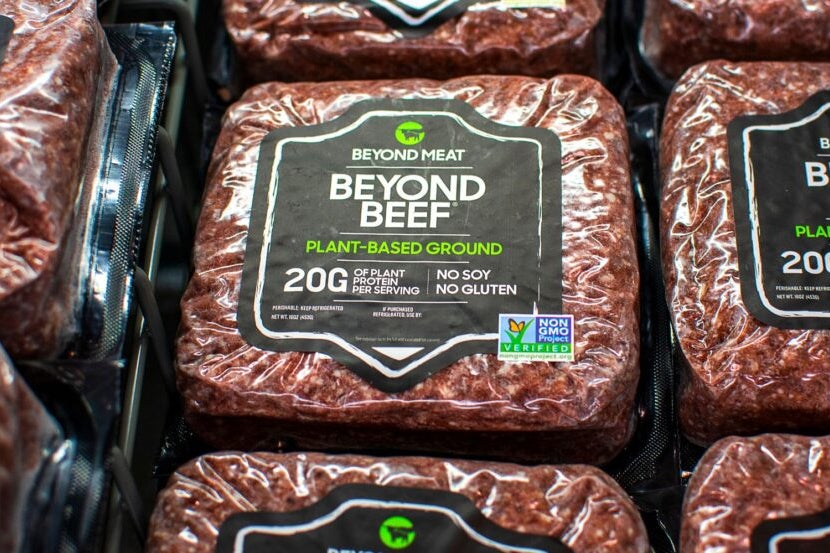
- Revenue Growth Slowdown: Beyond Meat experienced a staggering 239% revenue growth in 2019, but this plummeted to just 37% in 2020 due to the pandemic, as consumers shifted back to cheaper animal-based meats, severely impacting market performance.
- Significant Margin Decline: The company's gross margin has drastically fallen from 33.5% in 2019 to 12.8% in 2024 due to inventory liquidation and increased competition, which not only affects profitability but also exacerbates financial pressures.
- Increased Share Dilution: Since its IPO, Beyond Meat has increased its outstanding shares by 678%, a trend that is likely to continue, further diluting shareholder value and complicating recovery efforts.
- Uncertain Future Outlook: Although Beyond Meat aims to stabilize its business through portfolio streamlining and price increases, analysts predict a 1% revenue decline in 2026 and only a 1% increase in 2027, highlighting the ongoing challenges the company faces.
See More
PepsiCo Options Trading Analysis
- Put Option Appeal: The current bid for the $165.00 put option is $9.80, and if an investor sells this option, they commit to buying the stock at $165.00, effectively lowering their cost basis to $155.20, which is about a 2% discount from the current price of $168.95, making it attractive for potential PEP buyers.
- Yield Potential Analysis: Should the put option expire worthless, the investor could realize a 5.94% return, or an annualized yield of 8.24%, referred to as YieldBoost, highlighting the strategy's potential appeal.
- Call Option Returns: The $170.00 call option has a current bid of $11.10, and if an investor buys PEP shares at $168.95 and sells this call option, they could achieve a total return of 7.19% if the stock is called away at expiration.
- Risk-Reward Trade-off: The $170.00 call option has a 47% chance of expiring worthless, in which case the investor retains both the stock and the premium collected, enhancing their return by an additional 6.57%, with an annualized yield of 9.12%.
See More

PepsiCo Recognized as a S.A.F.E. Dividend Stock
- Strong Dividend Performance: PepsiCo (PEP) boasts an annualized dividend of $5.69 per share, paid quarterly, demonstrating robust return capabilities and stable cash flow, which enhances investor confidence.
- Consistent Dividend Growth: The company has consistently increased its dividends over the past two decades, reflecting its reliability and growth potential in dividend payments, attracting long-term investors' interest.
- Solid Market Position: As a member of the iShares S&P 1500 Index ETF, PepsiCo represents 1.84% of the SPDR S&P Dividend ETF, highlighting its significance and stability in the market.
- High Dividend Safety: PepsiCo's inclusion in the
See More

Analysis of High-Quality Dividend Stocks
- Dividend Kings Concept: Dividend Kings are stocks that have raised their per-share dividends for at least 50 consecutive years, indicating these companies can maintain profitability through economic fluctuations, thus providing a reliable income source for investors.
- Procter & Gamble Performance: Procter & Gamble (PG) has increased its dividend for 69 consecutive years, with a forward-looking dividend yield of 2.6%, ensuring market share and resisting competitive pressures through its well-known consumer brands.
- Coca-Cola vs. PepsiCo: Coca-Cola (KO) is a top dividend stock in the consumer staples sector, while PepsiCo (PEP) currently offers a higher yield of 3.5%; despite underperformance in its food and snack business, new product launches are expected to help extend its 54-year dividend growth track record.
- Kimberly-Clark and Emerson Electric: Kimberly-Clark (KMB) has a strong 54-year dividend growth history with a forward yield of 4.6%; Emerson Electric (EMR) has raised its dividend for 68 years, and although its yield is only 1.5%, its stable demand in industrial automation makes it a solid choice for long-term investors.
See More
PepsiCo's Poppi Brand Continues Strong Growth Post-Acquisition
- Brand Growth Momentum: Since PepsiCo's $1.95 billion acquisition of Poppi on March 17, 2025, the brand has shown strong growth momentum, with explosive sales expected from 2020 to 2024, solidifying its position in the functional beverage market.
- Market Expansion Plans: Poppi is set to launch in the UK at Tesco and Pret A Manger on March 5, 2026, marking its second international market after Canada, with rapid market share growth anticipated through PepsiCo's distribution network.
- Channel Diversification: Poppi's sales channels have expanded to thousands of retailers, including Whole Foods, Target, and Walmart, demonstrating strong market penetration in the U.S., Canada, and Mexico, which enhances brand visibility and consumer acceptance.
- Strategic Significance: This acquisition not only strengthens PepsiCo's beverage portfolio but also supports its “positive choices” growth strategy by introducing a low-sugar, gut-health-focused functional beverage, thereby enhancing the brand's competitive edge in the market.
See More
Dividend Stocks Surge Amid Market Volatility, Outperforming S&P 500
- Dividend Stocks Performance: In 2026, dividend aristocrats are outperforming the broader market, with the ProShares S&P 500 Dividend Aristocrats ETF up 10% year-to-date compared to less than 1% for the S&P 500, reflecting investors' preference for stable income amid market volatility.
- Coca-Cola Dividend Increase: Coca-Cola announced a 4% increase in its quarterly dividend to 53 cents per share in February, marking its 64th consecutive year of dividend growth, and returned $8.8 billion to shareholders last year, demonstrating strong cash flow and market stability.
- NextEra Energy's Growth Plans: NextEra Energy raised its quarterly dividend by 10% to about 62 cents per share and plans for 10% annual dividend growth through 2026, with ambitions to add 30 gigawatts of new generation capacity by 2035, showcasing its commitment to renewable energy.
- Abbott Laboratories' Sustained Growth: Abbott announced a 6.8% dividend increase to 63 cents per share in December, achieving 54 consecutive years of growth, and despite missing fourth-quarter revenue expectations, its dividend growth of over 70% reflects strong profitability and market confidence.
See More
Analysis of Beyond Meat's Stock Price Collapse
- Revenue Growth Slowdown: Beyond Meat experienced a staggering 239% revenue growth in 2019, but this plummeted to just 37% in 2020 due to the pandemic, as consumers shifted back to cheaper animal-based meats, severely impacting market performance.
- Significant Margin Decline: The company's gross margin has drastically fallen from 33.5% in 2019 to 12.8% in 2024 due to inventory liquidation and increased competition, which not only affects profitability but also exacerbates financial pressures.
- Increased Share Dilution: Since its IPO, Beyond Meat has increased its outstanding shares by 678%, a trend that is likely to continue, further diluting shareholder value and complicating recovery efforts.
- Uncertain Future Outlook: Although Beyond Meat aims to stabilize its business through portfolio streamlining and price increases, analysts predict a 1% revenue decline in 2026 and only a 1% increase in 2027, highlighting the ongoing challenges the company faces.
See More
PepsiCo Options Trading Analysis
- Put Option Appeal: The current bid for the $165.00 put option is $9.80, and if an investor sells this option, they commit to buying the stock at $165.00, effectively lowering their cost basis to $155.20, which is about a 2% discount from the current price of $168.95, making it attractive for potential PEP buyers.
- Yield Potential Analysis: Should the put option expire worthless, the investor could realize a 5.94% return, or an annualized yield of 8.24%, referred to as YieldBoost, highlighting the strategy's potential appeal.
- Call Option Returns: The $170.00 call option has a current bid of $11.10, and if an investor buys PEP shares at $168.95 and sells this call option, they could achieve a total return of 7.19% if the stock is called away at expiration.
- Risk-Reward Trade-off: The $170.00 call option has a 47% chance of expiring worthless, in which case the investor retains both the stock and the premium collected, enhancing their return by an additional 6.57%, with an annualized yield of 9.12%.
See More
PepsiCo Recognized as a S.A.F.E. Dividend Stock
- Strong Dividend Performance: PepsiCo (PEP) boasts an annualized dividend of $5.69 per share, paid quarterly, demonstrating robust return capabilities and stable cash flow, which enhances investor confidence.
- Consistent Dividend Growth: The company has consistently increased its dividends over the past two decades, reflecting its reliability and growth potential in dividend payments, attracting long-term investors' interest.
- Solid Market Position: As a member of the iShares S&P 1500 Index ETF, PepsiCo represents 1.84% of the SPDR S&P Dividend ETF, highlighting its significance and stability in the market.
- High Dividend Safety: PepsiCo's inclusion in the
See More
Analysis of High-Quality Dividend Stocks
- Dividend Kings Concept: Dividend Kings are stocks that have raised their per-share dividends for at least 50 consecutive years, indicating these companies can maintain profitability through economic fluctuations, thus providing a reliable income source for investors.
- Procter & Gamble Performance: Procter & Gamble (PG) has increased its dividend for 69 consecutive years, with a forward-looking dividend yield of 2.6%, ensuring market share and resisting competitive pressures through its well-known consumer brands.
- Coca-Cola vs. PepsiCo: Coca-Cola (KO) is a top dividend stock in the consumer staples sector, while PepsiCo (PEP) currently offers a higher yield of 3.5%; despite underperformance in its food and snack business, new product launches are expected to help extend its 54-year dividend growth track record.
- Kimberly-Clark and Emerson Electric: Kimberly-Clark (KMB) has a strong 54-year dividend growth history with a forward yield of 4.6%; Emerson Electric (EMR) has raised its dividend for 68 years, and although its yield is only 1.5%, its stable demand in industrial automation makes it a solid choice for long-term investors.
See More





