

Taiwan Semiconductor: A Leader in Global Semiconductor Innovation



- Global Investment Opportunities: While U.S. investors often focus on domestic companies, the rapid advancement of AI globally highlights the importance of overseas investment opportunities, particularly with Taiwan Semiconductor's pivotal role in the global semiconductor market.
- Founder's Background: Founder Morris Chang joined Texas Instruments in 1958 and, after a 25-year career, played a crucial role in semiconductor development, ultimately founding Taiwan Semiconductor in 1987, marking the rise of Taiwan's semiconductor industry.
- Business Model Innovation: Taiwan Semiconductor's pure-play foundry model allows multiple clients to design chips, enhancing production efficiency and gaining a competitive edge, enabling design companies to focus on innovation rather than manufacturing.
- Strong Financial Performance: With a current market cap of $1.9 trillion and a gross margin of 59.02%, Taiwan Semiconductor's profitability continues to grow, driven by long-term trends like digital transformation and AI, making it an attractive investment for investors.
Trade with 70% Backtested Accuracy
Analyst Views on TSM

About TSM
About the author


Nvidia Invests $4 Billion to Advance AI Infrastructure


- Major Investment: Nvidia has announced a $4 billion investment in optical networking companies to support R&D and future capacity expansion for AI infrastructure, demonstrating its strong commitment to the AI sector.
- Partnership Agreements: The agreements with Lumentum and Coherent include multibillion-dollar purchase commitments, ensuring supply for future laser and optical networking components, which reduces expansion risks and enhances data transfer efficiency in data centers.
- 6G Strategic Initiative: Nvidia is partnering with telecom and technology firms to advance AI-native 6G network designs, planning to build future wireless systems around software-based architectures that enhance network intelligence and update capabilities.
- Market Reaction: Despite Nvidia's strong earnings failing to prevent declines in semiconductor and tech stocks, shares of Lumentum and Coherent rose significantly, with Lumentum climbing 11% and Coherent reaching a record high following the announcement.
ASML Ventures into Advanced Packaging for AI Chips


- Strategic Innovation: ASML plans to integrate AI into its current and future operations to enhance the performance and speed of its tools, which are critical for producing cutting-edge AI processors, despite a 5.06% drop in stock following this announcement.
- Market Expansion Potential: The company is exploring advanced packaging solutions to connect multiple specialized chips, which is seen as a cornerstone for the future of AI chips and their supporting complex memory systems, potentially significantly increasing its market share.
- Leadership Changes: The promotion of Chief Technology Officer Marco Pieters signifies the company's commitment to technological innovation, with a restructured tech business focusing more on engineering capabilities to adapt to industry trends over the next decade.
- Investor Confidence: Although ASML's stock fell in premarket trading, its market valuation stands at approximately $560 billion, with a 103% increase in share price over the past 12 months, reflecting strong investor confidence in its EUV technology and leadership.

Alibaba Consolidates AI Efforts Under 'Qwen' Brand

- Brand Consolidation: Alibaba has unified its large model brand under 'Qwen', with the app serving as its flagship product, aiming to strengthen its competitive position in the rapidly growing AI market, despite a 2.57% drop in stock price.
- User Engagement: During the Lunar New Year, users placed nearly 200 million orders through the 'Qwen' app, demonstrating strong consumer appeal and further driving Alibaba's market share in the AI sector.
- Low-Cost AI Tools: Alibaba Cloud launched a new AI coding platform providing low-cost access to various leading Chinese AI models, with the basic version priced at 7.9 yuan for the first month, aimed at attracting more developers and boosting cloud service revenue.
- Chip Innovation: Alibaba's T-Head introduced the Zhenwu 810E chip, comparable in performance to Nvidia's H20, deployed in multiple 10,000-card clusters and utilized by over 400 customers, including State Grid, showcasing its robust capabilities in AI training and inference.
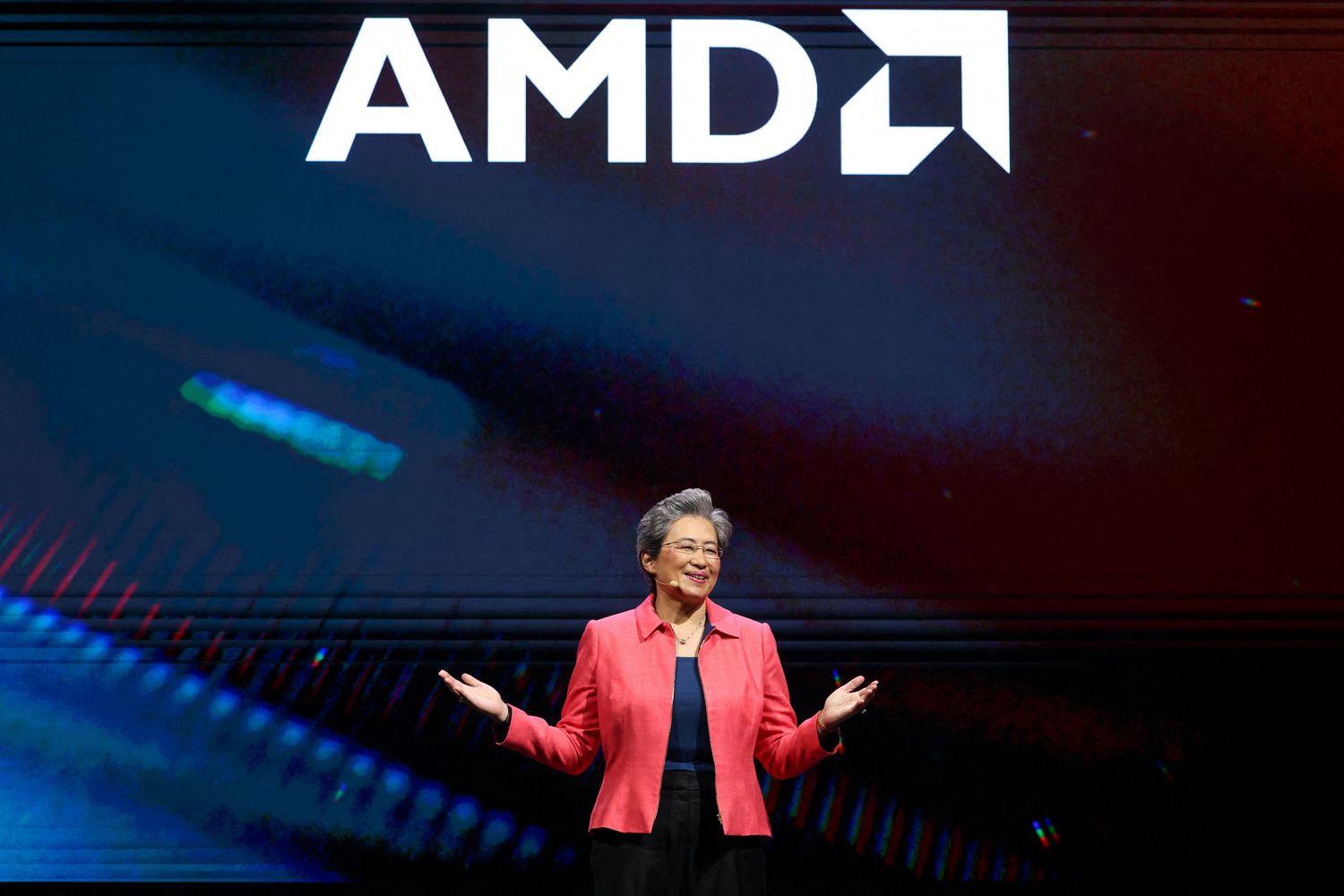
AMD Unveils New AI-Focused Desktop Processors

- Processor Launch: AMD unveiled the Ryzen AI 400 Series and Ryzen AI PRO 400 Series desktop processors at Mobile World Congress 2026, aiming to provide broader options for AI-capable PCs and enabling on-device AI software execution, particularly for demanding engineering and design workloads.
- Transformation to Intelligent Assistants: Senior VP Jack Huynh stated that desktop PCs are evolving from mere tools to intelligent assistants, with the Ryzen AI 400 Series being touted as the world's first designed to support new Copilot+ experiences on desktops, highlighting AMD's commitment to enhancing on-device AI capabilities.
- Commercial Expansion and OEM Partnerships: The Ryzen AI PRO 400 Series will extend into mobile workstations, further promoting Copilot+ PC features beyond notebooks, with shipments expected to begin in Q2 2026 through OEM partners like HP and Lenovo, indicating AMD's proactive approach in the commercial market.
- Market Pressure and Stock Fluctuations: AMD's stock fell 2.43% to $195.35 in premarket trading on Monday, driven by investor reactions to Nvidia's earnings and ongoing concerns about AI profitability, reflecting market uncertainties regarding AI valuations and heavy capital expenditures.

Top Three AI Stocks to Buy Now

- Market Growth Potential: The four major AI hyperscalers are projected to spend $650 billion in capital expenditures in 2023, and despite growing concerns about ROI, investors should remain focused on the potential of this technological revolution.
- Nvidia's Market Leadership: Nvidia anticipates that global data center capital expenditures could reach $3 trillion by 2030, and with its GPUs being the preferred choice for AI computing, the company is well-positioned to benefit and drive stock price growth.
- Broadcom's Custom Chip Strategy: By partnering with AI hyperscalers to design custom AI chips, Broadcom offers a lower-cost alternative to GPUs, making it competitive for specific computing tasks despite reduced flexibility, thereby enhancing its market position.
- Taiwan Semiconductor's Neutral Role: As the world's largest chip foundry, Taiwan Semiconductor supplies chips to nearly all AI hardware manufacturers, and with increasing AI spending, the company is set to benefit significantly, showcasing strong growth potential.

Global ETF Surges as Investors Abandon U.S. Stocks


Investor Trends: Since the beginning of the year, investors have been moving away from U.S. stocks and ETFs, favoring safer assets like gold and silver, as well as international equities, due to concerns over U.S. economic policies and market volatility.
ETF Performance: The VanEck FTSE All-World ex-U.S. ETF (VEU) has outperformed U.S. equities, gaining over 9% year-to-date compared to the S&P 500's slight gain, with significant interest from institutional investors.
Sector Exposure: The VEU ETF shows a strong allocation towards financials and technology, with notable holdings in companies from Japan, the UK, and Canada, reflecting a diversified global investment strategy.
Market Outlook: Analysts suggest that the ongoing "Sell America" trend and the ETF's strong performance indicate a continued preference for international investments, as U.S. equities face challenges from rising debt and unpredictable tariff policies.
Nvidia Invests $4 Billion to Advance AI Infrastructure
- Major Investment: Nvidia has announced a $4 billion investment in optical networking companies to support R&D and future capacity expansion for AI infrastructure, demonstrating its strong commitment to the AI sector.
- Partnership Agreements: The agreements with Lumentum and Coherent include multibillion-dollar purchase commitments, ensuring supply for future laser and optical networking components, which reduces expansion risks and enhances data transfer efficiency in data centers.
- 6G Strategic Initiative: Nvidia is partnering with telecom and technology firms to advance AI-native 6G network designs, planning to build future wireless systems around software-based architectures that enhance network intelligence and update capabilities.
- Market Reaction: Despite Nvidia's strong earnings failing to prevent declines in semiconductor and tech stocks, shares of Lumentum and Coherent rose significantly, with Lumentum climbing 11% and Coherent reaching a record high following the announcement.
ASML Ventures into Advanced Packaging for AI Chips
- Strategic Innovation: ASML plans to integrate AI into its current and future operations to enhance the performance and speed of its tools, which are critical for producing cutting-edge AI processors, despite a 5.06% drop in stock following this announcement.
- Market Expansion Potential: The company is exploring advanced packaging solutions to connect multiple specialized chips, which is seen as a cornerstone for the future of AI chips and their supporting complex memory systems, potentially significantly increasing its market share.
- Leadership Changes: The promotion of Chief Technology Officer Marco Pieters signifies the company's commitment to technological innovation, with a restructured tech business focusing more on engineering capabilities to adapt to industry trends over the next decade.
- Investor Confidence: Although ASML's stock fell in premarket trading, its market valuation stands at approximately $560 billion, with a 103% increase in share price over the past 12 months, reflecting strong investor confidence in its EUV technology and leadership.
Alibaba Consolidates AI Efforts Under 'Qwen' Brand
- Brand Consolidation: Alibaba has unified its large model brand under 'Qwen', with the app serving as its flagship product, aiming to strengthen its competitive position in the rapidly growing AI market, despite a 2.57% drop in stock price.
- User Engagement: During the Lunar New Year, users placed nearly 200 million orders through the 'Qwen' app, demonstrating strong consumer appeal and further driving Alibaba's market share in the AI sector.
- Low-Cost AI Tools: Alibaba Cloud launched a new AI coding platform providing low-cost access to various leading Chinese AI models, with the basic version priced at 7.9 yuan for the first month, aimed at attracting more developers and boosting cloud service revenue.
- Chip Innovation: Alibaba's T-Head introduced the Zhenwu 810E chip, comparable in performance to Nvidia's H20, deployed in multiple 10,000-card clusters and utilized by over 400 customers, including State Grid, showcasing its robust capabilities in AI training and inference.
AMD Unveils New AI-Focused Desktop Processors
- Processor Launch: AMD unveiled the Ryzen AI 400 Series and Ryzen AI PRO 400 Series desktop processors at Mobile World Congress 2026, aiming to provide broader options for AI-capable PCs and enabling on-device AI software execution, particularly for demanding engineering and design workloads.
- Transformation to Intelligent Assistants: Senior VP Jack Huynh stated that desktop PCs are evolving from mere tools to intelligent assistants, with the Ryzen AI 400 Series being touted as the world's first designed to support new Copilot+ experiences on desktops, highlighting AMD's commitment to enhancing on-device AI capabilities.
- Commercial Expansion and OEM Partnerships: The Ryzen AI PRO 400 Series will extend into mobile workstations, further promoting Copilot+ PC features beyond notebooks, with shipments expected to begin in Q2 2026 through OEM partners like HP and Lenovo, indicating AMD's proactive approach in the commercial market.
- Market Pressure and Stock Fluctuations: AMD's stock fell 2.43% to $195.35 in premarket trading on Monday, driven by investor reactions to Nvidia's earnings and ongoing concerns about AI profitability, reflecting market uncertainties regarding AI valuations and heavy capital expenditures.
Top Three AI Stocks to Buy Now
- Market Growth Potential: The four major AI hyperscalers are projected to spend $650 billion in capital expenditures in 2023, and despite growing concerns about ROI, investors should remain focused on the potential of this technological revolution.
- Nvidia's Market Leadership: Nvidia anticipates that global data center capital expenditures could reach $3 trillion by 2030, and with its GPUs being the preferred choice for AI computing, the company is well-positioned to benefit and drive stock price growth.
- Broadcom's Custom Chip Strategy: By partnering with AI hyperscalers to design custom AI chips, Broadcom offers a lower-cost alternative to GPUs, making it competitive for specific computing tasks despite reduced flexibility, thereby enhancing its market position.
- Taiwan Semiconductor's Neutral Role: As the world's largest chip foundry, Taiwan Semiconductor supplies chips to nearly all AI hardware manufacturers, and with increasing AI spending, the company is set to benefit significantly, showcasing strong growth potential.
Global ETF Surges as Investors Abandon U.S. Stocks
Investor Trends: Since the beginning of the year, investors have been moving away from U.S. stocks and ETFs, favoring safer assets like gold and silver, as well as international equities, due to concerns over U.S. economic policies and market volatility.
ETF Performance: The VanEck FTSE All-World ex-U.S. ETF (VEU) has outperformed U.S. equities, gaining over 9% year-to-date compared to the S&P 500's slight gain, with significant interest from institutional investors.
Sector Exposure: The VEU ETF shows a strong allocation towards financials and technology, with notable holdings in companies from Japan, the UK, and Canada, reflecting a diversified global investment strategy.
Market Outlook: Analysts suggest that the ongoing "Sell America" trend and the ETF's strong performance indicate a continued preference for international investments, as U.S. equities face challenges from rising debt and unpredictable tariff policies.




