

SoftBank Drives Drop in Japanese Tech Stocks Amid Concerns Over AI Investment Impacting Asia
Japanese Tech Stocks Decline: Japanese tech stocks, including Softbank Group Corp, experienced significant losses due to concerns over AI infrastructure spending, mirroring declines in the U.S. tech-heavy Nasdaq Composite.
Impact on Softbank and Other Companies: Softbank's stock fell as much as 7.25%, while other tech firms like Advantest and Lasertec also saw declines, reflecting market volatility linked to fears surrounding AI-related investments.
Export Growth Amidst Concerns: Despite the stock declines, Japan's trade data showed a rise in exports of electrical machinery and semiconductor-related products, indicating a potential benefit from U.S. tech spending.
Regional Comparisons: While Japanese tech stocks faced sharp declines, South Korean companies like Samsung Electronics and SK Hynix showed less pronounced losses, highlighting varying impacts across the region.
Trade with 70% Backtested Accuracy
Analyst Views on ORCL

About ORCL
About the author

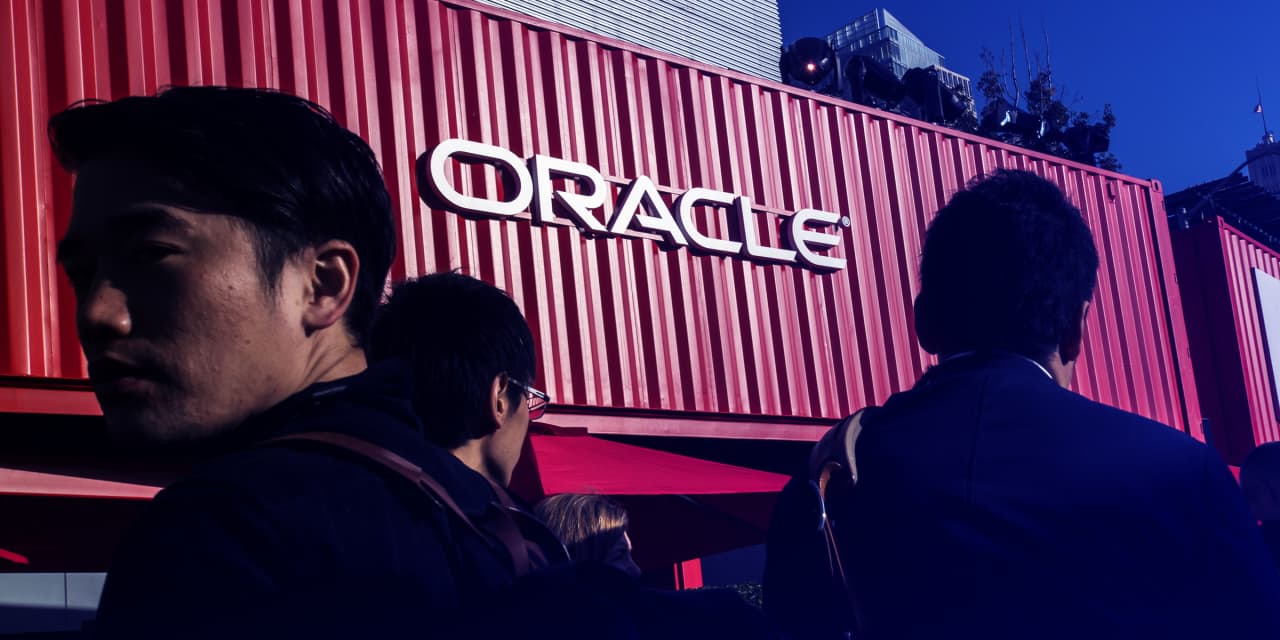
Oracle Sets Date for Q3 FY2026 Earnings Release

- Earnings Release Date: Oracle Corporation has announced that its third quarter fiscal year 2026 earnings will be released on March 10, 2026, after market close, reflecting the company's commitment to transparency and timely information disclosure.
- Conference Call Details: The company will host a conference call and live webcast at 4:00 p.m. Central Time on the same day to discuss the financial results in depth, enhancing communication with shareholders.
- Investor Relations Platform: The live webcast will be available on Oracle's Investor Relations website, further improving the company's accessibility and information sharing capabilities among investors.
- Cloud Computing Leadership: Oracle offers integrated suites of applications and secure, autonomous infrastructure, reinforcing its leadership position in the cloud computing sector and attracting more investor interest in its financial performance.

Trump Pushes Tech Firms for Self-Powered AI Data Centers


- Self-Power Commitment: Trump is set to sign an agreement with major tech firms like Amazon, Google, and Meta, mandating them to supply their own power for AI data centers, addressing rising public anger over electricity prices, although the specifics of the commitment remain unclear.
- Rising Electricity Pressure: Average residential electricity prices in the U.S. increased by 6% in 2025, contrasting Trump's promise to halve prices during his term, highlighting the government's challenges in controlling energy costs, which could impact his support in the midterm elections.
- Implementation Challenges: The decentralized nature of electric grid regulations across states poses significant hurdles for the Trump administration in converting the pledge into actionable policy, with experts indicating that new federal legislation is necessary to address power supply shortages.
- Increased Political Pressure: Trump is leveraging his political influence to pressure tech companies into absorbing the costs associated with their data centers, despite the complexities arising from state-level regulation of power generation, which may complicate policy implementation.
Anthropic Designated Supply Chain Risk by Trump Administration


- Supply Chain Risk Declaration: The Trump administration's designation of Anthropic as a supply chain risk has prompted 10 startups working with the Department of Defense to cease using its Claude model and seek alternatives, potentially impacting about 80% of Anthropic's enterprise revenue.
- Defense Contract Implications: Major defense contractors like Lockheed Martin are expected to remove Anthropic's technology from their supply chains, which could lead to a decline in Anthropic's market share within the defense sector and adversely affect future revenue growth.
- Legal Response Possibility: Anthropic has indicated it may appeal the supply chain risk designation through legal channels, although no formal action has been taken yet; if the designation becomes official, it would restrict the use of Claude in defense contracts, potentially affecting its business with other clients.
- Market Reaction and Alternatives: Several defense tech firms are proactively transitioning their workforce away from Claude to other models, and while Anthropic's product is regarded as excellent, the reliance on it for defense contracts is now under scrutiny, posing challenges for its continued use in sensitive environments.

Oracle Corporation Faces Class Action Securities Fraud Lawsuit
- Lawsuit Background: Levi & Korsinsky LLP has notified investors that Oracle Corporation is facing a class action securities fraud lawsuit covering the period from June 12, 2025, to December 16, 2025, aimed at recovering losses for affected investors.
- Allegations Details: The complaint alleges that the defendants concealed that the company's AI infrastructure strategy would lead to significant increases in capital expenditures without corresponding near-term revenue growth, thereby increasing risks related to Oracle's debt, credit rating, cash flow, and project funding capabilities.
- Investor Rights: Affected investors have until April 6, 2026, to request appointment as lead plaintiff to participate in any potential recovery, with no costs or obligations required to join the lawsuit, ensuring protection of investor rights.
- Law Firm Credentials: Levi & Korsinsky has over 20 years of experience in securities litigation, securing hundreds of millions of dollars for aggrieved shareholders, and has been ranked among the top securities litigation firms in the U.S. for seven consecutive years, demonstrating its expertise in complex securities cases.

Latest Ratings and Price Targets on Wall Street

- nLIGHT Coverage Initiation: Baird initiates coverage of nLIGHT with an Outperform rating and a $95 price target, citing favorable market trends and robust funding that support growth, particularly enhanced by the company's vertical integration and technological strengths.
- Apple's New Product Launch: Oppenheimer reiterates Apple as Perform, highlighting the new MacBook Pro lines powered by M5 Pro and M5 Max chips, which signify a new era of local AI computing and reinforce Apple's significant lead in efficiency and scalability in personal computing devices.
- PulteGroup and Toll Brothers Ratings: Truist initiates PulteGroup and Toll Brothers with Buy ratings, setting a price target of $170, as they believe the market is significantly undervaluing both companies' profitability potential, especially in the context of a recovering luxury housing market.
- Tesla and General Motors Upgrades: Bank of America upgrades Tesla to Buy with a $460 price target, viewing it as the leader in consumer autonomy, while reinstating General Motors as Buy, expecting benefits from lower warranty costs and regulatory credits.

OpenAI's Controversial Partnership with the Pentagon
- DoD Partnership Agreement: OpenAI's $200 million contract with the Department of Defense allows its models to be used in non-classified contexts, while the new arrangement enables deployment across classified networks, highlighting the company's significance in government projects.
- Operational Decision Constraints: CEO Sam Altman stated in an all-hands meeting that while the DoD respects OpenAI's technical expertise, operational decisions ultimately rest with the Secretary of Defense, raising employee concerns about the company's direction.
- Competitor Dynamics: Following OpenAI's agreement with the DoD, rival Anthropic was labeled a 'Supply-Chain Risk to National Security' and banned from using its technology, illustrating the intense competition and policy implications within the industry.
- Safety and Collaboration: Altman acknowledged that the partnership with the DoD appeared 'opportunistic and sloppy,' yet emphasized the agency's commitment to safety and willingness to collaborate with OpenAI, indicating potential ethical and security challenges the company may face in the future.
Oracle Sets Date for Q3 FY2026 Earnings Release
- Earnings Release Date: Oracle Corporation has announced that its third quarter fiscal year 2026 earnings will be released on March 10, 2026, after market close, reflecting the company's commitment to transparency and timely information disclosure.
- Conference Call Details: The company will host a conference call and live webcast at 4:00 p.m. Central Time on the same day to discuss the financial results in depth, enhancing communication with shareholders.
- Investor Relations Platform: The live webcast will be available on Oracle's Investor Relations website, further improving the company's accessibility and information sharing capabilities among investors.
- Cloud Computing Leadership: Oracle offers integrated suites of applications and secure, autonomous infrastructure, reinforcing its leadership position in the cloud computing sector and attracting more investor interest in its financial performance.
Trump Pushes Tech Firms for Self-Powered AI Data Centers
- Self-Power Commitment: Trump is set to sign an agreement with major tech firms like Amazon, Google, and Meta, mandating them to supply their own power for AI data centers, addressing rising public anger over electricity prices, although the specifics of the commitment remain unclear.
- Rising Electricity Pressure: Average residential electricity prices in the U.S. increased by 6% in 2025, contrasting Trump's promise to halve prices during his term, highlighting the government's challenges in controlling energy costs, which could impact his support in the midterm elections.
- Implementation Challenges: The decentralized nature of electric grid regulations across states poses significant hurdles for the Trump administration in converting the pledge into actionable policy, with experts indicating that new federal legislation is necessary to address power supply shortages.
- Increased Political Pressure: Trump is leveraging his political influence to pressure tech companies into absorbing the costs associated with their data centers, despite the complexities arising from state-level regulation of power generation, which may complicate policy implementation.
Anthropic Designated Supply Chain Risk by Trump Administration
- Supply Chain Risk Declaration: The Trump administration's designation of Anthropic as a supply chain risk has prompted 10 startups working with the Department of Defense to cease using its Claude model and seek alternatives, potentially impacting about 80% of Anthropic's enterprise revenue.
- Defense Contract Implications: Major defense contractors like Lockheed Martin are expected to remove Anthropic's technology from their supply chains, which could lead to a decline in Anthropic's market share within the defense sector and adversely affect future revenue growth.
- Legal Response Possibility: Anthropic has indicated it may appeal the supply chain risk designation through legal channels, although no formal action has been taken yet; if the designation becomes official, it would restrict the use of Claude in defense contracts, potentially affecting its business with other clients.
- Market Reaction and Alternatives: Several defense tech firms are proactively transitioning their workforce away from Claude to other models, and while Anthropic's product is regarded as excellent, the reliance on it for defense contracts is now under scrutiny, posing challenges for its continued use in sensitive environments.
Oracle Corporation Faces Class Action Securities Fraud Lawsuit
- Lawsuit Background: Levi & Korsinsky LLP has notified investors that Oracle Corporation is facing a class action securities fraud lawsuit covering the period from June 12, 2025, to December 16, 2025, aimed at recovering losses for affected investors.
- Allegations Details: The complaint alleges that the defendants concealed that the company's AI infrastructure strategy would lead to significant increases in capital expenditures without corresponding near-term revenue growth, thereby increasing risks related to Oracle's debt, credit rating, cash flow, and project funding capabilities.
- Investor Rights: Affected investors have until April 6, 2026, to request appointment as lead plaintiff to participate in any potential recovery, with no costs or obligations required to join the lawsuit, ensuring protection of investor rights.
- Law Firm Credentials: Levi & Korsinsky has over 20 years of experience in securities litigation, securing hundreds of millions of dollars for aggrieved shareholders, and has been ranked among the top securities litigation firms in the U.S. for seven consecutive years, demonstrating its expertise in complex securities cases.
Latest Ratings and Price Targets on Wall Street
- nLIGHT Coverage Initiation: Baird initiates coverage of nLIGHT with an Outperform rating and a $95 price target, citing favorable market trends and robust funding that support growth, particularly enhanced by the company's vertical integration and technological strengths.
- Apple's New Product Launch: Oppenheimer reiterates Apple as Perform, highlighting the new MacBook Pro lines powered by M5 Pro and M5 Max chips, which signify a new era of local AI computing and reinforce Apple's significant lead in efficiency and scalability in personal computing devices.
- PulteGroup and Toll Brothers Ratings: Truist initiates PulteGroup and Toll Brothers with Buy ratings, setting a price target of $170, as they believe the market is significantly undervaluing both companies' profitability potential, especially in the context of a recovering luxury housing market.
- Tesla and General Motors Upgrades: Bank of America upgrades Tesla to Buy with a $460 price target, viewing it as the leader in consumer autonomy, while reinstating General Motors as Buy, expecting benefits from lower warranty costs and regulatory credits.
OpenAI's Controversial Partnership with the Pentagon
- DoD Partnership Agreement: OpenAI's $200 million contract with the Department of Defense allows its models to be used in non-classified contexts, while the new arrangement enables deployment across classified networks, highlighting the company's significance in government projects.
- Operational Decision Constraints: CEO Sam Altman stated in an all-hands meeting that while the DoD respects OpenAI's technical expertise, operational decisions ultimately rest with the Secretary of Defense, raising employee concerns about the company's direction.
- Competitor Dynamics: Following OpenAI's agreement with the DoD, rival Anthropic was labeled a 'Supply-Chain Risk to National Security' and banned from using its technology, illustrating the intense competition and policy implications within the industry.
- Safety and Collaboration: Altman acknowledged that the partnership with the DoD appeared 'opportunistic and sloppy,' yet emphasized the agency's commitment to safety and willingness to collaborate with OpenAI, indicating potential ethical and security challenges the company may face in the future.




