

Validea's Top Consumer Discretionary Stocks Based On Peter Lynch - 6/25/2024
Written by Emily J. Thompson, Senior Investment Analyst
Updated: Jun 25 2024
0mins


Should l Buy PHM?
Source: NASDAQ.COM
- Top Rated Consumer Discretionary Stocks: Validea's P/E/Growth Investor model highlights top-rated stocks like SKECHERS USA INC, PULTEGROUP, INC., TRIP.COM GROUP LTD (ADR), ODP CORP, and DARDEN RESTAURANTS, INC.
- SKECHERS USA INC (SKX): Large-cap growth stock in the Footwear industry with a 93% rating based on Peter Lynch's strategy, offering diverse footwear, apparel, and accessories.
- PULTEGROUP, INC. (PHM): Large-cap value stock in Construction Services with a 93% rating according to Peter Lynch's strategy, engaged in homebuilding operations and financial services.
- TRIP.COM GROUP LTD (ADR) (TCOM): Large-cap growth stock in Personal Services with a 91% rating based on Peter Lynch's strategy, operating a one-stop travel platform in China.
- ODP CORP (ODP): Small-cap growth stock in Office Supplies with a 91% rating according to Peter Lynch's strategy, providing business services, products, and digital workplace technology solutions.
- DARDEN RESTAURANTS, INC. (DRI): Large-cap growth stock in Restaurants with a 91% rating based on Peter Lynch's strategy, owning and operating various restaurant brands under its portfolio.
Trade with 70% Backtested Accuracy
Stop guessing "Should I Buy PHM?" and start using high-conviction signals backed by rigorous historical data.
Sign up today to access powerful investing tools and make smarter, data-driven decisions.
Analyst Views on PHM
Wall Street analysts forecast PHM stock price to rise
12 Analyst Rating
7 Buy
5 Hold
0 Sell
Moderate Buy
Current: 137.200

Low
111.00
Averages
138.73
High
159.00
Current: 137.200
Low
111.00
Averages
138.73
High
159.00
About PHM
PulteGroup, Inc. is a homebuilder in the United States. The Company's segments include Homebuilding and Financial Services. Its Homebuilding operations involve acquisition and development of land primarily for residential purposes within the United States and the construction of housing on such land. Its financial services business segment includes mortgage banking, title, and insurance agency operations, through Pulte Mortgage LLC (Pulte Mortgage) and other subsidiaries. Pulte Mortgage arranges financing through the origination of mortgage loans primarily for the benefit of its homebuyers. Its Homebuilding operations are aggregated into six segments: Northeast, Southeast, Florida, Midwest, Texas and West. The Company, through its brand portfolio that includes Centex, Pulte Homes, Del Webb, DiVosta Homes, American West and John Wieland Homes and Neighborhoods, offers a variety of home designs with varying levels of options and amenities to its customer groups.
About the author

Emily J. Thompson
Emily J. Thompson, a Chartered Financial Analyst (CFA) with 12 years in investment research, graduated with honors from the Wharton School. Specializing in industrial and technology stocks, she provides in-depth analysis for Intellectia’s earnings and market brief reports.

Mixed Close for US Stocks Amid Iran War Impact


- Mixed Market Performance: On Monday, the S&P 500 closed up 0.04%, while the Dow Jones Industrial Average fell 0.15%, and the Nasdaq 100 rose 0.13%, reflecting a divergence in market sentiment influenced by the ongoing war in Iran, with increased demand for defense and energy stocks.
- Surge in Oil Prices: WTI crude oil prices soared over 6% to an 8.25-month high following Iran's attack on oil tankers, which is expected to elevate inflation expectations and impact the overall economic environment and investor confidence.
- Strong Manufacturing Index: The US February ISM manufacturing index unexpectedly rose to 52.4, surpassing the market expectation of 51.5, indicating economic resilience that could influence the Federal Reserve's monetary policy direction, leading to shifts in future rate hike expectations.
- Optimistic Earnings Outlook: More than 90% of S&P 500 companies have reported earnings, with 73% exceeding expectations, and Q4 earnings growth is projected at 8.4%, providing market support despite geopolitical risks.
See More

Iran War Drives Market Volatility and Sector Performance
- Market Reaction: Stocks initially retreated following the US and Israel's joint military actions against Iran, but rebounded after the February ISM manufacturing index exceeded expectations, indicating investor focus on economic data.
- Surge in Energy Prices: The halt of tanker traffic through the Strait of Hormuz due to Iran's attacks on three oil tankers led to WTI crude oil prices soaring over 65% to an 8.25-month high, potentially exacerbating global inflationary pressures.
- Defense Stocks Rise: The ongoing conflict in Iran has bolstered earnings prospects for defense companies, with Aerovironment's stock rising over 12%, while Northrop Grumman and RTX Corp also saw increases of over 4%, reflecting market optimism about defense spending.
- Economic Data Focus: Investors are keenly awaiting upcoming economic data releases, including ADP employment changes and the ISM services index, which are expected to influence future monetary policy directions amid rising inflation concerns.
See More
US Stocks Close Higher, Driven by Strong AI Sector Performance

- Strong Market Performance: The S&P 500 index rose by 0.81%, reaching a 1.5-week high, while the Nasdaq 100 increased by 1.41%, marking a 2-week high, reflecting strong investor confidence in AI infrastructure and software stocks.
- AI Companies Drive Market: The statement from AI startup Anthropic PBC alleviated concerns about AI disruption, and Nvidia's Q4 revenue is projected to hit $65.91 billion, further fueling optimism about demand for AI processors among investors.
- Economic Data Impact: US MBA mortgage applications rose by 0.4%, with the average 30-year fixed mortgage rate falling to 6.09%, a nearly 3.5-year low, indicating a potential recovery in buyer confidence that could stimulate the housing market.
- International Market Rally: Overseas stock markets generally rose, with the Euro Stoxx 50 reaching a new high, indicating global investor optimism about economic recovery, which further supports the upward trend in US stocks.
See More

U.S. Mortgage Rates Decline, Signaling Housing Market Recovery


- Mortgage Rate Decline: The average 30-year fixed mortgage rate fell to 6.01% last week, the lowest since September 2022, and is expected to continue declining as the Federal Reserve cuts rates further, enhancing buyer affordability and stimulating a recovery in the U.S. housing market.
- Builder Stock Surge: With falling mortgage rates improving housing affordability, the iShares U.S. Home Construction ETF has risen 11.8% year-to-date, while stocks of builders like Lennar, D.R. Horton, and PulteGroup have increased by 10.3%, 12%, and 17.4% respectively, indicating strong demand for new homes.
- Housing Shortage Issue: High home prices and mortgage rates have led to a housing affordability crisis, with Goldman Sachs estimating that the U.S. needs an additional 3 to 4 million homes to address the shortage, reflecting urgent demand for new construction.
- Trump Administration Housing Policies: The Trump administration is exploring solutions for housing affordability, including government purchases of mortgage-backed securities to lower rates, although the effectiveness of these measures remains uncertain; meanwhile, builders like Lennar are planning to construct 1 million entry-level homes to meet market demand.
See More
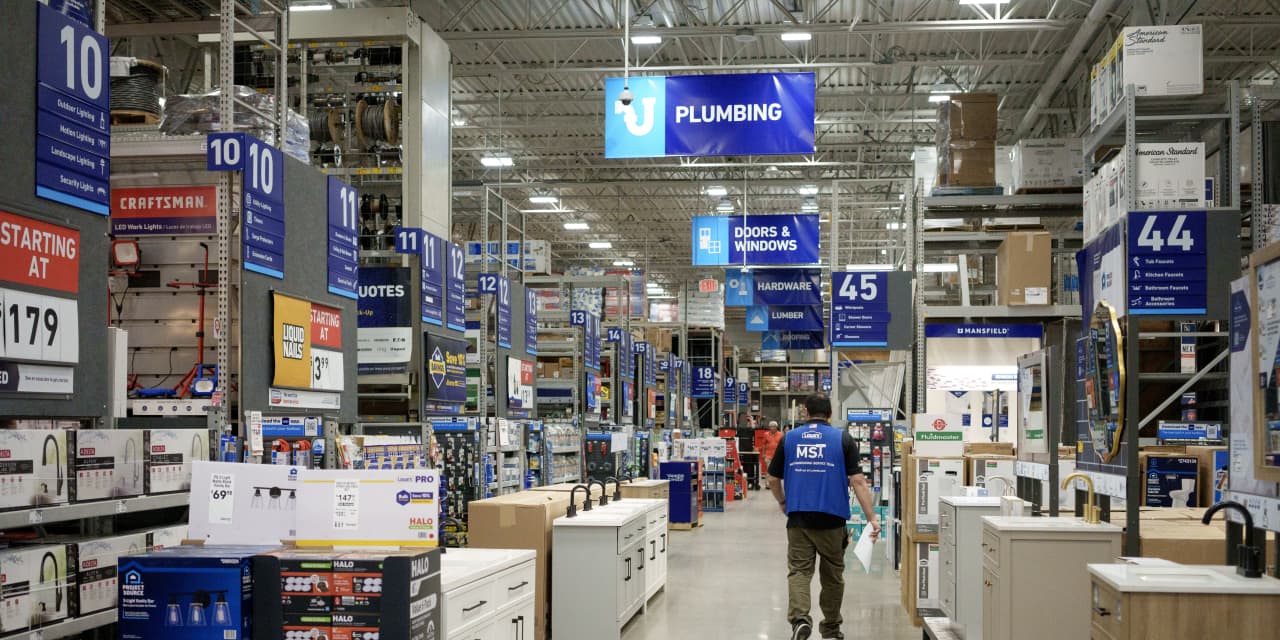
Home Builder Stocks Decline Following Cautious Forecasts from Lowe’s and Home Depot


- Home Builder Stocks Decline: Home builder stocks experienced a drop on Wednesday.
- Cautious Guidance from Retailers: Home improvement retailers provided cautious guidance, indicating limited prospects for significant housing market improvement this spring.
See More

Sharp Drop in US Mortgage Rates Boosts Refinancing Demand


- Mortgage Application Stability: According to the Mortgage Bankers Association's seasonally adjusted index, total mortgage application volume was essentially flat last week, rising just 0.4% compared to the previous week, indicating that homebuyer demand has not significantly improved.
- Impact of Rate Decline: The average contract interest rate for 30-year fixed-rate mortgages decreased from 6.17% to 6.09%, marking the lowest level since September 2022; however, mortgage purchase applications still fell by 5% despite improved affordability.
- Surge in Refinancing Demand: Refinance applications increased by 4% from the previous week and were 150% higher year-over-year, reflecting a significant rise in borrower interest in refinancing as rates drop, although the year-ago comparison is based on a low base.
- Increased Market Uncertainty: A report from Redfin indicated that nearly 40,000 home-sale agreements were canceled in January, representing 13.7% of homes under contract, the highest January share since 2017, highlighting the impact of economic uncertainty on consumer behavior.
See More
Mixed Close for US Stocks Amid Iran War Impact
- Mixed Market Performance: On Monday, the S&P 500 closed up 0.04%, while the Dow Jones Industrial Average fell 0.15%, and the Nasdaq 100 rose 0.13%, reflecting a divergence in market sentiment influenced by the ongoing war in Iran, with increased demand for defense and energy stocks.
- Surge in Oil Prices: WTI crude oil prices soared over 6% to an 8.25-month high following Iran's attack on oil tankers, which is expected to elevate inflation expectations and impact the overall economic environment and investor confidence.
- Strong Manufacturing Index: The US February ISM manufacturing index unexpectedly rose to 52.4, surpassing the market expectation of 51.5, indicating economic resilience that could influence the Federal Reserve's monetary policy direction, leading to shifts in future rate hike expectations.
- Optimistic Earnings Outlook: More than 90% of S&P 500 companies have reported earnings, with 73% exceeding expectations, and Q4 earnings growth is projected at 8.4%, providing market support despite geopolitical risks.
See More
Iran War Drives Market Volatility and Sector Performance
- Market Reaction: Stocks initially retreated following the US and Israel's joint military actions against Iran, but rebounded after the February ISM manufacturing index exceeded expectations, indicating investor focus on economic data.
- Surge in Energy Prices: The halt of tanker traffic through the Strait of Hormuz due to Iran's attacks on three oil tankers led to WTI crude oil prices soaring over 65% to an 8.25-month high, potentially exacerbating global inflationary pressures.
- Defense Stocks Rise: The ongoing conflict in Iran has bolstered earnings prospects for defense companies, with Aerovironment's stock rising over 12%, while Northrop Grumman and RTX Corp also saw increases of over 4%, reflecting market optimism about defense spending.
- Economic Data Focus: Investors are keenly awaiting upcoming economic data releases, including ADP employment changes and the ISM services index, which are expected to influence future monetary policy directions amid rising inflation concerns.
See More
US Stocks Close Higher, Driven by Strong AI Sector Performance
- Strong Market Performance: The S&P 500 index rose by 0.81%, reaching a 1.5-week high, while the Nasdaq 100 increased by 1.41%, marking a 2-week high, reflecting strong investor confidence in AI infrastructure and software stocks.
- AI Companies Drive Market: The statement from AI startup Anthropic PBC alleviated concerns about AI disruption, and Nvidia's Q4 revenue is projected to hit $65.91 billion, further fueling optimism about demand for AI processors among investors.
- Economic Data Impact: US MBA mortgage applications rose by 0.4%, with the average 30-year fixed mortgage rate falling to 6.09%, a nearly 3.5-year low, indicating a potential recovery in buyer confidence that could stimulate the housing market.
- International Market Rally: Overseas stock markets generally rose, with the Euro Stoxx 50 reaching a new high, indicating global investor optimism about economic recovery, which further supports the upward trend in US stocks.
See More
U.S. Mortgage Rates Decline, Signaling Housing Market Recovery
- Mortgage Rate Decline: The average 30-year fixed mortgage rate fell to 6.01% last week, the lowest since September 2022, and is expected to continue declining as the Federal Reserve cuts rates further, enhancing buyer affordability and stimulating a recovery in the U.S. housing market.
- Builder Stock Surge: With falling mortgage rates improving housing affordability, the iShares U.S. Home Construction ETF has risen 11.8% year-to-date, while stocks of builders like Lennar, D.R. Horton, and PulteGroup have increased by 10.3%, 12%, and 17.4% respectively, indicating strong demand for new homes.
- Housing Shortage Issue: High home prices and mortgage rates have led to a housing affordability crisis, with Goldman Sachs estimating that the U.S. needs an additional 3 to 4 million homes to address the shortage, reflecting urgent demand for new construction.
- Trump Administration Housing Policies: The Trump administration is exploring solutions for housing affordability, including government purchases of mortgage-backed securities to lower rates, although the effectiveness of these measures remains uncertain; meanwhile, builders like Lennar are planning to construct 1 million entry-level homes to meet market demand.
See More
Home Builder Stocks Decline Following Cautious Forecasts from Lowe’s and Home Depot
- Home Builder Stocks Decline: Home builder stocks experienced a drop on Wednesday.
- Cautious Guidance from Retailers: Home improvement retailers provided cautious guidance, indicating limited prospects for significant housing market improvement this spring.
See More
Sharp Drop in US Mortgage Rates Boosts Refinancing Demand
- Mortgage Application Stability: According to the Mortgage Bankers Association's seasonally adjusted index, total mortgage application volume was essentially flat last week, rising just 0.4% compared to the previous week, indicating that homebuyer demand has not significantly improved.
- Impact of Rate Decline: The average contract interest rate for 30-year fixed-rate mortgages decreased from 6.17% to 6.09%, marking the lowest level since September 2022; however, mortgage purchase applications still fell by 5% despite improved affordability.
- Surge in Refinancing Demand: Refinance applications increased by 4% from the previous week and were 150% higher year-over-year, reflecting a significant rise in borrower interest in refinancing as rates drop, although the year-ago comparison is based on a low base.
- Increased Market Uncertainty: A report from Redfin indicated that nearly 40,000 home-sale agreements were canceled in January, representing 13.7% of homes under contract, the highest January share since 2017, highlighting the impact of economic uncertainty on consumer behavior.
See More




