JPMorgan: AI Disruption Fears Overstated for Software Sector
Written by Emily J. Thompson, Senior Investment Analyst
Updated: Feb 13 2026
0mins


Should l Buy MSFT?
Source: Benzinga
- Market Rebound Expectations: JPMorgan believes that while the market's outlook on AI disruption in the software sector is overly pessimistic, certain software companies are demonstrating greater resilience, potentially providing rebound opportunities for investors, especially given the current overly bearish sentiment.
- Extreme Price Volatility: Analysts point out that the extreme price action in software stocks has led to unrealistic expectations regarding AI disruption, which may prompt a rotation back into higher-quality companies, thereby improving portfolio performance.
- AI Profitability Gains: Companies in the S&P 500 that have adopted AI have seen net margins expand by approximately 2 to 3 percentage points more than their peers, indicating that AI technology is already delivering productivity gains and reflecting that corporate adoption is enhancing profitability.
- ETF Performance Decline: The State Street SPDR S&P Software & Services ETF (NYSE:XSW) is down 20.58% year-to-date, illustrating the overall pessimistic sentiment towards the software sector, despite some companies potentially benefiting from AI infrastructure demand.
Trade with 70% Backtested Accuracy
Stop guessing "Should I Buy MSFT?" and start using high-conviction signals backed by rigorous historical data.
Sign up today to access powerful investing tools and make smarter, data-driven decisions.
Analyst Views on MSFT
Wall Street analysts forecast MSFT stock price to rise
34 Analyst Rating
32 Buy
2 Hold
0 Sell
Strong Buy
Current: 392.740

Low
500.00
Averages
631.36
High
678.00
Current: 392.740
Low
500.00
Averages
631.36
High
678.00
About MSFT
Microsoft Corporation is a technology company that develops and supports software, services, devices, and solutions. Its Productivity and Business Processes segment consists of products and services in its portfolio of productivity, communication, and information services, spanning a variety of devices and platforms. It comprises Microsoft 365 Commercial products and cloud services; Microsoft 365 Consumer products and cloud services; LinkedIn, and Dynamics products and cloud services. The Intelligent Cloud segment consists of its public, private, and hybrid server products and cloud services. It comprises server products and cloud services, including Azure, and enterprise and partner services, including Enterprise Support Services. Its More Personal Computing segment primarily comprises Windows and Devices, including Windows OEM licensing; Gaming, including Xbox hardware and Xbox content; Search and news advertising, comprising Bing and Copilot, Microsoft News, and Microsoft Edge.
About the author

Emily J. Thompson
Emily J. Thompson, a Chartered Financial Analyst (CFA) with 12 years in investment research, graduated with honors from the Wharton School. Specializing in industrial and technology stocks, she provides in-depth analysis for Intellectia’s earnings and market brief reports.

Microsoft's Long-Term Potential in Quantum Computing

- Significant Cloud Growth: In Q2 of fiscal 2026, Microsoft reported a 16.7% year-over-year revenue increase to $81.3 billion, with cloud services contributing $51.5 billion, up 26%, indicating strong market demand and sustained growth potential.
- Increased Quantum Investment: Microsoft is heavily investing in its quantum computing ecosystem, introducing the Majorana 1 quantum processor aimed at enhancing computational stability and reducing errors, laying the groundwork for future commercialization.
- Data Center Expansion: The company added nearly 1 gigawatt of data center capacity in Q2 to address the challenge of Azure service demand exceeding supply, demonstrating its ongoing investment and strategic positioning in cloud infrastructure.
- Rapid AI Application Adoption: Microsoft’s Copilot user base surged over 160% year-over-year to 15 million paid users, showcasing its ability to successfully leverage AI in enterprise workflows, further driving revenue growth.
See More

Microsoft Stock Declines 18% Amid AI Concerns
- Stock Decline Reasons: Microsoft's stock has fallen 18% since the beginning of the year, primarily due to high valuations and concerns over AI spending growth, despite its strong financial health with a 660% increase over the past decade.
- Market Performance Comparison: Compared to other tech giants, Microsoft's decline is significant, as the Roundhill Magnificent Seven ETF has only dropped 7%, indicating a broader bearish sentiment in the tech sector.
- AI Product Performance: Microsoft's Copilot AI has underperformed in the market, failing to impress compared to other popular chatbots, leading investors to question its future growth potential, which has negatively impacted the stock price.
- Investment Opportunity Assessment: Although the stock was previously overvalued, Microsoft's current P/E ratio has dropped to 25, and with $119 billion in profits, it may present a favorable opportunity for investors to reassess and potentially increase their holdings.
See More

Microsoft's Quantum Computing Strategy and AI Growth
- Quantum Computing Investment: Microsoft is heavily investing in its quantum computing ecosystem, with the introduction of the Majorana 1 processor in 2025 utilizing topological qubits aimed at enhancing computational stability and reducing errors, thereby advancing the commercialization of quantum computing.
- Strong Financial Performance: In Q2 of fiscal 2026, Microsoft reported a 16.7% year-over-year revenue increase to $81.3 billion, with cloud services revenue reaching $51.5 billion, up 26%, reflecting robust demand for AI-related workloads.
- Data Center Expansion: Microsoft added nearly 1 gigawatt of data center capacity in Q2 and invested $37.5 billion, two-thirds of which was allocated to short-lived AI assets, indicating proactive measures to address data center capacity constraints.
- AI Application Growth: The number of paid Microsoft 365 Copilot users reached 15 million, up over 160% year-over-year, demonstrating the rapid adoption of AI applications in enterprise workflows, further driving revenue growth for the company.
See More

Concerns Over AI Stock Bubble Intensify

- Investor Concerns Rise: A Bank of America survey reveals that 23% of investment-grade credit investors cite the 'threat of an AI bubble' as their top concern, a significant increase from 9% in December 2025, indicating declining confidence in AI stocks.
- Rising Borrowing Risks: The survey highlights worries among credit investors about AI companies borrowing excessively, which could lead to increased debt risk if companies exceed their repayment capabilities, potentially impacting credit ratings and borrowing costs.
- Massive Investments by Giants: The four largest AI hyperscalers—Alphabet, Microsoft, Meta, and Amazon—are projected to spend around $700 billion on AI-related capital expenditures by 2026, and if these investments do not yield substantial returns, it could negatively affect shareholders and bondholders.
- Adjusting Investment Strategies: To mitigate risks associated with an AI bubble, investors might consider reallocating portions of their portfolios towards value stocks or small-cap ETFs, which tend to perform more steadily in volatile markets and reduce reliance on AI stocks.
See More

Analysis of Money Flows in Magnificent Seven Stocks


- Money Flow Trends: In early trading, negative money flows were observed in the Magnificent Seven stocks, including Apple, Amazon, Google, Meta, Microsoft, NVIDIA, and Tesla, indicating a lack of short-term confidence in these stocks, which may lead investors to reassess their positions.
- ETF Performance Weakness: The SPDR S&P 500 ETF and Invesco QQQ Trust also showed negative money flows, reflecting a general market sentiment downturn, which could lead investors to adopt a cautious stance on tech stocks, impacting the liquidity and pricing of related ETFs.
- Bitcoin Market Volatility: Bitcoin initially dropped following news of the Iran war but rebounded on the announcement of Ayatollah Khamenei's death, highlighting the cryptocurrency market's sensitivity to geopolitical events, prompting investors to monitor how such events influence market sentiment.
- Investment Strategy Recommendations: Investors are advised to maintain long-term quality positions while tactically adding to their investments based on market signals to navigate current uncertainties, ensuring the stability and growth potential of their portfolios.
See More
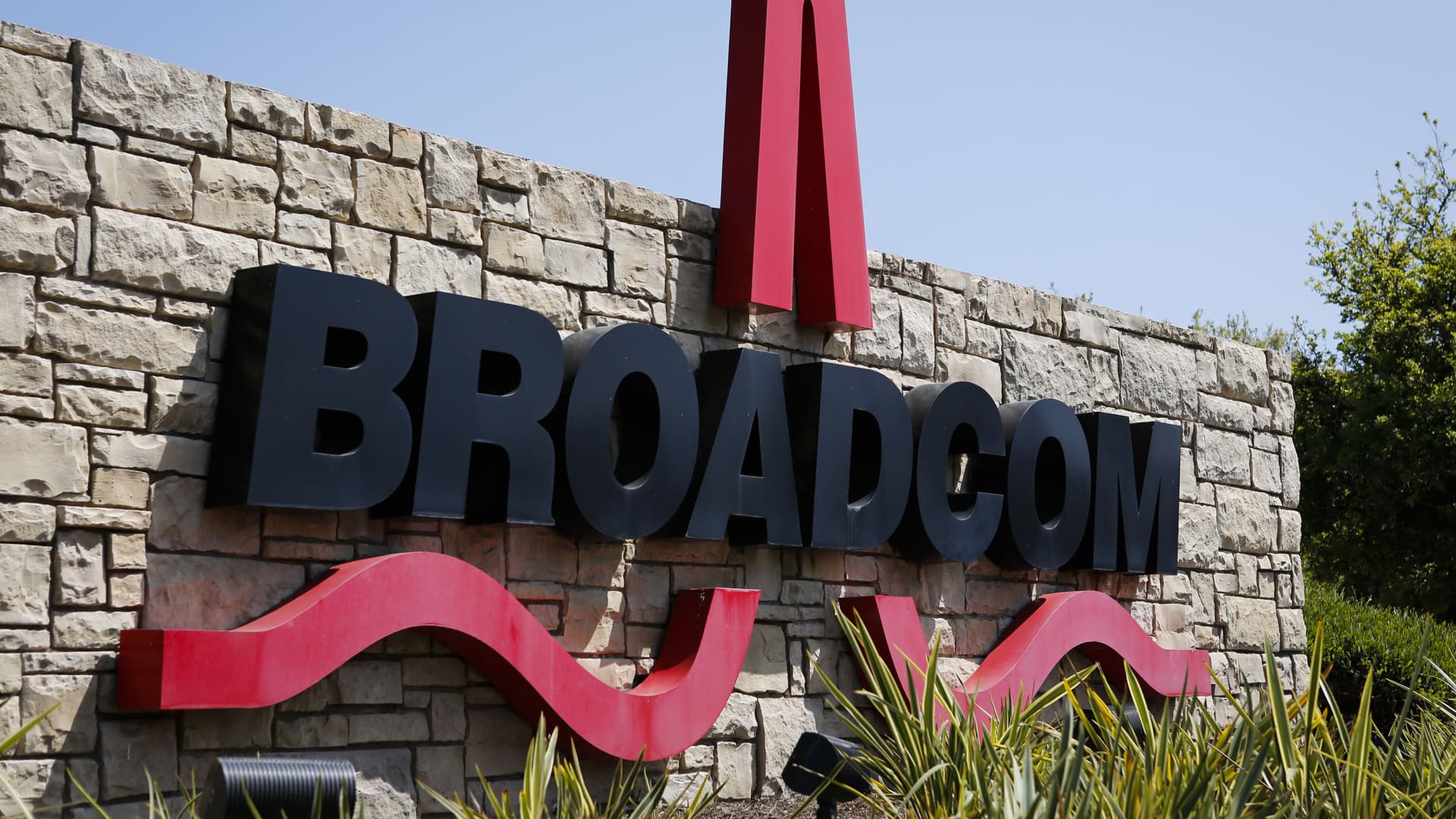
Broadcom's Q1 2026 Earnings Outlook and Analyst Insights


- Demand Sustainability Concerns: RBC Capital analyst Pajjuri highlighted uncertainties regarding Anthropic's demand sustainability beyond the first half of FY27, primarily due to its agreements with Nvidia and Microsoft, which could impact Broadcom's future performance.
- Optimistic Earnings Expectations: Broadcom is expected to report its Q1 earnings on March 4, with projected revenue of $19.1 billion, reflecting a 22.4% year-over-year increase, driven by strong TPU and networking demand that may exceed market expectations.
- Price Target Reduction: RBC Capital lowered its price target for Broadcom from $370 to $340 while maintaining a 'Sector Perform' rating, indicating cautious investor sentiment due to concerns over the lack of visibility into Anthropic's demand.
- Market Sentiment Shift: On Stocktwits, retail sentiment around AVGO shares surged from 'bullish' to 'extremely bullish' in the past 24 hours, reflecting optimism among investors about AI revenue doubling, contributing to a 67% increase in stock price over the past year.
See More
Microsoft's Long-Term Potential in Quantum Computing
- Significant Cloud Growth: In Q2 of fiscal 2026, Microsoft reported a 16.7% year-over-year revenue increase to $81.3 billion, with cloud services contributing $51.5 billion, up 26%, indicating strong market demand and sustained growth potential.
- Increased Quantum Investment: Microsoft is heavily investing in its quantum computing ecosystem, introducing the Majorana 1 quantum processor aimed at enhancing computational stability and reducing errors, laying the groundwork for future commercialization.
- Data Center Expansion: The company added nearly 1 gigawatt of data center capacity in Q2 to address the challenge of Azure service demand exceeding supply, demonstrating its ongoing investment and strategic positioning in cloud infrastructure.
- Rapid AI Application Adoption: Microsoft’s Copilot user base surged over 160% year-over-year to 15 million paid users, showcasing its ability to successfully leverage AI in enterprise workflows, further driving revenue growth.
See More
Microsoft Stock Declines 18% Amid AI Concerns
- Stock Decline Reasons: Microsoft's stock has fallen 18% since the beginning of the year, primarily due to high valuations and concerns over AI spending growth, despite its strong financial health with a 660% increase over the past decade.
- Market Performance Comparison: Compared to other tech giants, Microsoft's decline is significant, as the Roundhill Magnificent Seven ETF has only dropped 7%, indicating a broader bearish sentiment in the tech sector.
- AI Product Performance: Microsoft's Copilot AI has underperformed in the market, failing to impress compared to other popular chatbots, leading investors to question its future growth potential, which has negatively impacted the stock price.
- Investment Opportunity Assessment: Although the stock was previously overvalued, Microsoft's current P/E ratio has dropped to 25, and with $119 billion in profits, it may present a favorable opportunity for investors to reassess and potentially increase their holdings.
See More
Microsoft's Quantum Computing Strategy and AI Growth
- Quantum Computing Investment: Microsoft is heavily investing in its quantum computing ecosystem, with the introduction of the Majorana 1 processor in 2025 utilizing topological qubits aimed at enhancing computational stability and reducing errors, thereby advancing the commercialization of quantum computing.
- Strong Financial Performance: In Q2 of fiscal 2026, Microsoft reported a 16.7% year-over-year revenue increase to $81.3 billion, with cloud services revenue reaching $51.5 billion, up 26%, reflecting robust demand for AI-related workloads.
- Data Center Expansion: Microsoft added nearly 1 gigawatt of data center capacity in Q2 and invested $37.5 billion, two-thirds of which was allocated to short-lived AI assets, indicating proactive measures to address data center capacity constraints.
- AI Application Growth: The number of paid Microsoft 365 Copilot users reached 15 million, up over 160% year-over-year, demonstrating the rapid adoption of AI applications in enterprise workflows, further driving revenue growth for the company.
See More
Concerns Over AI Stock Bubble Intensify
- Investor Concerns Rise: A Bank of America survey reveals that 23% of investment-grade credit investors cite the 'threat of an AI bubble' as their top concern, a significant increase from 9% in December 2025, indicating declining confidence in AI stocks.
- Rising Borrowing Risks: The survey highlights worries among credit investors about AI companies borrowing excessively, which could lead to increased debt risk if companies exceed their repayment capabilities, potentially impacting credit ratings and borrowing costs.
- Massive Investments by Giants: The four largest AI hyperscalers—Alphabet, Microsoft, Meta, and Amazon—are projected to spend around $700 billion on AI-related capital expenditures by 2026, and if these investments do not yield substantial returns, it could negatively affect shareholders and bondholders.
- Adjusting Investment Strategies: To mitigate risks associated with an AI bubble, investors might consider reallocating portions of their portfolios towards value stocks or small-cap ETFs, which tend to perform more steadily in volatile markets and reduce reliance on AI stocks.
See More
Analysis of Money Flows in Magnificent Seven Stocks
- Money Flow Trends: In early trading, negative money flows were observed in the Magnificent Seven stocks, including Apple, Amazon, Google, Meta, Microsoft, NVIDIA, and Tesla, indicating a lack of short-term confidence in these stocks, which may lead investors to reassess their positions.
- ETF Performance Weakness: The SPDR S&P 500 ETF and Invesco QQQ Trust also showed negative money flows, reflecting a general market sentiment downturn, which could lead investors to adopt a cautious stance on tech stocks, impacting the liquidity and pricing of related ETFs.
- Bitcoin Market Volatility: Bitcoin initially dropped following news of the Iran war but rebounded on the announcement of Ayatollah Khamenei's death, highlighting the cryptocurrency market's sensitivity to geopolitical events, prompting investors to monitor how such events influence market sentiment.
- Investment Strategy Recommendations: Investors are advised to maintain long-term quality positions while tactically adding to their investments based on market signals to navigate current uncertainties, ensuring the stability and growth potential of their portfolios.
See More
Broadcom's Q1 2026 Earnings Outlook and Analyst Insights
- Demand Sustainability Concerns: RBC Capital analyst Pajjuri highlighted uncertainties regarding Anthropic's demand sustainability beyond the first half of FY27, primarily due to its agreements with Nvidia and Microsoft, which could impact Broadcom's future performance.
- Optimistic Earnings Expectations: Broadcom is expected to report its Q1 earnings on March 4, with projected revenue of $19.1 billion, reflecting a 22.4% year-over-year increase, driven by strong TPU and networking demand that may exceed market expectations.
- Price Target Reduction: RBC Capital lowered its price target for Broadcom from $370 to $340 while maintaining a 'Sector Perform' rating, indicating cautious investor sentiment due to concerns over the lack of visibility into Anthropic's demand.
- Market Sentiment Shift: On Stocktwits, retail sentiment around AVGO shares surged from 'bullish' to 'extremely bullish' in the past 24 hours, reflecting optimism among investors about AI revenue doubling, contributing to a 67% increase in stock price over the past year.
See More