

Ford Shares Drop After Multi-Million Vehicle Recall Announcement
Written by Emily J. Thompson, Senior Investment Analyst
Updated: 13 hours ago
0mins

Should l Buy F?
Source: NASDAQ.COM
- Recall Impact: Ford's announcement of a multi-million vehicle recall due to towing safety issues led to a 4.97% drop in stock price to $13.39 on Monday, highlighting the potential threat of quality issues on the company's reputation and future profitability.
- Surge in Trading Volume: Trading volume for Ford reached 103.7 million shares, approximately 70% above the three-month average of 61 million shares, indicating heightened investor concern and volatility regarding the company's future performance.
- Ongoing Quality Challenges: Despite appointing a 'quality czar' in 2022 to improve vehicle quality, recent recall events suggest that quality issues remain a significant challenge for Ford, potentially impacting future sales and brand image.
- Investor Caution: While Ford's stock has risen 40% over the past year, persistent quality issues could hinder this growth momentum, leading analysts to advise caution for investors, especially as Ford was not included in the list of 'best stocks' to buy now.
Trade with 70% Backtested Accuracy
Stop guessing "Should I Buy F?" and start using high-conviction signals backed by rigorous historical data.
Sign up today to access powerful investing tools and make smarter, data-driven decisions.
Analyst Views on F
Wall Street analysts forecast F stock price to fall
14 Analyst Rating
3 Buy
10 Hold
1 Sell
Hold
Current: 14.090

Low
11.00
Averages
13.65
High
16.00
Current: 14.090
Low
11.00
Averages
13.65
High
16.00
About F
Ford Motor Company is an automobile company. The Company develops and delivers Ford trucks, sport utility vehicles, commercial vans and cars, and Lincoln luxury vehicles, along with connected services. The Company’s segments include Ford Blue, Ford Model e, Ford Pro, and Ford Credit. The Ford Blue segment primarily includes the sale of Ford and Lincoln internal combustion engine (ICE) and hybrid vehicles, service parts, accessories, and digital services for retail customers. The Ford Model e segment primarily includes the sale of its electric vehicles, service parts, accessories, and digital services for retail customers. The Ford Pro segment primarily includes the sale of Ford and Lincoln vehicles, service parts, accessories, and services for commercial, government, and rental customers. The Ford Credit segment consists of the Ford Credit business on a consolidated basis, which is primarily vehicle-related financing and leasing activities. Its vehicle brands are Ford and Lincoln.
About the author

Emily J. Thompson
Emily J. Thompson, a Chartered Financial Analyst (CFA) with 12 years in investment research, graduated with honors from the Wharton School. Specializing in industrial and technology stocks, she provides in-depth analysis for Intellectia’s earnings and market brief reports.
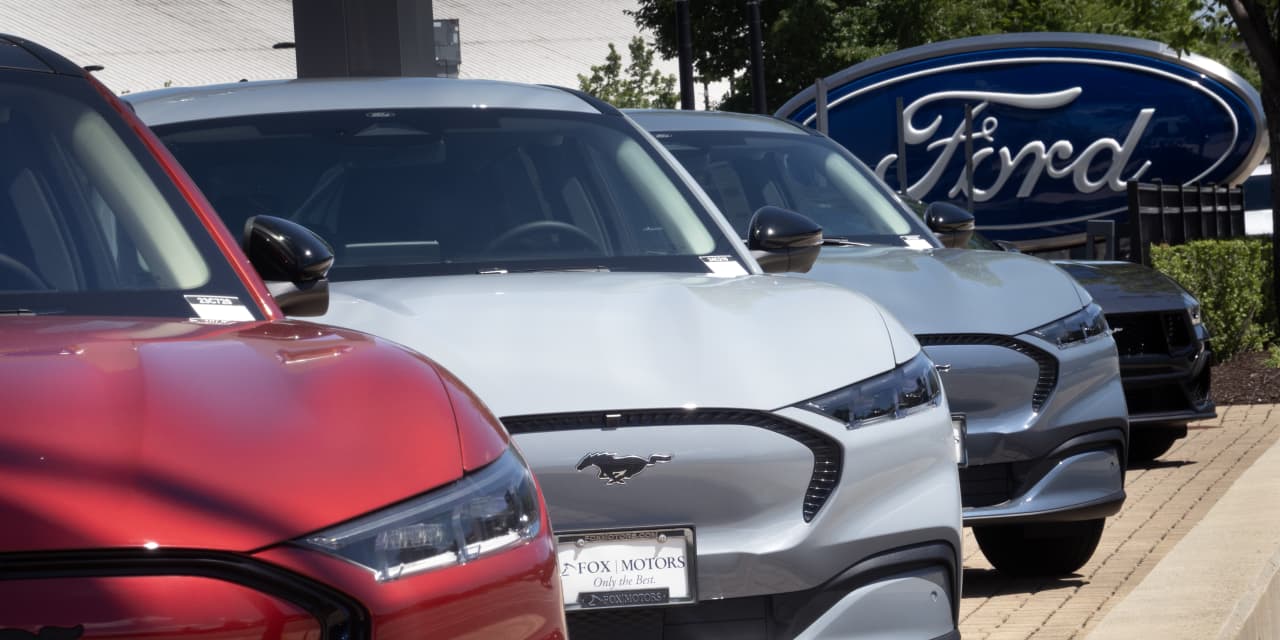
Ford, GM, Stellantis Stocks Decline Amid Oil Price Surge


- Stock Price Decline: Ford's stock fell 4.97% to $13.39 at market close on Monday, while GM dropped 1.21% to $77.76, and Stellantis slid 5.69% to $7.63, reflecting market concerns about the automotive industry's outlook.
- Continued Downward Trend: In pre-market trading on Tuesday, Ford further declined 1.79% to $13.15, GM fell 1.81% to $76.35, and Stellantis dropped 5.64% to $7.20, indicating increasing investor anxiety about the sector.
- Impact of Rising Oil Prices: The surge in oil prices due to tensions between the U.S. and Iran has raised doubts about the profitability of automakers, particularly as high fuel costs may deter consumers from purchasing gasoline-powered vehicles.
- Global Supply Chain Disruption: Qatar Energy's suspension of LNG production following military strikes has exacerbated global supply chain tensions, posing additional challenges for automakers reliant on stable supply chains.
See More

Ford Shares Drop After Multi-Million Vehicle Recall Announcement
- Recall Impact: Ford's announcement of a multi-million vehicle recall due to towing safety issues led to a 4.97% drop in stock price to $13.39 on Monday, highlighting the potential threat of quality issues on the company's reputation and future profitability.
- Surge in Trading Volume: Trading volume for Ford reached 103.7 million shares, approximately 70% above the three-month average of 61 million shares, indicating heightened investor concern and volatility regarding the company's future performance.
- Ongoing Quality Challenges: Despite appointing a 'quality czar' in 2022 to improve vehicle quality, recent recall events suggest that quality issues remain a significant challenge for Ford, potentially impacting future sales and brand image.
- Investor Caution: While Ford's stock has risen 40% over the past year, persistent quality issues could hinder this growth momentum, leading analysts to advise caution for investors, especially as Ford was not included in the list of 'best stocks' to buy now.
See More
Ford Motor Company Shares Drop Due to Recall Announcement
- Recall Impact: Ford Motor Company's shares fell 4.97% following a recall of nearly 5 million vehicles related to towing safety, which not only increases quality costs but could also pressure future profitability.
- Surge in Trading Volume: Trading volume reached 103.7 million shares, approximately 70% above the three-month average, indicating heightened market concern regarding Ford's quality issues.
- Quality Management Challenges: Despite appointing a 'quality czar' in 2022, Jim Baumbick, to oversee improvements, the recent recall highlights ongoing quality challenges that could affect brand reputation and future sales.
- Stock Performance: Ford's stock has risen 40% over the past year, but persistent quality issues may hinder this momentum, prompting investors to carefully assess its long-term investment value.
See More
Detroit Automakers Monitor Impact of Iran War on Operations and Sales
- Market Monitoring: Ford and General Motors are closely monitoring the potential impact of the Iran war on their Middle Eastern operations, particularly how soaring gasoline prices might affect U.S. new vehicle sales, with analysts noting that the duration of the conflict will determine supply chain disruptions.
- Oil Price Risks: Analysts predict that if the conflict escalates, oil flow through the Strait of Hormuz could be affected, leading to rising oil prices, with Brent crude already up 8% to $78.49 per barrel, potentially putting pressure on automakers.
- Sales Dynamics: Ford's sales in Saudi Arabia have increased by 5%, while GM and Stellantis are experiencing declining sales in the Middle East, indicating Ford's expanding market share and competitiveness in the region.
- EV Outlook: Despite the current government's negative stance on EV production, analysts believe that sustained high gasoline prices could accelerate the transition to electric vehicles, potentially leading to a surge in demand for EVs in the future.
See More

Tesla Increases Cybertruck AWD Price by $10,000

- Price Adjustment: Tesla has raised the price of the Cybertruck's all-wheel drive base model from $59,990 to $69,990, marking a $10,000 increase shortly after the model's launch, indicating the company's responsiveness to market demand.
- Strong Market Demand: Data from influencer Sawyer Merritt shows that the dual motor base variant of the Cybertruck is experiencing strong interest, suggesting a potential boost in future sales driven by consumer enthusiasm.
- Other Model Pricing: In addition to the base model, the Cybertruck's premium all-wheel drive variant is priced at $79,990, while the Cyberbeast variant is set at $99,990, reflecting Tesla's strategic pricing across different market segments.
- Sales Trend: Despite a 0.18% decline in Tesla's stock price to $401.80 during after-hours trading on Friday, the company's performance in the electric pickup market remains robust, indicating a favorable long-term price trend and market momentum.
See More

Investment Opportunity Analysis: Ford vs. Ferrari

- Ford Stock Appeal: Ford's shares trade at a forward P/E ratio of 9, attracting value investors, and its 4.23% dividend yield surpasses the 4.04% yield on 10-year Treasuries, making it appealing to income investors.
- EV Transition Challenges: Ford reported a massive $19.5 billion special charge in Q4 2025; however, its F-Series trucks remain the best-selling vehicles in America, indicating potential to maintain market leadership during its EV transition.
- Ferrari's Scarcity Strategy: Ferrari maintains market demand by limiting production, achieving a 9.6% compound annual growth rate in sales from 2015 to 2025, with expectations of 6.5% growth over the next three years, showcasing its strong pricing power in the luxury market.
- Profitability Comparison: Ferrari posted a 29.5% operating margin last year, significantly higher than Ford's 3%, indicating a more lucrative business model, leading investors to remain optimistic about its future growth.
See More
Ford, GM, Stellantis Stocks Decline Amid Oil Price Surge
- Stock Price Decline: Ford's stock fell 4.97% to $13.39 at market close on Monday, while GM dropped 1.21% to $77.76, and Stellantis slid 5.69% to $7.63, reflecting market concerns about the automotive industry's outlook.
- Continued Downward Trend: In pre-market trading on Tuesday, Ford further declined 1.79% to $13.15, GM fell 1.81% to $76.35, and Stellantis dropped 5.64% to $7.20, indicating increasing investor anxiety about the sector.
- Impact of Rising Oil Prices: The surge in oil prices due to tensions between the U.S. and Iran has raised doubts about the profitability of automakers, particularly as high fuel costs may deter consumers from purchasing gasoline-powered vehicles.
- Global Supply Chain Disruption: Qatar Energy's suspension of LNG production following military strikes has exacerbated global supply chain tensions, posing additional challenges for automakers reliant on stable supply chains.
See More
Ford Shares Drop After Multi-Million Vehicle Recall Announcement
- Recall Impact: Ford's announcement of a multi-million vehicle recall due to towing safety issues led to a 4.97% drop in stock price to $13.39 on Monday, highlighting the potential threat of quality issues on the company's reputation and future profitability.
- Surge in Trading Volume: Trading volume for Ford reached 103.7 million shares, approximately 70% above the three-month average of 61 million shares, indicating heightened investor concern and volatility regarding the company's future performance.
- Ongoing Quality Challenges: Despite appointing a 'quality czar' in 2022 to improve vehicle quality, recent recall events suggest that quality issues remain a significant challenge for Ford, potentially impacting future sales and brand image.
- Investor Caution: While Ford's stock has risen 40% over the past year, persistent quality issues could hinder this growth momentum, leading analysts to advise caution for investors, especially as Ford was not included in the list of 'best stocks' to buy now.
See More
Ford Motor Company Shares Drop Due to Recall Announcement
- Recall Impact: Ford Motor Company's shares fell 4.97% following a recall of nearly 5 million vehicles related to towing safety, which not only increases quality costs but could also pressure future profitability.
- Surge in Trading Volume: Trading volume reached 103.7 million shares, approximately 70% above the three-month average, indicating heightened market concern regarding Ford's quality issues.
- Quality Management Challenges: Despite appointing a 'quality czar' in 2022, Jim Baumbick, to oversee improvements, the recent recall highlights ongoing quality challenges that could affect brand reputation and future sales.
- Stock Performance: Ford's stock has risen 40% over the past year, but persistent quality issues may hinder this momentum, prompting investors to carefully assess its long-term investment value.
See More
Detroit Automakers Monitor Impact of Iran War on Operations and Sales
- Market Monitoring: Ford and General Motors are closely monitoring the potential impact of the Iran war on their Middle Eastern operations, particularly how soaring gasoline prices might affect U.S. new vehicle sales, with analysts noting that the duration of the conflict will determine supply chain disruptions.
- Oil Price Risks: Analysts predict that if the conflict escalates, oil flow through the Strait of Hormuz could be affected, leading to rising oil prices, with Brent crude already up 8% to $78.49 per barrel, potentially putting pressure on automakers.
- Sales Dynamics: Ford's sales in Saudi Arabia have increased by 5%, while GM and Stellantis are experiencing declining sales in the Middle East, indicating Ford's expanding market share and competitiveness in the region.
- EV Outlook: Despite the current government's negative stance on EV production, analysts believe that sustained high gasoline prices could accelerate the transition to electric vehicles, potentially leading to a surge in demand for EVs in the future.
See More
Tesla Increases Cybertruck AWD Price by $10,000
- Price Adjustment: Tesla has raised the price of the Cybertruck's all-wheel drive base model from $59,990 to $69,990, marking a $10,000 increase shortly after the model's launch, indicating the company's responsiveness to market demand.
- Strong Market Demand: Data from influencer Sawyer Merritt shows that the dual motor base variant of the Cybertruck is experiencing strong interest, suggesting a potential boost in future sales driven by consumer enthusiasm.
- Other Model Pricing: In addition to the base model, the Cybertruck's premium all-wheel drive variant is priced at $79,990, while the Cyberbeast variant is set at $99,990, reflecting Tesla's strategic pricing across different market segments.
- Sales Trend: Despite a 0.18% decline in Tesla's stock price to $401.80 during after-hours trading on Friday, the company's performance in the electric pickup market remains robust, indicating a favorable long-term price trend and market momentum.
See More
Investment Opportunity Analysis: Ford vs. Ferrari
- Ford Stock Appeal: Ford's shares trade at a forward P/E ratio of 9, attracting value investors, and its 4.23% dividend yield surpasses the 4.04% yield on 10-year Treasuries, making it appealing to income investors.
- EV Transition Challenges: Ford reported a massive $19.5 billion special charge in Q4 2025; however, its F-Series trucks remain the best-selling vehicles in America, indicating potential to maintain market leadership during its EV transition.
- Ferrari's Scarcity Strategy: Ferrari maintains market demand by limiting production, achieving a 9.6% compound annual growth rate in sales from 2015 to 2025, with expectations of 6.5% growth over the next three years, showcasing its strong pricing power in the luxury market.
- Profitability Comparison: Ferrari posted a 29.5% operating margin last year, significantly higher than Ford's 3%, indicating a more lucrative business model, leading investors to remain optimistic about its future growth.
See More




