

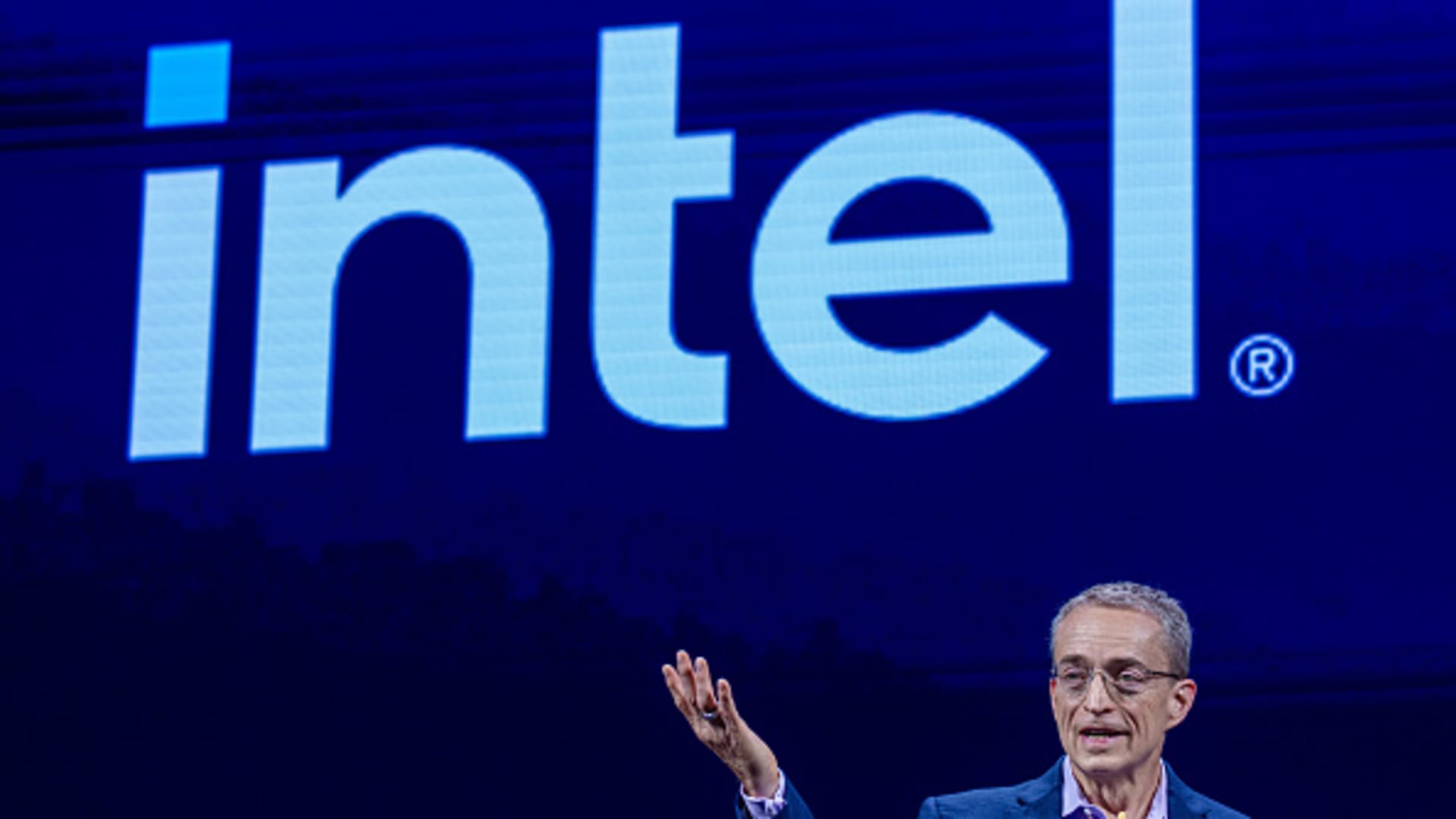
Five Things to Know About Lip-Bu Tan, Intel’s Next CEO
Written by Emily J. Thompson, Senior Investment Analyst
Updated: Mar 13 2025
0mins


Should l Buy INTC?
Source: WSJ
Leadership Change at Intel: Lip-Bu Tan, a seasoned semiconductor industry veteran and former Intel board member, is set to become Intel's new CEO next week.
Challenges Ahead for Intel: Tan will lead the company during a challenging period as it faces declining fortunes due to a shift in demand towards artificial intelligence, moving away from traditional central processing chips.
Trade with 70% Backtested Accuracy
Stop guessing "Should I Buy INTC?" and start using high-conviction signals backed by rigorous historical data.
Sign up today to access powerful investing tools and make smarter, data-driven decisions.
Analyst Views on INTC
Wall Street analysts forecast INTC stock price to fall
29 Analyst Rating
5 Buy
19 Hold
5 Sell
Hold
Current: 45.500

Low
20.00
Averages
39.30
High
52.00
Current: 45.500
Low
20.00
Averages
39.30
High
52.00
About INTC
Intel Corporation is a global designer and manufacturer of semiconductor products. The Company operates through three segments: Intel Products, Intel Foundry, and All Other. Its Intel Products segment includes Client Computing Group (CCG), Data Center and AI (DCAI), Network and Edge (NEX). The CCG is bringing together the operating system, system architecture, hardware, and software application integration to enable PC experiences. DCAI delivers workload-optimized solutions to cloud service providers and enterprises, along with silicon devices for communications service providers, network and edge, and HPC customers. NEX helps networks and edge compute systems from fixed-function hardware to general-purpose compute, acceleration, and networking devices running cloud native software on programmable hardware. The Intel Foundry segment comprises technology development, manufacturing and foundry services. All Other segments include Altera, Mobileye, Other.
About the author

Emily J. Thompson
Emily J. Thompson, a Chartered Financial Analyst (CFA) with 12 years in investment research, graduated with honors from the Wharton School. Specializing in industrial and technology stocks, she provides in-depth analysis for Intellectia’s earnings and market brief reports.

Intel Board Chair Frank Yeary Announces Retirement, Dr. Craig Barratt to Succeed

- Board Restructuring: Intel's board chair Frank Yeary announced his retirement effective after the May 13, 2026 annual shareholder meeting, indicating further adjustments in corporate governance that could impact the company's strategic direction.
- Successor Profile: Current board member Dr. Craig H. Barratt will succeed Yeary, having joined the board in late 2025 and bringing extensive semiconductor and technology leadership experience from Qualcomm and Google, which is expected to provide Intel with fresh perspectives and strategies.
- Executive Transition Context: This retirement is part of a series of board changes at Intel following CEO Lip-Bu Tan's appointment, reflecting ongoing adjustments in top management that may influence investor confidence and company stability.
- Future Outlook: With Barratt's leadership, Intel is likely to increase investments in AI and semiconductor sectors to address competitive pressures and technological shifts, aiming to drive long-term growth for the company.
See More

CoreWeave Shares Plunge 25% Amid Concerns Over Financials


- Significant Revenue Growth: CoreWeave reported a 110% year-over-year revenue increase in Q4, reaching $1.6 billion; however, the stock plummeted due to investor concerns about the company's profitability, indicating market skepticism about its long-term sustainability.
- Worsening Losses: The company's net loss widened to $452 million in Q4, with operating margins dropping from 15.1% to -5.7%, highlighting escalating cost control issues that could impact future financing capabilities amid aggressive expansion.
- Capital Expenditure Plans: CoreWeave anticipates capital expenditures between $30 billion and $35 billion in 2026 to support its $66.8 billion revenue backlog, yet such high spending may exacerbate cash flow pressures and increase financial risks.
- Market Valuation Risks: With a current market capitalization of $38 billion and a price-to-sales ratio of about 7, the market appears to have fully priced in the potential for CoreWeave to transition into a highly profitable enterprise software platform, but any economic slowdown could directly impact its capital-intensive business model.
See More
Global Stock Markets Retreat as Oil Prices Surge


- Market Decline: The S&P 500 index fell by 0.94%, reaching a 3.25-month low, reflecting investor concerns over escalating tensions in Iran, which may impact future investment decisions and market stability.
- Surge in Oil Prices: WTI crude oil prices rose over 4% to an 8.5-month high due to threats from Iran to close the Strait of Hormuz, intensifying fears of energy supply disruptions and potential inflationary pressures in the economy.
- Natural Gas Price Spike: European natural gas prices surged more than 22% to a three-year high after Qatar's Ras Laffan plant was targeted by an Iranian drone attack, posing significant risks to global liquefied natural gas supply and market stability.
- Economic Data Expectations: This week, the ADP employment change is expected to increase by 50,000, while the ISM services index is projected to slip slightly, with markets closely monitoring these indicators to assess economic health and potential implications for Federal Reserve monetary policy decisions.
See More
Intel Appoints New Board Chairman Amid Leadership Transition
- Board Transition: Intel has appointed semiconductor veteran Craig Barratt as the new independent chairman of its board, succeeding Frank Yeary, who is retiring after serving as a director since 2009 and as chair since 2023, indicating a significant leadership change within the company.
- Stock Price Reaction: Following this announcement, Intel's shares fell slightly in after-hours trading, reflecting market uncertainty regarding the leadership transition, after already experiencing a drop of over 5% during regular trading, which may impact investor confidence.
- Leadership Acknowledgment: CEO Lip-Bu Tan expressed gratitude towards Yeary for his strong leadership during one of the most consequential periods in Intel's history, highlighting the support he provided in guiding the company through its transformation and solidifying its foundation for future growth.
- Future Strategic Focus: Barratt emphasized a commitment to rigorous execution, investment in U.S.-based R&D and manufacturing, and ensuring Intel is well-positioned for future competition, indicating the company's ongoing dedication to technological and operational improvements.
See More

Carvana Q4 Results Beat Estimates but Stock Declines

- Strong Sales Performance: Carvana reported fourth-quarter sales of $5.6 billion, exceeding analyst expectations by $330 million and reflecting a 58% year-over-year increase, indicating robust market performance despite stock price pressures from other factors.
- Profitability Concerns: While the earnings per share of $4.22 significantly surpassed the market's forecast of $1.13, the adjusted EBITDA of $511 million fell short of the $535.7 million expected by analysts, raising concerns about the company's profitability and market confidence.
- Related-Party Transaction Allegations: A short report from Gotham City Research accused Carvana of overstating earnings through related-party transactions with businesses owned by CEO Ernie Garcia III's family, particularly highlighting the connections with DriveTime and Bridgecrest, which has raised investor scrutiny and could impact the company's reputation.
- Vague Forward Guidance: The forward guidance provided by Carvana alongside its Q4 report lacked specific details, as management committed to growth in retail units and adjusted EBITDA but failed to outline a clear strategic direction, leaving investors feeling uncertain about the company's future trajectory.
See More
Intel Stock Declines Amid Geopolitical Tensions
- Stock Decline: Intel's share price fell by 4.9% to $43.34 as of 1:25 p.m. ET, although it remains up approximately 17% year-to-date, indicating investor concerns over geopolitical risks.
- Market Reaction: The escalation of conflict between the U.S. and Israel with Iran has led to a loss of investor confidence in tech stocks, contributing to declines of 1.3% in the S&P 500 and 1.2% in the Nasdaq Composite, reflecting overall market unease.
- Supply Chain Risks: Iran's closure of the Strait of Hormuz has resulted in soaring oil prices, raising fears of sustained supply chain disruptions and accelerating inflation, which could further pressure Intel and other tech stocks.
- Defensive Advantage: Despite ongoing losses in CPU market share, Intel's unique position as the only U.S. company capable of large-scale semiconductor fabrication provides some defensive benefits, and government initiatives are expected to support its domestic fab business.
See More
Intel Board Chair Frank Yeary Announces Retirement, Dr. Craig Barratt to Succeed
- Board Restructuring: Intel's board chair Frank Yeary announced his retirement effective after the May 13, 2026 annual shareholder meeting, indicating further adjustments in corporate governance that could impact the company's strategic direction.
- Successor Profile: Current board member Dr. Craig H. Barratt will succeed Yeary, having joined the board in late 2025 and bringing extensive semiconductor and technology leadership experience from Qualcomm and Google, which is expected to provide Intel with fresh perspectives and strategies.
- Executive Transition Context: This retirement is part of a series of board changes at Intel following CEO Lip-Bu Tan's appointment, reflecting ongoing adjustments in top management that may influence investor confidence and company stability.
- Future Outlook: With Barratt's leadership, Intel is likely to increase investments in AI and semiconductor sectors to address competitive pressures and technological shifts, aiming to drive long-term growth for the company.
See More
CoreWeave Shares Plunge 25% Amid Concerns Over Financials
- Significant Revenue Growth: CoreWeave reported a 110% year-over-year revenue increase in Q4, reaching $1.6 billion; however, the stock plummeted due to investor concerns about the company's profitability, indicating market skepticism about its long-term sustainability.
- Worsening Losses: The company's net loss widened to $452 million in Q4, with operating margins dropping from 15.1% to -5.7%, highlighting escalating cost control issues that could impact future financing capabilities amid aggressive expansion.
- Capital Expenditure Plans: CoreWeave anticipates capital expenditures between $30 billion and $35 billion in 2026 to support its $66.8 billion revenue backlog, yet such high spending may exacerbate cash flow pressures and increase financial risks.
- Market Valuation Risks: With a current market capitalization of $38 billion and a price-to-sales ratio of about 7, the market appears to have fully priced in the potential for CoreWeave to transition into a highly profitable enterprise software platform, but any economic slowdown could directly impact its capital-intensive business model.
See More
Global Stock Markets Retreat as Oil Prices Surge
- Market Decline: The S&P 500 index fell by 0.94%, reaching a 3.25-month low, reflecting investor concerns over escalating tensions in Iran, which may impact future investment decisions and market stability.
- Surge in Oil Prices: WTI crude oil prices rose over 4% to an 8.5-month high due to threats from Iran to close the Strait of Hormuz, intensifying fears of energy supply disruptions and potential inflationary pressures in the economy.
- Natural Gas Price Spike: European natural gas prices surged more than 22% to a three-year high after Qatar's Ras Laffan plant was targeted by an Iranian drone attack, posing significant risks to global liquefied natural gas supply and market stability.
- Economic Data Expectations: This week, the ADP employment change is expected to increase by 50,000, while the ISM services index is projected to slip slightly, with markets closely monitoring these indicators to assess economic health and potential implications for Federal Reserve monetary policy decisions.
See More
Intel Appoints New Board Chairman Amid Leadership Transition
- Board Transition: Intel has appointed semiconductor veteran Craig Barratt as the new independent chairman of its board, succeeding Frank Yeary, who is retiring after serving as a director since 2009 and as chair since 2023, indicating a significant leadership change within the company.
- Stock Price Reaction: Following this announcement, Intel's shares fell slightly in after-hours trading, reflecting market uncertainty regarding the leadership transition, after already experiencing a drop of over 5% during regular trading, which may impact investor confidence.
- Leadership Acknowledgment: CEO Lip-Bu Tan expressed gratitude towards Yeary for his strong leadership during one of the most consequential periods in Intel's history, highlighting the support he provided in guiding the company through its transformation and solidifying its foundation for future growth.
- Future Strategic Focus: Barratt emphasized a commitment to rigorous execution, investment in U.S.-based R&D and manufacturing, and ensuring Intel is well-positioned for future competition, indicating the company's ongoing dedication to technological and operational improvements.
See More
Carvana Q4 Results Beat Estimates but Stock Declines
- Strong Sales Performance: Carvana reported fourth-quarter sales of $5.6 billion, exceeding analyst expectations by $330 million and reflecting a 58% year-over-year increase, indicating robust market performance despite stock price pressures from other factors.
- Profitability Concerns: While the earnings per share of $4.22 significantly surpassed the market's forecast of $1.13, the adjusted EBITDA of $511 million fell short of the $535.7 million expected by analysts, raising concerns about the company's profitability and market confidence.
- Related-Party Transaction Allegations: A short report from Gotham City Research accused Carvana of overstating earnings through related-party transactions with businesses owned by CEO Ernie Garcia III's family, particularly highlighting the connections with DriveTime and Bridgecrest, which has raised investor scrutiny and could impact the company's reputation.
- Vague Forward Guidance: The forward guidance provided by Carvana alongside its Q4 report lacked specific details, as management committed to growth in retail units and adjusted EBITDA but failed to outline a clear strategic direction, leaving investors feeling uncertain about the company's future trajectory.
See More
Intel Stock Declines Amid Geopolitical Tensions
- Stock Decline: Intel's share price fell by 4.9% to $43.34 as of 1:25 p.m. ET, although it remains up approximately 17% year-to-date, indicating investor concerns over geopolitical risks.
- Market Reaction: The escalation of conflict between the U.S. and Israel with Iran has led to a loss of investor confidence in tech stocks, contributing to declines of 1.3% in the S&P 500 and 1.2% in the Nasdaq Composite, reflecting overall market unease.
- Supply Chain Risks: Iran's closure of the Strait of Hormuz has resulted in soaring oil prices, raising fears of sustained supply chain disruptions and accelerating inflation, which could further pressure Intel and other tech stocks.
- Defensive Advantage: Despite ongoing losses in CPU market share, Intel's unique position as the only U.S. company capable of large-scale semiconductor fabrication provides some defensive benefits, and government initiatives are expected to support its domestic fab business.
See More




