Mining Giants Leverage Muon Technology to Enhance Copper, Nickel, and Uranium Extraction Efficiency
Written by Emily J. Thompson, Senior Investment Analyst
Updated: Jan 22 2026
0mins

Should l Buy RIO?
Source: Fool
- Strategic Partnership: Rio Tinto's five-year agreement with Ideon Technologies to utilize muon imaging for developing 3D subsurface models is expected to significantly enhance resource exploration efficiency by accurately identifying copper and iron ore deposits.
- Safety Enhancements: Freeport-McMoRan's installation of muon detection technology at the Grasberg mine in Indonesia aims to verify site safety and prevent future incidents like the recent mud rush, thereby improving miner safety protocols.
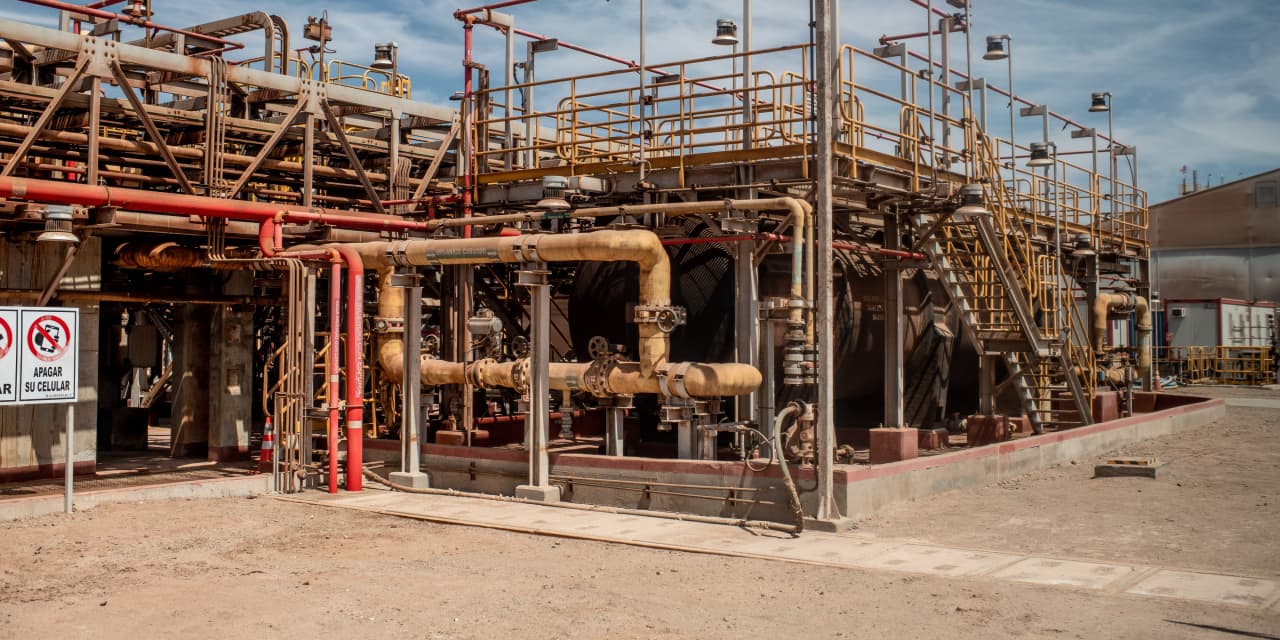
- Leaching Technology Innovation: Rio Tinto's Nuton technology achieved its first copper production by late 2025, with muon technology enhancing the monitoring of leaching processes, thereby increasing the efficiency of bio-leaching and reducing project timelines from concept to production.
- Future Outlook: As the commercialization of muon technology accelerates, mining companies are expected to achieve more efficient resource exploration and extraction by 2026, promoting sustainable supply of key materials such as copper, nickel, and uranium.
Trade with 70% Backtested Accuracy
Stop guessing "Should I Buy RIO?" and start using high-conviction signals backed by rigorous historical data.
Sign up today to access powerful investing tools and make smarter, data-driven decisions.
Analyst Views on RIO
Wall Street analysts forecast RIO stock price to fall
6 Analyst Rating
2 Buy
4 Hold
0 Sell
Moderate Buy
Current: 99.610

Low
68.00
Averages
83.70
High
129.50
Current: 99.610
Low
68.00
Averages
83.70
High
129.50
About RIO
Rio Tinto plc is a United Kingdom-based mining and materials company. It operates in over 35 countries, and its portfolio includes iron ore, copper, aluminum and a range of other minerals and materials. Its segments include Iron Ore, Aluminum, Copper, and Minerals. The Iron Ore segment includes iron ore mining and salt and gypsum production in Western Australia. Its iron ore operations in Pilbara comprise an integrated network of over 18 iron ore mines and four independent port terminals. The Aluminum segment includes bauxite mining, alumina refining, and aluminum smelting and recycling. The Copper segment includes mining and refining of copper, gold, silver, molybdenum, other by-products and licensing of extraction technologies. The Minerals segment includes mining and processing of borates, diamonds, iron concentrate and pellets from the Iron Ore Company of Canada, lithium and titanium dioxide feedstock.
About the author

Emily J. Thompson
Emily J. Thompson, a Chartered Financial Analyst (CFA) with 12 years in investment research, graduated with honors from the Wharton School. Specializing in industrial and technology stocks, she provides in-depth analysis for Intellectia’s earnings and market brief reports.

Rio Tinto Secures C$18.95M Support from Canadian Government

- Funding Approval: The Canadian government has conditionally approved a non-repayable contribution of up to C$18.95M (~US$13.8M) for Rio Tinto's research and development project aimed at extracting primary gallium from its alumina refining process in Quebec, highlighting governmental support for critical mineral initiatives.
- Pilot Plant Construction: Rio Tinto plans to construct a pilot plant at its Jonquière complex in Saguenay to validate the technology in an industrial setting, with operations expected to commence in 2027, thereby providing empirical support for gallium extraction.
- Capacity Expansion: Plans are underway to build a demonstration plant with a capacity of up to 4 metric tons/year of gallium at the same site, and Rio Tinto indicated that transitioning to a commercial-scale plant could yield production of 40 metric tons/year, representing approximately 5% of global gallium output, significantly enhancing the company's market presence.
- Supply Chain Enhancement: Amid China's restrictions on critical minerals like gallium, Rio Tinto's extraction project is poised to create additional value for the North American supply chain, bolstering the region's competitiveness in high-performance radars, smartphones, electric vehicles, and laptops.
See More
US Reshapes Rare Earth Metal Supply Chain

- Rare Earth Transformation: REalloys is converting rare-earth oxides into metals at its Euclid, Ohio facility, receiving U.S. government funding, marking a significant advancement in North America's rare earth metal production and enhancing national security and military readiness.
- Supply Chain Autonomy: By partnering with the Saskatchewan Research Council, REalloys secures upstream supply of heavy rare earths, creating a complete supply chain from separation to metallization, reducing reliance on China and strengthening U.S. competitiveness in the defense industry.
- Strategic Investment: REalloys plans to process approximately 3,000 tonnes of NdPr metal and 245 tonnes of heavy rare earth metals over the next five years, further solidifying its position in the North American rare earth market to meet defense and advanced industrial system demands.
- Policy Support: The U.S. Department of Defense's updated procurement regulations prohibit the use of Chinese-origin rare earth materials, reflecting the government's commitment to domestic metallization capabilities, which is expected to attract more investment to support this critical sector.
See More

RIO TINTO WITHDRAWS INITIAL $250/T OFFER ON MONDAY TO EVALUATE EFFECTS OF MIDDLE EAST CONFLICT - SOURCES

Initial Offer: A preliminary offer of $250 per ton was made on Monday.
Impact Assessment: The offer aims to assess the impact of the ongoing conflict in the Middle East.
See More
SOUTH32'S INITIAL Q2 ALUMINIUM PREMIUM OFFER OF $220/T IN JAPAN QUARTERLY DISCUSSIONS HAS EXPIRED, SOURCES SAY
- Aluminum Premium Offer: South32 has made an initial offer for Q2 aluminum premium at $220 per ton in Japan.
- Quarterly Talks Expiration: The quarterly negotiations for aluminum premiums have expired as of Friday, according to sources.
See More
Rio Tinto Restarts Zulti South Project in South Africa
- Project Restart: Rio Tinto announced the restart of the Zulti South project at Richards Bay Minerals in South Africa, with a $473 million investment, which had been suspended at the end of 2019 due to community protests, expected to provide long-term operational security for the company.
- Operational Continuity Plan: The Zulti South project is crucial for Richards Bay Minerals, aiming to extend operations to 2050 and ensure production continuity as the Zulti North ore body declines, thereby maintaining revenue streams.
- Construction Timeline: Construction is scheduled to begin in Q1 2026, with initial commercial production expected by the end of 2028, which will create new revenue opportunities and enhance Rio Tinto's market competitiveness.
- Aluminum Supply Negotiations Suspended: Rio Tinto has suspended negotiations with Japanese clients regarding aluminum supply due to concerns that the Strait of Hormuz, a critical supply route, may be disrupted by the U.S.-Israel conflict, potentially impacting the stability of its aluminum business.
See More
Rio Tinto Group Rated as Best Undervalued UK Stock
- Strong Financial Performance: Rio Tinto Group's fiscal 2025 earnings report revealed an 8% year-over-year increase in net cash generated from activities, reaching $16.83 billion, which bolsters investor confidence in the company's robust mining operations.
- EBITDA Growth: The adjusted EBITDA grew by 9% to $25.4 billion, reflecting ongoing production increases in copper and iron ore, particularly driven by the completion of the Oyu Tolgoi underground copper mine and ramp-up in Pilbara iron ore.
- Rating Changes Analysis: Despite strong results, Barclays downgraded Rio Tinto's rating from Buy to Hold and lowered the price target from 6,885p to 6,600p, citing that iron ore prices are near seasonal peaks and expected seasonal headwinds.
- Industry Competitive Landscape: The valuation discount of Rio Tinto to its peer BHP is the narrowest since 2020, limiting further upside potential, even as the company shows strong growth in its bauxite and aluminum segments.
See More
Rio Tinto Secures C$18.95M Support from Canadian Government
- Funding Approval: The Canadian government has conditionally approved a non-repayable contribution of up to C$18.95M (~US$13.8M) for Rio Tinto's research and development project aimed at extracting primary gallium from its alumina refining process in Quebec, highlighting governmental support for critical mineral initiatives.
- Pilot Plant Construction: Rio Tinto plans to construct a pilot plant at its Jonquière complex in Saguenay to validate the technology in an industrial setting, with operations expected to commence in 2027, thereby providing empirical support for gallium extraction.
- Capacity Expansion: Plans are underway to build a demonstration plant with a capacity of up to 4 metric tons/year of gallium at the same site, and Rio Tinto indicated that transitioning to a commercial-scale plant could yield production of 40 metric tons/year, representing approximately 5% of global gallium output, significantly enhancing the company's market presence.
- Supply Chain Enhancement: Amid China's restrictions on critical minerals like gallium, Rio Tinto's extraction project is poised to create additional value for the North American supply chain, bolstering the region's competitiveness in high-performance radars, smartphones, electric vehicles, and laptops.
See More
US Reshapes Rare Earth Metal Supply Chain
- Rare Earth Transformation: REalloys is converting rare-earth oxides into metals at its Euclid, Ohio facility, receiving U.S. government funding, marking a significant advancement in North America's rare earth metal production and enhancing national security and military readiness.
- Supply Chain Autonomy: By partnering with the Saskatchewan Research Council, REalloys secures upstream supply of heavy rare earths, creating a complete supply chain from separation to metallization, reducing reliance on China and strengthening U.S. competitiveness in the defense industry.
- Strategic Investment: REalloys plans to process approximately 3,000 tonnes of NdPr metal and 245 tonnes of heavy rare earth metals over the next five years, further solidifying its position in the North American rare earth market to meet defense and advanced industrial system demands.
- Policy Support: The U.S. Department of Defense's updated procurement regulations prohibit the use of Chinese-origin rare earth materials, reflecting the government's commitment to domestic metallization capabilities, which is expected to attract more investment to support this critical sector.
See More
RIO TINTO WITHDRAWS INITIAL $250/T OFFER ON MONDAY TO EVALUATE EFFECTS OF MIDDLE EAST CONFLICT - SOURCES
Initial Offer: A preliminary offer of $250 per ton was made on Monday.
Impact Assessment: The offer aims to assess the impact of the ongoing conflict in the Middle East.
See More
SOUTH32'S INITIAL Q2 ALUMINIUM PREMIUM OFFER OF $220/T IN JAPAN QUARTERLY DISCUSSIONS HAS EXPIRED, SOURCES SAY
- Aluminum Premium Offer: South32 has made an initial offer for Q2 aluminum premium at $220 per ton in Japan.
- Quarterly Talks Expiration: The quarterly negotiations for aluminum premiums have expired as of Friday, according to sources.
See More
Rio Tinto Restarts Zulti South Project in South Africa
- Project Restart: Rio Tinto announced the restart of the Zulti South project at Richards Bay Minerals in South Africa, with a $473 million investment, which had been suspended at the end of 2019 due to community protests, expected to provide long-term operational security for the company.
- Operational Continuity Plan: The Zulti South project is crucial for Richards Bay Minerals, aiming to extend operations to 2050 and ensure production continuity as the Zulti North ore body declines, thereby maintaining revenue streams.
- Construction Timeline: Construction is scheduled to begin in Q1 2026, with initial commercial production expected by the end of 2028, which will create new revenue opportunities and enhance Rio Tinto's market competitiveness.
- Aluminum Supply Negotiations Suspended: Rio Tinto has suspended negotiations with Japanese clients regarding aluminum supply due to concerns that the Strait of Hormuz, a critical supply route, may be disrupted by the U.S.-Israel conflict, potentially impacting the stability of its aluminum business.
See More
Rio Tinto Group Rated as Best Undervalued UK Stock
- Strong Financial Performance: Rio Tinto Group's fiscal 2025 earnings report revealed an 8% year-over-year increase in net cash generated from activities, reaching $16.83 billion, which bolsters investor confidence in the company's robust mining operations.
- EBITDA Growth: The adjusted EBITDA grew by 9% to $25.4 billion, reflecting ongoing production increases in copper and iron ore, particularly driven by the completion of the Oyu Tolgoi underground copper mine and ramp-up in Pilbara iron ore.
- Rating Changes Analysis: Despite strong results, Barclays downgraded Rio Tinto's rating from Buy to Hold and lowered the price target from 6,885p to 6,600p, citing that iron ore prices are near seasonal peaks and expected seasonal headwinds.
- Industry Competitive Landscape: The valuation discount of Rio Tinto to its peer BHP is the narrowest since 2020, limiting further upside potential, even as the company shows strong growth in its bauxite and aluminum segments.
See More