Meituan Projects Loss of Up to 24.3 Billion Yuan for 2025

- Loss Forecast: Meituan anticipates a net loss of up to 24.3 billion yuan for 2025, a stark reversal from a profit of 35.8 billion yuan last year, highlighting the financial strain from intense price competition.
- Q4 Performance: The company reported a fourth-quarter loss of 15.7 billion yuan, an improvement from the 18.6 billion yuan loss in Q3, indicating efforts to manage losses amid ongoing competitive pressures.
- Regulatory Intervention: China's market regulator convened Meituan, Alibaba, and JD.com to address the overheated competition in the emerging instant commerce sector, which may influence future market strategies.
- Surging Marketing Expenses: Meituan's marketing costs soared to 34.3 billion yuan in Q3, accounting for 36% of revenue, reflecting the high expenditure in competition, despite actual revenue growth of only 2%.
Trade with 70% Backtested Accuracy
Analyst Views on BABA

About BABA
About the author

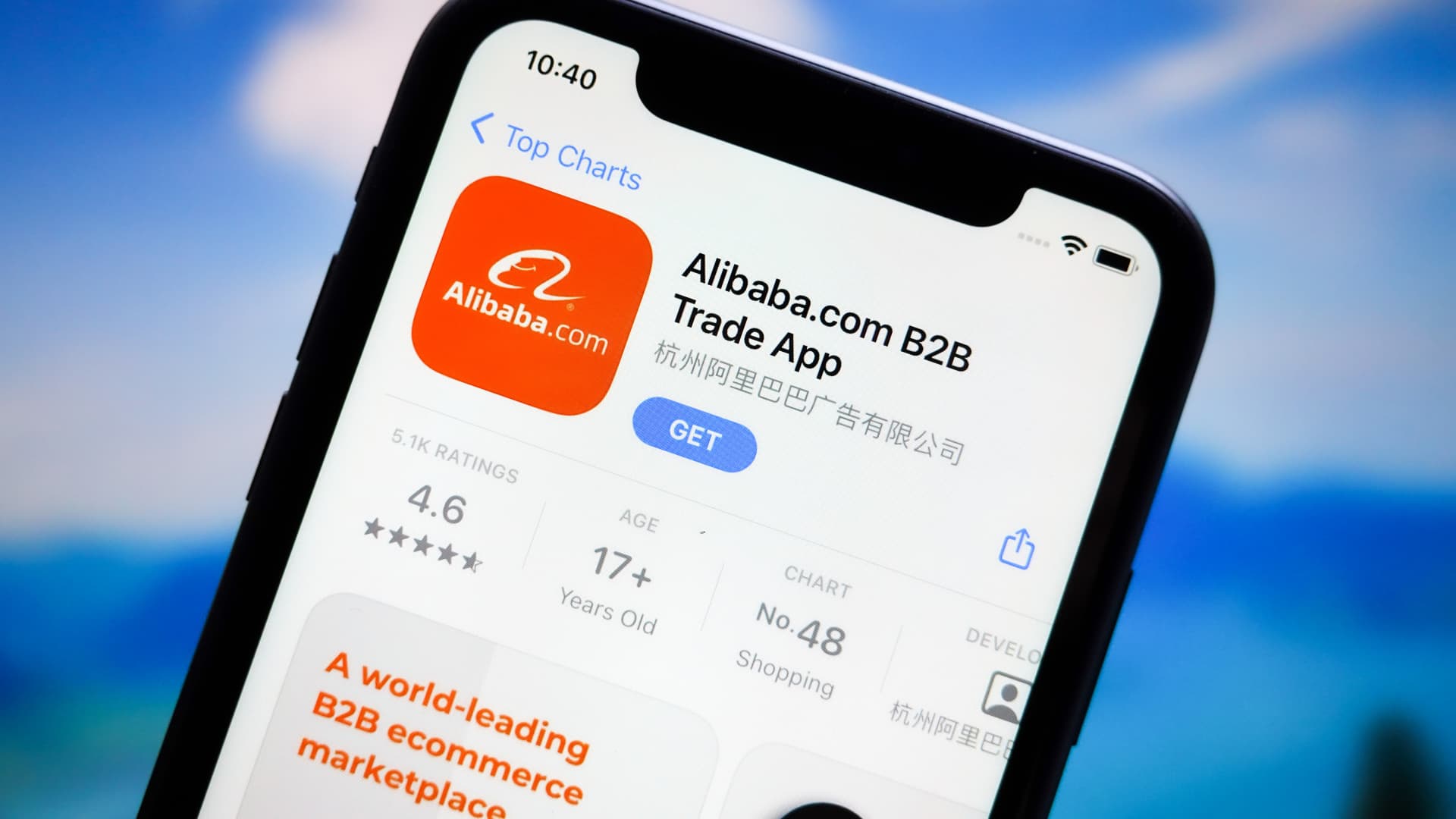
Alibaba Qwen AI Head Resigns Amid Product Launch

- Executive Departure: Lin Junyang, head of Alibaba's Qwen AI division, announced his resignation just two days after the company launched updated AI products, indicating potential instability in management that could affect product development direction.
- Team Turmoil: Lin's exit prompted other team members to follow suit, including a research scientist and a core contributor, suggesting that team morale may be impacted and future project advancement could face challenges.
- Surge in User Growth: The Qwen mobile app saw its monthly active users soar to 203 million in February, up from 31.05 million in January, reflecting increased product popularity, but management changes may affect user experience and sustained growth.
- Market Performance Analysis: Alibaba's market capitalization stands at $323.71 billion, with a 52-week high of $192.67 and a low of $95.73, while the current Relative Strength Index (RSI) is at 23.57, indicating the stock may be oversold, prompting investors to monitor the potential impact of management changes on stock price.

Investment Opportunities in Alibaba and Intuitive Machines

- Alibaba's Market Challenges: Alibaba's stock is currently over 50% below its all-time high from October 2020, primarily due to a record antitrust fine in 2021, reduced consumer spending from the pandemic, and trade conflicts between the U.S. and China, which have weakened its competitive position.
- Overseas Market Expansion: Alibaba is offsetting slower e-commerce sales in China by expanding into overseas markets such as Lazada in Southeast Asia, Trendyol in Turkey, and Daraz in South Asia, while also enhancing its Cainiao logistics business to strengthen its global market share.
- Intuitive Machines' Growth Potential: Intuitive Machines has successfully sent two Nova-C landers to NASA and plans to launch its third lunar mission, IM-3, in March 2025, with revenue expected to rise nearly fivefold from 2025 to 2027, indicating strong growth potential.
- Diversification Strategy: By acquiring Lanteris Space Systems, Intuitive Machines aims to transform into a diversified space transportation service provider, reducing its dependence on NASA's lunar missions, with expectations of profitability by 2026 and a fivefold increase in net income by 2027.
Alibaba and Intuitive Machines Growth Prospects
- Alibaba's Market Challenges: Alibaba's stock has fallen over 50% from its all-time high in 2020, primarily due to a record antitrust fine in 2021 that limited its competitive edge, resulting in constrained growth for its e-commerce and cloud businesses.
- Overseas Expansion Strategy: Despite slowing domestic e-commerce sales, Alibaba is actively expanding into overseas markets, including Lazada in Southeast Asia and Daraz in South Asia, to offset weakness in China and enhance its global market share.
- Intuitive Machines' Growth Potential: Intuitive Machines plans to achieve nearly fivefold revenue growth from 2025 to 2027 and expects to turn profitable in 2026, indicating strong growth potential in the space logistics sector, despite facing increased competition and potential reductions in NASA contracts.
- Acquisition and Market Positioning: Intuitive Machines recently acquired Lanteris Space Systems to accelerate its transformation into a diversified space transportation service provider, reducing reliance on NASA lunar missions and strengthening its position in the defense sector.

Trump Orders Maritime Trade Insurance in Gulf


- Policy Response: Trump announced on social media that he has directed the U.S. Development Finance Corporation to provide political risk insurance and financial guarantees for all maritime trade transiting the Strait of Hormuz, aiming to alleviate concerns over energy supply disruptions, which could stabilize market sentiment.
- Market Recovery: Following Trump's statement, the S&P 500 trimmed its midday loss from 1.5% to 0.6%, indicating a positive investor reaction to the policy support, which may help restore market confidence.
- Sector Impact: Royal Caribbean Group and other cruise operators saw significant rebounds after Trump's announcement, suggesting that fears of the Iran conflict impacting consumer travel spending may be easing, potentially boosting travel-related expenditures.
- Future Outlook: Trump's mention of more actions to come was interpreted by the market as ongoing support for energy markets, with investors keenly watching whether normal traffic through the Strait of Hormuz can resume and if the Navy escort threat can expedite a diplomatic resolution.

Alibaba Consolidates AI Efforts Under 'Qwen' Brand

- Brand Consolidation: Alibaba has unified its large model brand under 'Qwen', with the app serving as its flagship product, aiming to strengthen its competitive position in the rapidly growing AI market, despite a 2.57% drop in stock price.
- User Engagement: During the Lunar New Year, users placed nearly 200 million orders through the 'Qwen' app, demonstrating strong consumer appeal and further driving Alibaba's market share in the AI sector.
- Low-Cost AI Tools: Alibaba Cloud launched a new AI coding platform providing low-cost access to various leading Chinese AI models, with the basic version priced at 7.9 yuan for the first month, aimed at attracting more developers and boosting cloud service revenue.
- Chip Innovation: Alibaba's T-Head introduced the Zhenwu 810E chip, comparable in performance to Nvidia's H20, deployed in multiple 10,000-card clusters and utilized by over 400 customers, including State Grid, showcasing its robust capabilities in AI training and inference.

Global ETF Surges as Investors Abandon U.S. Stocks


Investor Trends: Since the beginning of the year, investors have been moving away from U.S. stocks and ETFs, favoring safer assets like gold and silver, as well as international equities, due to concerns over U.S. economic policies and market volatility.
ETF Performance: The VanEck FTSE All-World ex-U.S. ETF (VEU) has outperformed U.S. equities, gaining over 9% year-to-date compared to the S&P 500's slight gain, with significant interest from institutional investors.
Sector Exposure: The VEU ETF shows a strong allocation towards financials and technology, with notable holdings in companies from Japan, the UK, and Canada, reflecting a diversified global investment strategy.
Market Outlook: Analysts suggest that the ongoing "Sell America" trend and the ETF's strong performance indicate a continued preference for international investments, as U.S. equities face challenges from rising debt and unpredictable tariff policies.
Alibaba Qwen AI Head Resigns Amid Product Launch
- Executive Departure: Lin Junyang, head of Alibaba's Qwen AI division, announced his resignation just two days after the company launched updated AI products, indicating potential instability in management that could affect product development direction.
- Team Turmoil: Lin's exit prompted other team members to follow suit, including a research scientist and a core contributor, suggesting that team morale may be impacted and future project advancement could face challenges.
- Surge in User Growth: The Qwen mobile app saw its monthly active users soar to 203 million in February, up from 31.05 million in January, reflecting increased product popularity, but management changes may affect user experience and sustained growth.
- Market Performance Analysis: Alibaba's market capitalization stands at $323.71 billion, with a 52-week high of $192.67 and a low of $95.73, while the current Relative Strength Index (RSI) is at 23.57, indicating the stock may be oversold, prompting investors to monitor the potential impact of management changes on stock price.
Investment Opportunities in Alibaba and Intuitive Machines
- Alibaba's Market Challenges: Alibaba's stock is currently over 50% below its all-time high from October 2020, primarily due to a record antitrust fine in 2021, reduced consumer spending from the pandemic, and trade conflicts between the U.S. and China, which have weakened its competitive position.
- Overseas Market Expansion: Alibaba is offsetting slower e-commerce sales in China by expanding into overseas markets such as Lazada in Southeast Asia, Trendyol in Turkey, and Daraz in South Asia, while also enhancing its Cainiao logistics business to strengthen its global market share.
- Intuitive Machines' Growth Potential: Intuitive Machines has successfully sent two Nova-C landers to NASA and plans to launch its third lunar mission, IM-3, in March 2025, with revenue expected to rise nearly fivefold from 2025 to 2027, indicating strong growth potential.
- Diversification Strategy: By acquiring Lanteris Space Systems, Intuitive Machines aims to transform into a diversified space transportation service provider, reducing its dependence on NASA's lunar missions, with expectations of profitability by 2026 and a fivefold increase in net income by 2027.
Alibaba and Intuitive Machines Growth Prospects
- Alibaba's Market Challenges: Alibaba's stock has fallen over 50% from its all-time high in 2020, primarily due to a record antitrust fine in 2021 that limited its competitive edge, resulting in constrained growth for its e-commerce and cloud businesses.
- Overseas Expansion Strategy: Despite slowing domestic e-commerce sales, Alibaba is actively expanding into overseas markets, including Lazada in Southeast Asia and Daraz in South Asia, to offset weakness in China and enhance its global market share.
- Intuitive Machines' Growth Potential: Intuitive Machines plans to achieve nearly fivefold revenue growth from 2025 to 2027 and expects to turn profitable in 2026, indicating strong growth potential in the space logistics sector, despite facing increased competition and potential reductions in NASA contracts.
- Acquisition and Market Positioning: Intuitive Machines recently acquired Lanteris Space Systems to accelerate its transformation into a diversified space transportation service provider, reducing reliance on NASA lunar missions and strengthening its position in the defense sector.
Trump Orders Maritime Trade Insurance in Gulf
- Policy Response: Trump announced on social media that he has directed the U.S. Development Finance Corporation to provide political risk insurance and financial guarantees for all maritime trade transiting the Strait of Hormuz, aiming to alleviate concerns over energy supply disruptions, which could stabilize market sentiment.
- Market Recovery: Following Trump's statement, the S&P 500 trimmed its midday loss from 1.5% to 0.6%, indicating a positive investor reaction to the policy support, which may help restore market confidence.
- Sector Impact: Royal Caribbean Group and other cruise operators saw significant rebounds after Trump's announcement, suggesting that fears of the Iran conflict impacting consumer travel spending may be easing, potentially boosting travel-related expenditures.
- Future Outlook: Trump's mention of more actions to come was interpreted by the market as ongoing support for energy markets, with investors keenly watching whether normal traffic through the Strait of Hormuz can resume and if the Navy escort threat can expedite a diplomatic resolution.
Alibaba Consolidates AI Efforts Under 'Qwen' Brand
- Brand Consolidation: Alibaba has unified its large model brand under 'Qwen', with the app serving as its flagship product, aiming to strengthen its competitive position in the rapidly growing AI market, despite a 2.57% drop in stock price.
- User Engagement: During the Lunar New Year, users placed nearly 200 million orders through the 'Qwen' app, demonstrating strong consumer appeal and further driving Alibaba's market share in the AI sector.
- Low-Cost AI Tools: Alibaba Cloud launched a new AI coding platform providing low-cost access to various leading Chinese AI models, with the basic version priced at 7.9 yuan for the first month, aimed at attracting more developers and boosting cloud service revenue.
- Chip Innovation: Alibaba's T-Head introduced the Zhenwu 810E chip, comparable in performance to Nvidia's H20, deployed in multiple 10,000-card clusters and utilized by over 400 customers, including State Grid, showcasing its robust capabilities in AI training and inference.
Global ETF Surges as Investors Abandon U.S. Stocks
Investor Trends: Since the beginning of the year, investors have been moving away from U.S. stocks and ETFs, favoring safer assets like gold and silver, as well as international equities, due to concerns over U.S. economic policies and market volatility.
ETF Performance: The VanEck FTSE All-World ex-U.S. ETF (VEU) has outperformed U.S. equities, gaining over 9% year-to-date compared to the S&P 500's slight gain, with significant interest from institutional investors.
Sector Exposure: The VEU ETF shows a strong allocation towards financials and technology, with notable holdings in companies from Japan, the UK, and Canada, reflecting a diversified global investment strategy.
Market Outlook: Analysts suggest that the ongoing "Sell America" trend and the ETF's strong performance indicate a continued preference for international investments, as U.S. equities face challenges from rising debt and unpredictable tariff policies.