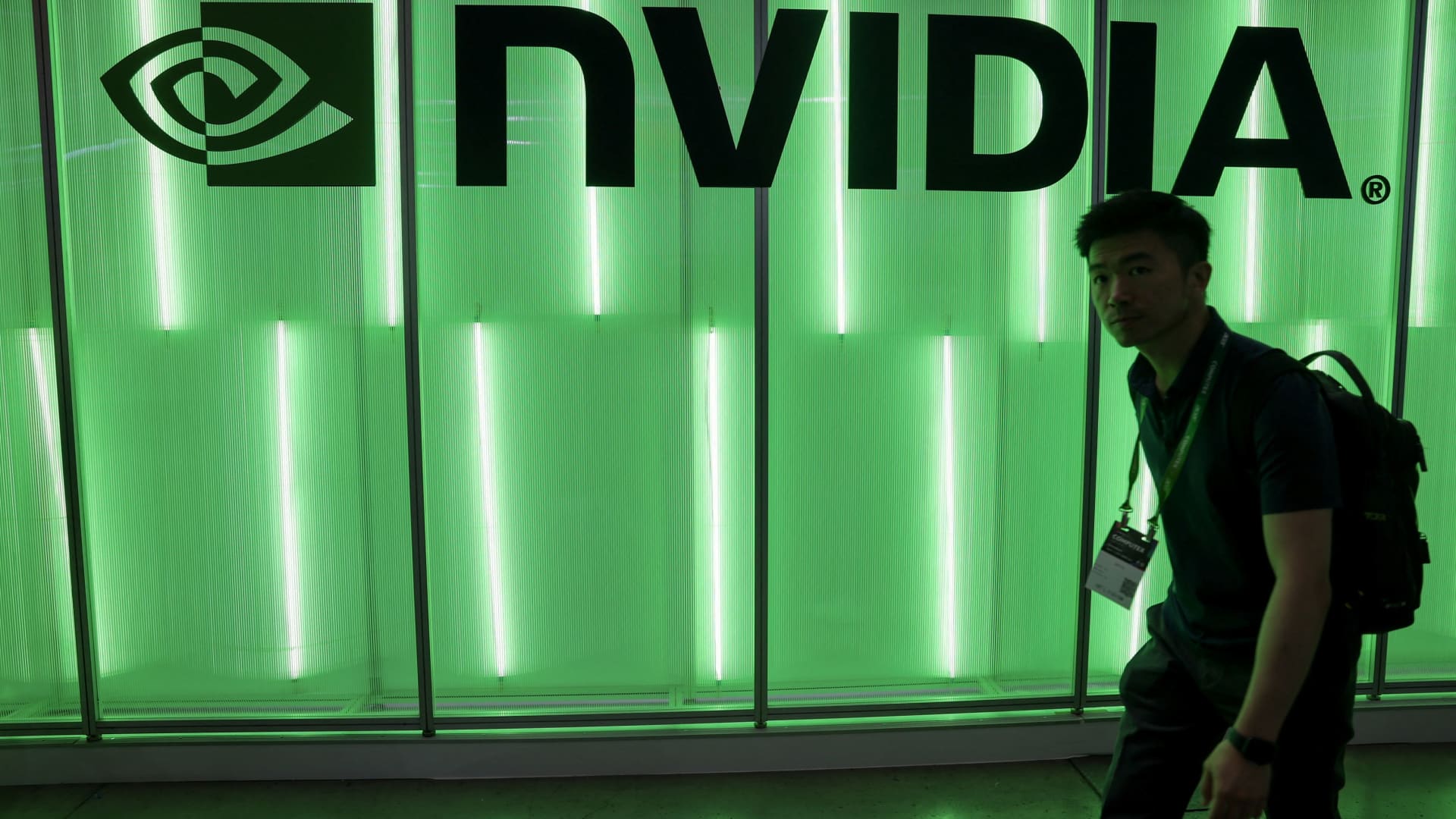
Dow Futures Decline as Nvidia Shares Retreat Despite Strong Earnings
Written by Emily J. Thompson, Senior Investment Analyst
Updated: 6 days ago
0mins


Should l Buy NVDA?
Source: Yahoo Finance
- Nvidia Earnings Reaction: Nvidia reported strong earnings and guidance, yet its shares fell in after-hours trading, indicating market concerns over high valuations that could undermine investor confidence.
- Market Trend Shift: The S&P 500 has regained its position above the 50-day moving average, suggesting a short-term improvement in market sentiment; however, overall market uncertainty remains, necessitating cautious investor strategies.
- Dow Futures Movement: Dow futures are declining, reflecting investor caution towards tech stocks, particularly following a pullback in shares of leading companies like Nvidia, which may trigger broader market volatility.
- Investor Strategy Adjustment: As market sentiment shifts, investors may need to reassess their portfolios, especially in light of the unstable performance of tech stocks, seeking more stable investment opportunities.
Trade with 70% Backtested Accuracy
Stop guessing "Should I Buy NVDA?" and start using high-conviction signals backed by rigorous historical data.
Sign up today to access powerful investing tools and make smarter, data-driven decisions.
Analyst Views on NVDA
Wall Street analysts forecast NVDA stock price to rise
41 Analyst Rating
39 Buy
1 Hold
1 Sell
Strong Buy
Current: 180.050

Low
200.00
Averages
264.97
High
352.00
Current: 180.050
Low
200.00
Averages
264.97
High
352.00
About NVDA
NVIDIA Corporation is a full-stack computing infrastructure company. The Company is engaged in accelerated computing to help solve the challenging computational problems. The Company’s segments include Compute & Networking and Graphics. The Compute & Networking segment includes its Data Center accelerated computing platforms and artificial intelligence (AI) solutions and software; networking; automotive platforms and autonomous and electric vehicle solutions; Jetson for robotics and other embedded platforms, and DGX Cloud computing services. The Graphics segment includes GeForce GPUs for gaming and PCs, the GeForce NOW game streaming service and related infrastructure, and solutions for gaming platforms; Quadro/NVIDIA RTX GPUs for enterprise workstation graphics; virtual GPU software for cloud-based visual and virtual computing; automotive platforms for infotainment systems, and Omniverse Enterprise software for building and operating industrial AI and digital twin applications.
About the author

Emily J. Thompson
Emily J. Thompson, a Chartered Financial Analyst (CFA) with 12 years in investment research, graduated with honors from the Wharton School. Specializing in industrial and technology stocks, she provides in-depth analysis for Intellectia’s earnings and market brief reports.

Nvidia's Growth Rate Exceeds 73% Yet Stock Price Declines

- Significant Earnings Growth: Nvidia's latest earnings report reveals a revenue of $68.1 billion for the quarter ending January 25, reflecting an impressive growth rate of 73%, which is exceptionally rare among tech companies, indicating robust market demand and business performance.
- Stock Price Volatility: Despite strong performance, Nvidia's stock price has declined following the earnings release, currently trading at a P/E ratio of 37, which drops to 23 based on expected earnings, highlighting market concerns over its high valuation.
- Market Position Consolidation: As the world's most valuable company with a market cap of $4.4 trillion, Nvidia maintains a strong investment appeal despite overall bearish sentiment in tech, thanks to its leadership in the AI chip sector.
- Cautious Investor Sentiment: Analysts suggest that investors should approach Nvidia with caution in the current market environment, as while its business remains strong, the likelihood of the stock doubling in value in the short term is low, necessitating realistic expectations.
See More
Vanguard Total Stock Market ETF: Advantages and Risks
- Core Investment: The Vanguard Total Stock Market ETF (VTI) tracks the entire U.S. stock market and owns over 3,500 stocks, providing investors with the convenience of investing in thousands of stocks with a single click, making it ideal for those looking to simplify their investments.
- Cost Advantage: With an expense ratio of just 0.03%, investing $10,000 incurs only $3 in annual fees, significantly lowering investment costs and enhancing long-term return potential for investors.
- Long-Term Return Potential: Since its inception in 2001, the ETF has averaged a 9.2% annual total return, meaning a $10,000 investment would be worth over $90,000 today, demonstrating its effectiveness as a wealth-building tool.
- Concentration Risk and Lack of Diversification: Despite holding many stocks, the ETF's performance is heavily reliant on the top 10 companies, presenting significant concentration risk, while lacking exposure to international stocks and fixed-income assets, which may hinder portfolio diversification.
See More

CoreWeave Partners with Perplexity AI for Strategic Growth

- Stock Surge: CoreWeave's stock surged by as much as 9.1% today, with an 8.1% increase as of 12:41 p.m. ET, indicating strong market optimism regarding its growth potential.
- Strategic Partnership: The company announced a multiyear strategic partnership with Perplexity AI, which will leverage CoreWeave's platform for next-generation inference workloads, significantly enhancing its AI processing capabilities.
- Enterprise Product Rollout: CoreWeave will implement Perplexity's top-tier subscription product, Enterprise Max, across its workforce, enabling employees to conduct in-depth research and data analysis on a unified platform, thereby improving operational efficiency.
- Strong Financial Performance: CoreWeave reported a revenue of $5.1 billion in 2025, a 168% increase, while its loss per share improved to $2.81, indicating a high-risk, high-reward investment profile as it continues to seek profitability.
See More
Nvidia CEO Discusses OpenAI Investment Opportunity
- Investment Opportunity Assessment: Nvidia CEO Jensen Huang stated that while the company plans to invest $30 billion in OpenAI, the prospect of a $100 billion investment is likely off the table due to OpenAI's impending public offering, which may limit its financing flexibility.
- Market Dynamics Impact: Huang highlighted at the Morgan Stanley Technology, Media, and Telecom conference that OpenAI's IPO will alter its capital structure, potentially introducing more uncertainty into Nvidia's future investment decisions.
- Industry Outlook: Despite the reduced investment scale, Nvidia remains optimistic about its collaboration potential with OpenAI, anticipating that technological integration will enhance its competitiveness in the artificial intelligence sector.
- Strategic Adjustment Necessity: With OpenAI's IPO approaching, Nvidia must reassess its investment strategy to adapt to the rapidly changing market environment and technological advancements, ensuring its continued leadership in the AI field.
See More

Rivian: The Intersection of EVs and AI Potential

- In-House AI Chip Production: Rivian plans to manufacture its own AI chips to reduce reliance on external suppliers, addressing current chip shortages and enhancing its competitiveness in self-driving technology development.
- Voice Interface Innovation: The company will introduce a highly conversational AI voice interface in its R1 and R2 models, which is expected to improve user experience and strengthen brand appeal, helping Rivian stand out in the competitive EV market.
- Full Autonomy Goal: Rivian aims for full Level 5 autonomy, with plans to enable hands-free driving on over 3.5 million miles of North American roads by the end of 2026, significantly boosting its product competitiveness.
- Valuation Advantage: Despite facing fierce competition in AI and autonomy, Rivian's current sales valuation stands at just 3.4 times, compared to Nvidia's 25 times and Tesla's 15 times, highlighting its attractiveness as a potential AI investment.
See More

CoreWeave Enters Multi-Year Deal with Perplexity AI
- Strategic Partnership: CoreWeave has entered a multi-year strategic partnership with Perplexity AI, which will leverage CoreWeave's neocloud platform to support its AI inference workloads, thereby enhancing its AI processing capacity and driving business growth.
- Platform Upgrade: CoreWeave will roll out Perplexity's Enterprise Max subscription service, enabling employees to conduct deep research, visualize and analyze data all within one platform, thereby improving operational efficiency and enhancing the application of AI models.
- Strong Financial Performance: CoreWeave reported a revenue of $5.1 billion in 2025, a 168% increase year-over-year, although its loss per share improved to $2.81, indicating a high-risk, high-reward investment profile as profitability remains elusive.
- Positive Market Reaction: Following the announcement of the partnership, CoreWeave's stock surged by as much as 9.1%, reflecting market optimism regarding its future growth potential, although analysts advise investors to proceed with caution.
See More
Nvidia's Growth Rate Exceeds 73% Yet Stock Price Declines
- Significant Earnings Growth: Nvidia's latest earnings report reveals a revenue of $68.1 billion for the quarter ending January 25, reflecting an impressive growth rate of 73%, which is exceptionally rare among tech companies, indicating robust market demand and business performance.
- Stock Price Volatility: Despite strong performance, Nvidia's stock price has declined following the earnings release, currently trading at a P/E ratio of 37, which drops to 23 based on expected earnings, highlighting market concerns over its high valuation.
- Market Position Consolidation: As the world's most valuable company with a market cap of $4.4 trillion, Nvidia maintains a strong investment appeal despite overall bearish sentiment in tech, thanks to its leadership in the AI chip sector.
- Cautious Investor Sentiment: Analysts suggest that investors should approach Nvidia with caution in the current market environment, as while its business remains strong, the likelihood of the stock doubling in value in the short term is low, necessitating realistic expectations.
See More
Vanguard Total Stock Market ETF: Advantages and Risks
- Core Investment: The Vanguard Total Stock Market ETF (VTI) tracks the entire U.S. stock market and owns over 3,500 stocks, providing investors with the convenience of investing in thousands of stocks with a single click, making it ideal for those looking to simplify their investments.
- Cost Advantage: With an expense ratio of just 0.03%, investing $10,000 incurs only $3 in annual fees, significantly lowering investment costs and enhancing long-term return potential for investors.
- Long-Term Return Potential: Since its inception in 2001, the ETF has averaged a 9.2% annual total return, meaning a $10,000 investment would be worth over $90,000 today, demonstrating its effectiveness as a wealth-building tool.
- Concentration Risk and Lack of Diversification: Despite holding many stocks, the ETF's performance is heavily reliant on the top 10 companies, presenting significant concentration risk, while lacking exposure to international stocks and fixed-income assets, which may hinder portfolio diversification.
See More
CoreWeave Partners with Perplexity AI for Strategic Growth
- Stock Surge: CoreWeave's stock surged by as much as 9.1% today, with an 8.1% increase as of 12:41 p.m. ET, indicating strong market optimism regarding its growth potential.
- Strategic Partnership: The company announced a multiyear strategic partnership with Perplexity AI, which will leverage CoreWeave's platform for next-generation inference workloads, significantly enhancing its AI processing capabilities.
- Enterprise Product Rollout: CoreWeave will implement Perplexity's top-tier subscription product, Enterprise Max, across its workforce, enabling employees to conduct in-depth research and data analysis on a unified platform, thereby improving operational efficiency.
- Strong Financial Performance: CoreWeave reported a revenue of $5.1 billion in 2025, a 168% increase, while its loss per share improved to $2.81, indicating a high-risk, high-reward investment profile as it continues to seek profitability.
See More
Nvidia CEO Discusses OpenAI Investment Opportunity
- Investment Opportunity Assessment: Nvidia CEO Jensen Huang stated that while the company plans to invest $30 billion in OpenAI, the prospect of a $100 billion investment is likely off the table due to OpenAI's impending public offering, which may limit its financing flexibility.
- Market Dynamics Impact: Huang highlighted at the Morgan Stanley Technology, Media, and Telecom conference that OpenAI's IPO will alter its capital structure, potentially introducing more uncertainty into Nvidia's future investment decisions.
- Industry Outlook: Despite the reduced investment scale, Nvidia remains optimistic about its collaboration potential with OpenAI, anticipating that technological integration will enhance its competitiveness in the artificial intelligence sector.
- Strategic Adjustment Necessity: With OpenAI's IPO approaching, Nvidia must reassess its investment strategy to adapt to the rapidly changing market environment and technological advancements, ensuring its continued leadership in the AI field.
See More
Rivian: The Intersection of EVs and AI Potential
- In-House AI Chip Production: Rivian plans to manufacture its own AI chips to reduce reliance on external suppliers, addressing current chip shortages and enhancing its competitiveness in self-driving technology development.
- Voice Interface Innovation: The company will introduce a highly conversational AI voice interface in its R1 and R2 models, which is expected to improve user experience and strengthen brand appeal, helping Rivian stand out in the competitive EV market.
- Full Autonomy Goal: Rivian aims for full Level 5 autonomy, with plans to enable hands-free driving on over 3.5 million miles of North American roads by the end of 2026, significantly boosting its product competitiveness.
- Valuation Advantage: Despite facing fierce competition in AI and autonomy, Rivian's current sales valuation stands at just 3.4 times, compared to Nvidia's 25 times and Tesla's 15 times, highlighting its attractiveness as a potential AI investment.
See More
CoreWeave Enters Multi-Year Deal with Perplexity AI
- Strategic Partnership: CoreWeave has entered a multi-year strategic partnership with Perplexity AI, which will leverage CoreWeave's neocloud platform to support its AI inference workloads, thereby enhancing its AI processing capacity and driving business growth.
- Platform Upgrade: CoreWeave will roll out Perplexity's Enterprise Max subscription service, enabling employees to conduct deep research, visualize and analyze data all within one platform, thereby improving operational efficiency and enhancing the application of AI models.
- Strong Financial Performance: CoreWeave reported a revenue of $5.1 billion in 2025, a 168% increase year-over-year, although its loss per share improved to $2.81, indicating a high-risk, high-reward investment profile as profitability remains elusive.
- Positive Market Reaction: Following the announcement of the partnership, CoreWeave's stock surged by as much as 9.1%, reflecting market optimism regarding its future growth potential, although analysts advise investors to proceed with caution.
See More