Berkshire Hathaway's Strategic Shift Under New CEO
Written by Emily J. Thompson, Senior Investment Analyst
Updated: 23 hours ago
0mins

Source: Benzinga
- Core Investment Adjustment: In his inaugural letter to shareholders, CEO Greg Abel's omission of two major holdings indicates a potential shift in Berkshire Hathaway's equity strategy, reflecting a concentrated management approach toward long-term investments.
- Holding Changes: During the final quarter of 2025, Berkshire reduced its stake in Bank of America by 9% while increasing its position in Chevron by 7%, demonstrating the company's dynamic adjustment strategy across different investment sectors.
- Cultural Leadership Shift: Abel emphasizes a culture of “stewardship” and decentralized autonomy, marking a new leadership era post-Buffett; despite his $25 million salary, significantly higher than Buffett's $100,000, he remains focused on maintaining “fortress-like” financial strength.
- Cash Reserves Growth: Berkshire's cash holdings now exceed $370 billion, showcasing the company's ongoing commitment to financial robustness, which provides strong support for future investment opportunities.
Trade with 70% Backtested Accuracy
Stop guessing "Should I Buy CVX?" and start using high-conviction signals backed by rigorous historical data.
Sign up today to access powerful investing tools and make smarter, data-driven decisions.
Analyst Views on CVX
Wall Street analysts forecast CVX stock price to fall
19 Analyst Rating
15 Buy
4 Hold
0 Sell
Strong Buy
Current: 186.760

Low
158.00
Averages
176.95
High
206.00
Current: 186.760
Low
158.00
Averages
176.95
High
206.00
About CVX
Chevron Corporation is an integrated energy company. The Company produces crude oil and natural gas; manufactures transportation fuels, lubricants, petrochemicals and additives; and develops technologies that enhance its business and industry. The Company’s segments include Upstream and Downstream. Upstream operations consist primarily of exploring for, developing, producing and transporting crude oil and natural gas; liquefaction, transportation and regasification associated with LNG; transporting crude oil by major international oil export pipelines; processing, transporting, storage and marketing of natural gas; carbon capture and storage; and a gas-to-liquids plant. Downstream operations consist primarily of the refining of crude oil into petroleum products; marketing crude oil, refined products, and lubricants; manufacturing and marketing of renewable fuels, and transporting of crude oil and refined products by pipeline, marine vessel, motor equipment and rail car.
About the author

Emily J. Thompson
Emily J. Thompson, a Chartered Financial Analyst (CFA) with 12 years in investment research, graduated with honors from the Wharton School. Specializing in industrial and technology stocks, she provides in-depth analysis for Intellectia’s earnings and market brief reports.

U.S. Treasury Yields Rise Amid Escalating Middle East Conflict


- Rising Treasury Yields: The benchmark 10-year Treasury yield increased by nearly 4 basis points to 4.09% as investors assess the ongoing Middle East conflict, indicating heightened market sensitivity to risk that could lead to capital outflows from equities.
- Short-term Bond Fluctuations: The 2-year Treasury yield rose over 4 basis points to 3.531%, reflecting uncertainty in the short-term economic outlook, which may impact corporate financing costs and consumer confidence.
- Escalating Geopolitical Risks: The U.S.-Iran conflict has intensified as it enters its fourth day, shifting market sentiment to risk-off, pressuring global equities while increasing demand for safe-haven assets, pushing gold futures higher.
- Energy Supply Concerns: Reports of Iran closing the Strait of Hormuz have raised fears of energy supply disruptions, driving oil prices higher and exacerbating market anxiety, potentially affecting the pace of global economic recovery.
See More
Geopolitical Crisis in the Middle East Impacts European Stocks
- Market Sentiment Decline: European stocks are expected to open lower due to the ongoing geopolitical crisis in the Middle East, with the UK's FTSE index projected to drop by 0.7%, Germany's DAX down 1%, France's CAC 40 down 0.75%, and Italy's FTSE MIB down 0.6%, reflecting investor concerns about market outlook.
- Oil Price Surge: Global crude oil prices surged on Monday amid fears that the escalating U.S.-Iran conflict could disrupt oil infrastructure and push fuel prices higher, thereby increasing inflationary risks and adding economic pressure.
- Increased Demand for Safe Havens: As uncertainty rises, demand for gold as a safe haven has surged, with global equities under pressure, particularly as U.S. futures and Asian markets fell on Tuesday, indicating a risk-averse sentiment among investors.
- Military Reinforcements and Uncertain Situation: The U.S. military is sending more forces to the region, with President Trump stating that the conflict could last four to five weeks but may extend longer, highlighting the complexity and uncertainty of the situation, while the EU calls for de-escalation and civilian protection.
See More
Closure of Strait of Hormuz Triggers Global Energy Market Shock

- Energy Supply Disruption: The Iranian Revolutionary Guard's announcement of the closure of the Strait of Hormuz sends shockwaves through global energy markets, with approximately 13 million barrels per day of oil transport affected in 2025, potentially pushing oil prices above $100 per barrel and placing immense pressure on import-dependent Asian countries.
- LNG Supply Risks: About 20% of global liquefied natural gas exports are at risk, particularly from Qatar, which halted production following Iranian drone strikes, potentially leading to severe energy shortages for South Asian countries like Pakistan and Bangladesh.
- Vulnerability in Asia: Countries like India and Thailand are highly dependent on rising oil prices, with over half of India's LNG imports linked to the Gulf; thus, a blockade of the Strait of Hormuz would simultaneously increase oil and gas import costs, resulting in a dual economic shock.
- China's Resilience: While China is the world's largest crude oil importer and 40% of its oil imports pass through the Strait, its stockpiles and alternative supplies provide some buffer; however, a prolonged closure would intensify price competition across Asia.
See More
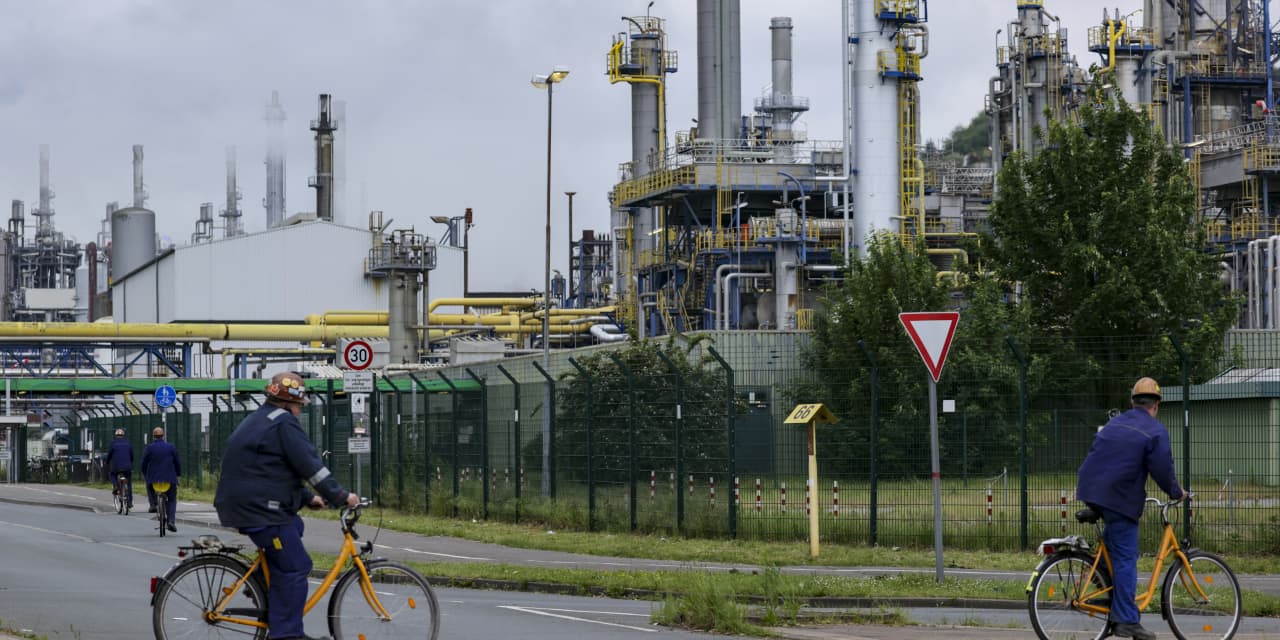
Escalating Middle East Tensions Disrupt Global Trade

- Flight Services Limited: The first flights out of Dubai have been cleared to depart since the U.S. and Israel attacked Iran, but services remain limited, resulting in over 11,000 flight cancellations in the Middle East, posing significant operational challenges for airlines.
- Oil Prices Surge: Crude oil prices jumped more than 8% on Monday after Iran announced the closure of the Strait of Hormuz, as market participants fear that the U.S.-Iran conflict could lead to major supply disruptions, significantly impacting the global energy market.
- Apple Product Launch: Apple launched a lower-cost iPhone 17e and a new iPad Air powered by its M4 chip, marking the beginning of a week-long hardware launch event that could stimulate consumer demand and enhance the company's sales performance.
- Shipping Industry Disruption: Following the U.S. and Israeli strikes on Iran, Danish shipping giant Maersk announced the suspension of all vessel crossings in the Strait of Hormuz, warning that services to Persian Gulf ports may experience delays, further exacerbating uncertainties in global trade.
See More

Market Resilience Amid Iran Conflict Highlights Energy Independence


- Market Resilience: Despite the geopolitical tensions following the U.S. and Israel's attacks on Iran, the S&P 500 managed to close slightly higher on Monday, indicating a relatively muted market response to the conflict and reflecting investor optimism about economic prospects.
- Impact of Energy Independence: Jim Cramer noted that U.S. energy independence has altered how investors react to geopolitical shocks, as the abundance of domestic oil production diminishes the impact of global oil price fluctuations on the U.S. economy.
- Oil Price Volatility: During Monday's session, West Texas Intermediate crude surged over 12.4% at its peak, settling at $71.23 per barrel, although it could not maintain those highs, highlighting the market's sensitivity to oil price movements.
- Market Sentiment: Investors appeared unfazed by the steep declines in private equity firms like KKR, Blackstone, and Apollo, despite concerns in the software sector, suggesting a calm market attitude towards geopolitical turmoil and indicating that economic panic is not necessarily a consequence of such events.
See More

Mixed Close for US Stocks Amid Iran War Impact


- Mixed Market Performance: On Monday, the S&P 500 closed up 0.04%, while the Dow Jones Industrial Average fell 0.15%, and the Nasdaq 100 rose 0.13%, reflecting a divergence in market sentiment influenced by the ongoing war in Iran, with increased demand for defense and energy stocks.
- Surge in Oil Prices: WTI crude oil prices soared over 6% to an 8.25-month high following Iran's attack on oil tankers, which is expected to elevate inflation expectations and impact the overall economic environment and investor confidence.
- Strong Manufacturing Index: The US February ISM manufacturing index unexpectedly rose to 52.4, surpassing the market expectation of 51.5, indicating economic resilience that could influence the Federal Reserve's monetary policy direction, leading to shifts in future rate hike expectations.
- Optimistic Earnings Outlook: More than 90% of S&P 500 companies have reported earnings, with 73% exceeding expectations, and Q4 earnings growth is projected at 8.4%, providing market support despite geopolitical risks.
See More
U.S. Treasury Yields Rise Amid Escalating Middle East Conflict
- Rising Treasury Yields: The benchmark 10-year Treasury yield increased by nearly 4 basis points to 4.09% as investors assess the ongoing Middle East conflict, indicating heightened market sensitivity to risk that could lead to capital outflows from equities.
- Short-term Bond Fluctuations: The 2-year Treasury yield rose over 4 basis points to 3.531%, reflecting uncertainty in the short-term economic outlook, which may impact corporate financing costs and consumer confidence.
- Escalating Geopolitical Risks: The U.S.-Iran conflict has intensified as it enters its fourth day, shifting market sentiment to risk-off, pressuring global equities while increasing demand for safe-haven assets, pushing gold futures higher.
- Energy Supply Concerns: Reports of Iran closing the Strait of Hormuz have raised fears of energy supply disruptions, driving oil prices higher and exacerbating market anxiety, potentially affecting the pace of global economic recovery.
See More
Geopolitical Crisis in the Middle East Impacts European Stocks
- Market Sentiment Decline: European stocks are expected to open lower due to the ongoing geopolitical crisis in the Middle East, with the UK's FTSE index projected to drop by 0.7%, Germany's DAX down 1%, France's CAC 40 down 0.75%, and Italy's FTSE MIB down 0.6%, reflecting investor concerns about market outlook.
- Oil Price Surge: Global crude oil prices surged on Monday amid fears that the escalating U.S.-Iran conflict could disrupt oil infrastructure and push fuel prices higher, thereby increasing inflationary risks and adding economic pressure.
- Increased Demand for Safe Havens: As uncertainty rises, demand for gold as a safe haven has surged, with global equities under pressure, particularly as U.S. futures and Asian markets fell on Tuesday, indicating a risk-averse sentiment among investors.
- Military Reinforcements and Uncertain Situation: The U.S. military is sending more forces to the region, with President Trump stating that the conflict could last four to five weeks but may extend longer, highlighting the complexity and uncertainty of the situation, while the EU calls for de-escalation and civilian protection.
See More
Closure of Strait of Hormuz Triggers Global Energy Market Shock
- Energy Supply Disruption: The Iranian Revolutionary Guard's announcement of the closure of the Strait of Hormuz sends shockwaves through global energy markets, with approximately 13 million barrels per day of oil transport affected in 2025, potentially pushing oil prices above $100 per barrel and placing immense pressure on import-dependent Asian countries.
- LNG Supply Risks: About 20% of global liquefied natural gas exports are at risk, particularly from Qatar, which halted production following Iranian drone strikes, potentially leading to severe energy shortages for South Asian countries like Pakistan and Bangladesh.
- Vulnerability in Asia: Countries like India and Thailand are highly dependent on rising oil prices, with over half of India's LNG imports linked to the Gulf; thus, a blockade of the Strait of Hormuz would simultaneously increase oil and gas import costs, resulting in a dual economic shock.
- China's Resilience: While China is the world's largest crude oil importer and 40% of its oil imports pass through the Strait, its stockpiles and alternative supplies provide some buffer; however, a prolonged closure would intensify price competition across Asia.
See More
Escalating Middle East Tensions Disrupt Global Trade
- Flight Services Limited: The first flights out of Dubai have been cleared to depart since the U.S. and Israel attacked Iran, but services remain limited, resulting in over 11,000 flight cancellations in the Middle East, posing significant operational challenges for airlines.
- Oil Prices Surge: Crude oil prices jumped more than 8% on Monday after Iran announced the closure of the Strait of Hormuz, as market participants fear that the U.S.-Iran conflict could lead to major supply disruptions, significantly impacting the global energy market.
- Apple Product Launch: Apple launched a lower-cost iPhone 17e and a new iPad Air powered by its M4 chip, marking the beginning of a week-long hardware launch event that could stimulate consumer demand and enhance the company's sales performance.
- Shipping Industry Disruption: Following the U.S. and Israeli strikes on Iran, Danish shipping giant Maersk announced the suspension of all vessel crossings in the Strait of Hormuz, warning that services to Persian Gulf ports may experience delays, further exacerbating uncertainties in global trade.
See More
Market Resilience Amid Iran Conflict Highlights Energy Independence
- Market Resilience: Despite the geopolitical tensions following the U.S. and Israel's attacks on Iran, the S&P 500 managed to close slightly higher on Monday, indicating a relatively muted market response to the conflict and reflecting investor optimism about economic prospects.
- Impact of Energy Independence: Jim Cramer noted that U.S. energy independence has altered how investors react to geopolitical shocks, as the abundance of domestic oil production diminishes the impact of global oil price fluctuations on the U.S. economy.
- Oil Price Volatility: During Monday's session, West Texas Intermediate crude surged over 12.4% at its peak, settling at $71.23 per barrel, although it could not maintain those highs, highlighting the market's sensitivity to oil price movements.
- Market Sentiment: Investors appeared unfazed by the steep declines in private equity firms like KKR, Blackstone, and Apollo, despite concerns in the software sector, suggesting a calm market attitude towards geopolitical turmoil and indicating that economic panic is not necessarily a consequence of such events.
See More
Mixed Close for US Stocks Amid Iran War Impact
- Mixed Market Performance: On Monday, the S&P 500 closed up 0.04%, while the Dow Jones Industrial Average fell 0.15%, and the Nasdaq 100 rose 0.13%, reflecting a divergence in market sentiment influenced by the ongoing war in Iran, with increased demand for defense and energy stocks.
- Surge in Oil Prices: WTI crude oil prices soared over 6% to an 8.25-month high following Iran's attack on oil tankers, which is expected to elevate inflation expectations and impact the overall economic environment and investor confidence.
- Strong Manufacturing Index: The US February ISM manufacturing index unexpectedly rose to 52.4, surpassing the market expectation of 51.5, indicating economic resilience that could influence the Federal Reserve's monetary policy direction, leading to shifts in future rate hike expectations.
- Optimistic Earnings Outlook: More than 90% of S&P 500 companies have reported earnings, with 73% exceeding expectations, and Q4 earnings growth is projected at 8.4%, providing market support despite geopolitical risks.
See More