Teledyne Reports Q3 Earnings and Revenues Exceed Expectations, Show Year-over-Year Growth

Teledyne Technologies Performance: Teledyne reported Q3 2025 adjusted earnings of $5.57 per share, exceeding estimates, with total sales of $1.54 billion, also above expectations, driven by growth in most business segments despite increased costs.
Segment Sales Breakdown: The Instrumentation segment saw a 3.9% sales increase, Digital Imaging rose by 2.2%, Aerospace and Defense Electronics surged 37.6%, while Engineered Systems experienced an 8.1% decline in revenues.
Other Defense Companies' Earnings: RTX Corporation, Lockheed Martin, and Northrop Grumman all reported strong Q3 earnings, with RTX's adjusted EPS at $1.70, Lockheed's at $6.95, and Northrop's at $7.67, all surpassing consensus estimates.
Future Earnings Guidance: Teledyne expects adjusted earnings of $5.73-$5.88 per share for Q4 2025, while its full-year guidance is set at $21.45-$21.60 per share, with consensus estimates slightly below these projections.
Trade with 70% Backtested Accuracy
Analyst Views on NOC

About NOC
About the author


Geopolitical Conflict Boosts Drone Demand


- Drone Market Growth: Analysts indicate that the Ukraine-Russia war has driven demand for drone systems, which is expected to enhance the sector's attractiveness, particularly as U.S. investment in unmanned systems increases.
- Rising Demand for Counter-Drone Tech: With Iran deploying low-cost long-range drones against U.S. targets, BTIG analysts note that production and distribution of counter-drone systems are increasing to address escalating threats, with AeroVironment and Leonardo DRS positioned as primary beneficiaries.
- Increased Defense Budget: The fiscal 2025 National Defense Authorization Act raised the budget for counter-drone programs by approximately $336 million, reflecting the U.S. government's commitment to unmanned systems, especially in countering emerging threats.
- Optimistic Market Outlook: AeroVironment is projected to capture hundreds of millions in market opportunities, particularly after the U.S. military selected its counter-drone systems, and analysts' strong buy ratings reflect confidence in the company's future growth prospects.
Anthropic Designated Supply Chain Risk by Trump Administration


- Supply Chain Risk Declaration: The Trump administration's designation of Anthropic as a supply chain risk has prompted 10 startups working with the Department of Defense to cease using its Claude model and seek alternatives, potentially impacting about 80% of Anthropic's enterprise revenue.
- Defense Contract Implications: Major defense contractors like Lockheed Martin are expected to remove Anthropic's technology from their supply chains, which could lead to a decline in Anthropic's market share within the defense sector and adversely affect future revenue growth.
- Legal Response Possibility: Anthropic has indicated it may appeal the supply chain risk designation through legal channels, although no formal action has been taken yet; if the designation becomes official, it would restrict the use of Claude in defense contracts, potentially affecting its business with other clients.
- Market Reaction and Alternatives: Several defense tech firms are proactively transitioning their workforce away from Claude to other models, and while Anthropic's product is regarded as excellent, the reliance on it for defense contracts is now under scrutiny, posing challenges for its continued use in sensitive environments.

Investors Urged to Exercise Caution Amid Market Uncertainty

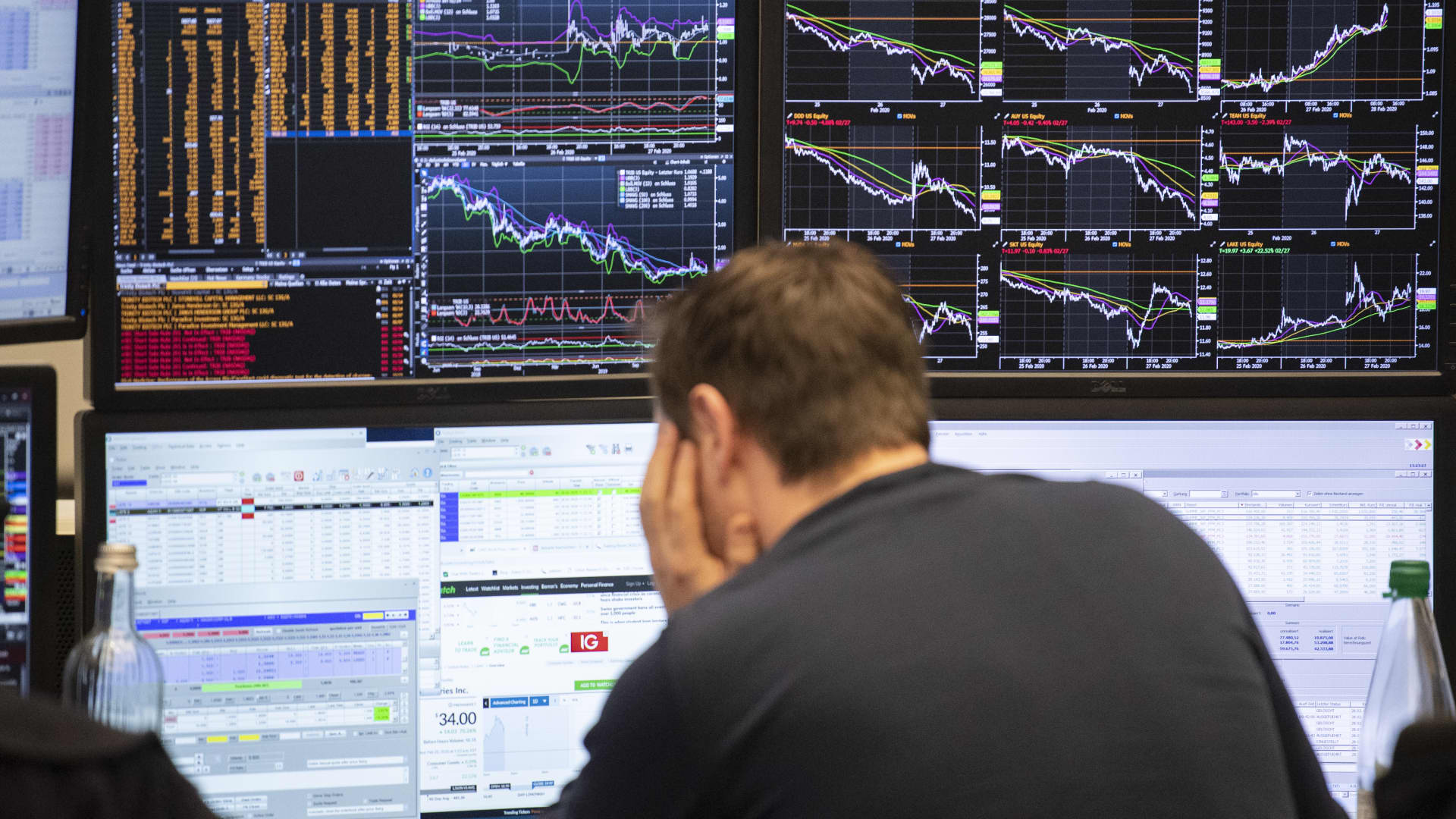
- Market Volatility Warning: Despite major indices rebounding from their lows on Tuesday, investors are advised to tread carefully as the Dow Jones Industrial Average plummeted over 1,200 points at one point, ultimately closing down 400 points, indicating market instability.
- Global Market Impact: The South Korean Kospi index crashed by 12% on Tuesday after a 7% drop on Monday, marking its largest single-day decline since 1985, reflecting significant losses in global markets due to geopolitical tensions.
- Investment Strategy Recommendations: JPMorgan advises clients to remain long on energy and the dollar index amid elevated geopolitical risks, while suggesting a focus on aerospace and defense stocks within equities to navigate market uncertainties.
- Energy Market Performance: U.S. crude futures have risen by 10% this week, and the S&P 500 energy sector has climbed 1%, indicating that energy assets retain defensive qualities and attractiveness amidst market turmoil.

Defense Secretary Pete Hegseth Claims 'America Is Winning' in Iran, Yet Defense Stocks Are Declining.


- Operation Update: Defense Secretary Pete Hegseth and Joint Chiefs Chair Dan Caine held a news conference to provide updates on Operation "Epic Fury."
- Public Communication: The conference aimed to inform the American public about the current status and objectives of the military operation.
Trump's Global Tariff Set for Implementation This Week


- Market Rebound: Trump's announcement that the U.S. will insure Gulf shipping and escort tankers through the Strait of Hormuz led to a market rebound after significant losses, with the S&P 500 closing down about 1%, well off its session lows of roughly 2.5%, indicating market sensitivity to geopolitical risks.
- Oil Price Impact: The assurances regarding oil trade not only boosted stock prices but also eased crude oil price pressures, highlighting that fluctuations in the oil market could have broader macroeconomic implications that investors need to monitor closely.
- Private Credit Concerns: Blackstone's Jon Gray defended the quality of loans from its main private credit fund, despite allowing investors to withdraw nearly 8% of their investments, which caused Blackstone shares to fall nearly 4%, reflecting growing market concerns about the health of the private credit sector.
- Congressional Hearing Pressure: Commerce Secretary Howard Lutnick voluntarily agreed to testify before the House Oversight Committee regarding his ties to sex offender Jeffrey Epstein, which has drawn bipartisan scrutiny, although he has not been accused of wrongdoing, potentially impacting his political future.

South Korea's Kospi Records Worst Day Ever with 12% Plunge
- Market Crash: South Korea's Kospi index plummeted 12% on Wednesday, marking its worst day ever, reflecting investor concerns over the global economic outlook, particularly amid escalating Middle East conflicts that could lead to oil price spikes and increased inflation risks.
- US Market Decline: Concurrently, US markets also faced significant declines, with the S&P 500 slipping about 0.94% and the Dow dropping over 1,200 points at one point before closing down 0.83%, indicating a sensitive market reaction to international developments.
- Defense Industry Meeting: Executives from US defense contractors Lockheed Martin and RTX are expected to meet with White House officials on Friday to discuss accelerating weapons production, which could positively impact defense spending and the stock prices of related companies.
- China's Manufacturing Slowdown: China's official manufacturing purchasing managers' index fell to 49 in February, missing economists' forecast of 49.1, indicating a slowdown in manufacturing activity due to production and cargo shipment pauses for the holiday, which may affect global supply chain stability.
Geopolitical Conflict Boosts Drone Demand
- Drone Market Growth: Analysts indicate that the Ukraine-Russia war has driven demand for drone systems, which is expected to enhance the sector's attractiveness, particularly as U.S. investment in unmanned systems increases.
- Rising Demand for Counter-Drone Tech: With Iran deploying low-cost long-range drones against U.S. targets, BTIG analysts note that production and distribution of counter-drone systems are increasing to address escalating threats, with AeroVironment and Leonardo DRS positioned as primary beneficiaries.
- Increased Defense Budget: The fiscal 2025 National Defense Authorization Act raised the budget for counter-drone programs by approximately $336 million, reflecting the U.S. government's commitment to unmanned systems, especially in countering emerging threats.
- Optimistic Market Outlook: AeroVironment is projected to capture hundreds of millions in market opportunities, particularly after the U.S. military selected its counter-drone systems, and analysts' strong buy ratings reflect confidence in the company's future growth prospects.
Anthropic Designated Supply Chain Risk by Trump Administration
- Supply Chain Risk Declaration: The Trump administration's designation of Anthropic as a supply chain risk has prompted 10 startups working with the Department of Defense to cease using its Claude model and seek alternatives, potentially impacting about 80% of Anthropic's enterprise revenue.
- Defense Contract Implications: Major defense contractors like Lockheed Martin are expected to remove Anthropic's technology from their supply chains, which could lead to a decline in Anthropic's market share within the defense sector and adversely affect future revenue growth.
- Legal Response Possibility: Anthropic has indicated it may appeal the supply chain risk designation through legal channels, although no formal action has been taken yet; if the designation becomes official, it would restrict the use of Claude in defense contracts, potentially affecting its business with other clients.
- Market Reaction and Alternatives: Several defense tech firms are proactively transitioning their workforce away from Claude to other models, and while Anthropic's product is regarded as excellent, the reliance on it for defense contracts is now under scrutiny, posing challenges for its continued use in sensitive environments.
Investors Urged to Exercise Caution Amid Market Uncertainty
- Market Volatility Warning: Despite major indices rebounding from their lows on Tuesday, investors are advised to tread carefully as the Dow Jones Industrial Average plummeted over 1,200 points at one point, ultimately closing down 400 points, indicating market instability.
- Global Market Impact: The South Korean Kospi index crashed by 12% on Tuesday after a 7% drop on Monday, marking its largest single-day decline since 1985, reflecting significant losses in global markets due to geopolitical tensions.
- Investment Strategy Recommendations: JPMorgan advises clients to remain long on energy and the dollar index amid elevated geopolitical risks, while suggesting a focus on aerospace and defense stocks within equities to navigate market uncertainties.
- Energy Market Performance: U.S. crude futures have risen by 10% this week, and the S&P 500 energy sector has climbed 1%, indicating that energy assets retain defensive qualities and attractiveness amidst market turmoil.
Defense Secretary Pete Hegseth Claims 'America Is Winning' in Iran, Yet Defense Stocks Are Declining.
- Operation Update: Defense Secretary Pete Hegseth and Joint Chiefs Chair Dan Caine held a news conference to provide updates on Operation "Epic Fury."
- Public Communication: The conference aimed to inform the American public about the current status and objectives of the military operation.
Trump's Global Tariff Set for Implementation This Week
- Market Rebound: Trump's announcement that the U.S. will insure Gulf shipping and escort tankers through the Strait of Hormuz led to a market rebound after significant losses, with the S&P 500 closing down about 1%, well off its session lows of roughly 2.5%, indicating market sensitivity to geopolitical risks.
- Oil Price Impact: The assurances regarding oil trade not only boosted stock prices but also eased crude oil price pressures, highlighting that fluctuations in the oil market could have broader macroeconomic implications that investors need to monitor closely.
- Private Credit Concerns: Blackstone's Jon Gray defended the quality of loans from its main private credit fund, despite allowing investors to withdraw nearly 8% of their investments, which caused Blackstone shares to fall nearly 4%, reflecting growing market concerns about the health of the private credit sector.
- Congressional Hearing Pressure: Commerce Secretary Howard Lutnick voluntarily agreed to testify before the House Oversight Committee regarding his ties to sex offender Jeffrey Epstein, which has drawn bipartisan scrutiny, although he has not been accused of wrongdoing, potentially impacting his political future.
South Korea's Kospi Records Worst Day Ever with 12% Plunge
- Market Crash: South Korea's Kospi index plummeted 12% on Wednesday, marking its worst day ever, reflecting investor concerns over the global economic outlook, particularly amid escalating Middle East conflicts that could lead to oil price spikes and increased inflation risks.
- US Market Decline: Concurrently, US markets also faced significant declines, with the S&P 500 slipping about 0.94% and the Dow dropping over 1,200 points at one point before closing down 0.83%, indicating a sensitive market reaction to international developments.
- Defense Industry Meeting: Executives from US defense contractors Lockheed Martin and RTX are expected to meet with White House officials on Friday to discuss accelerating weapons production, which could positively impact defense spending and the stock prices of related companies.
- China's Manufacturing Slowdown: China's official manufacturing purchasing managers' index fell to 49 in February, missing economists' forecast of 49.1, indicating a slowdown in manufacturing activity due to production and cargo shipment pauses for the holiday, which may affect global supply chain stability.